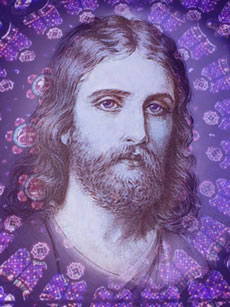
Jesus in India
Our story now takes a turn to the East, where the Wise Men came from. The following accounts of Jesus in the East during his so-called “lost years” are not a part of the Bible, but were recorded in ancient manuscripts, and reinforced by local traditions. They are most compelling, and bridge the gap between East and West, creating a new and stronger platform for universal peace.
The most important document that we find is published in the book The Unknown Life of Jesus Christ, by Russian explorer, writer and historian Nicholas Notovitch at the end of the 19th century. This book revealed an ancient manuscript that was held in the Tibetan Buddhist monastery in Himis—high in the Himalayas, in the cold and barren land of Ladakh. The manuscript is entitled The Life of Saint Issa: Best of the Sons of Men. The sacred manuscript was published along with an account of Notovitch's travels through Kashmir and the Tibetan Himalayas. Notovitch was told by the monks about Saint Issa, and the remarkable similarities between his life and the life of Jesus. One conversation in particular sheds light on how the Tibetan monks consider who they refer to as the “Buddha Issa.”
“The name of Issa,” said one of the lamas, “is very much respected among the Buddhists, but he is only known by the chief lamas, who have read the scrolls relating to his life.” The lamas elaborated. “The great Buddha, the soul of the Universe, is the incarnation of Brahma. He, almost always, remains immobile, containing in himself all things, being in himself the origin of all and his breath vivifying the world.”

Buddha the Winner by Nicholas Roerich
Speaking of Jesus, another lama said, “We too, respect him, whom we reference as son of the One and indivisible God, but we do not see him as the Only Son, but the excellent being who was chosen among all. Buddha, indeed, has incarnated himself in the person of the sacred Issa, who, without employing fire or iron has gone forth to propagate our true and great religion among all the world.”
It was only when Notovitch broke his leg and was held up in the monastery, that the venerable lama who ruled the convent proceeded to translate the ancient text to Notovitch, at his insistence, allowing him to write it down. “Would you commit a sin in reciting your copy of the life of Issa to a stranger?” Notovitch asked while a young boy spun the prayer wheels. “That which belongs to God belongs also to man,” the lama answered.
Notovitch gives us more information about the Buddhist Life of Saint Issa. He writes, “The two manuscripts, from which the lama of the convent Himis read to me all that had a bearing upon Jesus, are compilations from divers copies written in the Tibetan language, translations of scrolls belonging to the library of Lhassa and brought, about two hundred years after Christ, from India, Nepal and Maghada, to a convent on Mount Marbour, near the city of Lhassa, now the residence of the Dalai-Lama.
“These scrolls were written in Pali, which certain lamas study even now, so as to be able to translate it into the Thibetan.The chroniclers were Buddhists belonging to the sect of the Buddha Gautama. They seem to have been written during the first years following the death of Jesus, in whose career a lively and growing interest is shown. One of these accounts, communicated by merchant, refers to the origin of Jesus and his family; another tells of the expulsion of his partisans and the persecutions they had to suffer.”
The ancient manuscript that Notovitch translated and published in 1887 was re-translated and republished in 1927 by Swami Abhedananda in his book, In Kashmir and Tibet, with very few changes. Both Notovitch and Abhedananda were told by the monks that the original manuscript of Jesus' life—Saint Issa—was written in Pali and held in a monastery near Lhasa. Notovitch wrote down the verses as they were being translated to him by the monks, either in Russian or French. Having been published in both languages, The Life of Saint Issa was then translated and published in 1895 in English, German, Spanish, Swedish and Italian. The manuscript translated from Tibetan by monks for Swami Abhedananda was first published in 1929 in English and Bengali, and then republished by his disciple Swami Prajnananda in 1954.
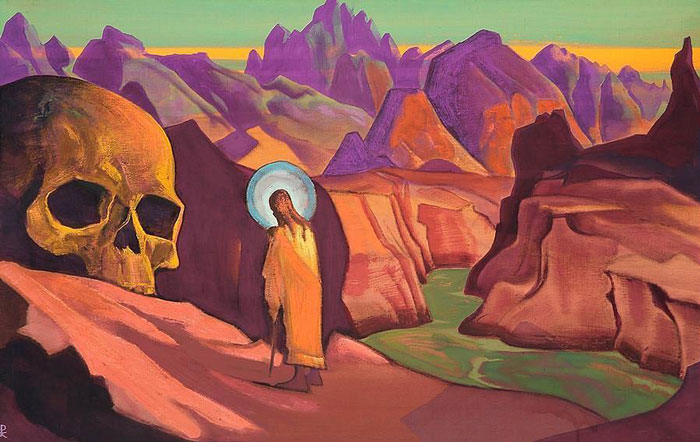
Around the same time period as Swami Abhedananda republished the Life of Saint Issa, Russian mystic, painter, writer and professor Nicholas Roerich led an expedition into the Himalayas with his wife and son, along with more than one hundred camel, yaks, horses and mules! He received confirmation of the eastern life of Jesus described in the manuscript by local people. In his book, Heart of Asia, he writes: “In Srinagar, we first encountered the curious legend about Christ's visit to this place. Afterwards, we saw how widely spread in India and Ladak and in Central Asia, was the legend of the visit of Christ to these parts during his long absence, quoted in the Gospel.”
Saint Isa by Nicholas Roerich (Isa faces Golgotha, the place of the skull)
Many of Jesus' teachings recorded in the gospels centered around parables. Parables are only mentioned once in the entire Old Testament, in the Psalm of Asaph, “I will open my mouth in parables. I will utter what has been hidden since the foundation of the world.” Parables, however, are very much an eastern practice. According to the Eastern traditions, Buddha taught in parables, including the Jakata Tales. So did Krishna.
In his book Altai-Himalaya, Roerich writes: “Let us hearken to the way in which, in the mountains of Tiber, they speak of Christ. In the documents which have the antiquity of about 1500 years one may read: Issa secretly left his parents and together with the merchants of Jerusalem turned towards Ind to become perfected in the Divine Word. And for the study of the laws of the Great Buddha.” He also writes about a pool of water known to have been blessed by Jesus. “A Hindu said to us: I have heard from one Ladaki official that according to the words of the former Abbott of Hemis, there was a tree and a small pool in Leh beside which Jesus taught.”
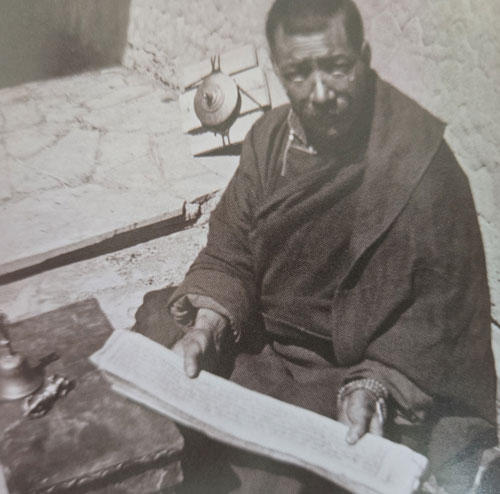
Picture taken by Dr. Elisabeth Caspari in Himis with a monk holding the
ancient manuscript of The Life of Saint Issa, saying, “These books say your Jesus was here.
Witnessing about Notovitch's book, Roerich says, “The local people know nothing of any published book but they know the legend and with deep reverence they speak of Issa.” Roerich witnessed to the depth of this reverence:“Issa communed...with the people on his way from Tibet. Secretly and cautiously the legends are guarded. It is difficult to sound them because lamas, above all people, know how to keep silent. Only by means of a common language—and not merely that of tongue but also of inner understanding—can one approach their significant mysteries.”
This is precisely what happened to Dr. Elisabeth Caspari, friend of Maria Montessori and pioneer of the Caspari Montessori Method, who was also a friend of mine. She spoke to me of her travels to Tibet and to the Himis monastery, just before the second world war broke out. Even though she was more than one hundred years old, she vividly treasured her memory at the Himis monastery, where a monk brought to her an ancient Tibetan monastery and placed it in her hands, saying “Your Jesus was here.” Her journey is beautifully chronicled in the book The Lost Years of Jesus by her friend and teacher Elizabeth Clare Prophet.
Let us look now, at The Life of Saint Issa: Best of the Sons of Men and what it reveals about Issa, the eastern pronunciation of the name Jesus. The manuscript tells us that merchants coming from Israel gave the following account of what occurred, and begins with the following pronouncement, before moving into background history of Moses and the ancient Israelites:
“The earth trembled and the heavens wept, because of the great crime committed in the land of Israel. For there was tortured and murdered the great and just Issa, in whom was manifest the soul of the Universe; Which had incarnated in a simple mortal, to benefit men and destroy the evil spirit in them; To lead back to peace, love and happiness, man, degraded by his sins, and recall him to the one and indivisible Creator whose mercy is infinite.”
The writings explain how the Israelites would forget their God, who had delivered them from the slavery of Egypt, and only turned to him in their times of lamentation. “Our Father,” says the text, “in his inexhaustible clemency, heard their prayer,” and sent Issa. “At that time the moment had come for the compassionate Judge to re-incarnate in a human form; And the eternal Spirit, resting in a state of complete inaction and supreme bliss, awakened and separated from the eternal Being, for an undetermined period, so that, in human form, He might teach man to identify himself with the Divinity and attain to eternal felicity; And to show, by His example, how man can attain moral purity and free his soul from the domination of the physical senses, so that it may achieve the perfection necessary for it to enter the Kingdom of Heaven, which is immutable and where bliss eternal reigns.”
The text goes on to say that soon after, a marvelous child was born in the land of Israel and that God himself spoke through his mouth, of the miseries of the body and the grandeur of the soul. It explains that this divine child, who was given the name of Issa, was the first born of his family and “commenced in his tender years to talk of the only and indivisible God, exhorting the strayed souls to repent and purify themselves from the sins of which they had become guilty.” The text relates that people from all parts came to hear him, and marveled at the discourses which came from his infantile mouth; and all Israel agreed that the Spirit of the Eternal dwelt in this child.
When the child Issa was thirteen years old, the age at which an Israelite was expected to marry, rich and illustrious people came to his house to make of him a son-in-law, desirous of the honor of marrying their daughter to a scholar or rabbi, so he secretly absented himself from his father's house, left Jerusalem, and, journeyed toward the Sindh (now Pakistan) in a train of merchants, with the object of perfecting himself in the knowledge of the word of God and the study of the laws of the great Buddhas.
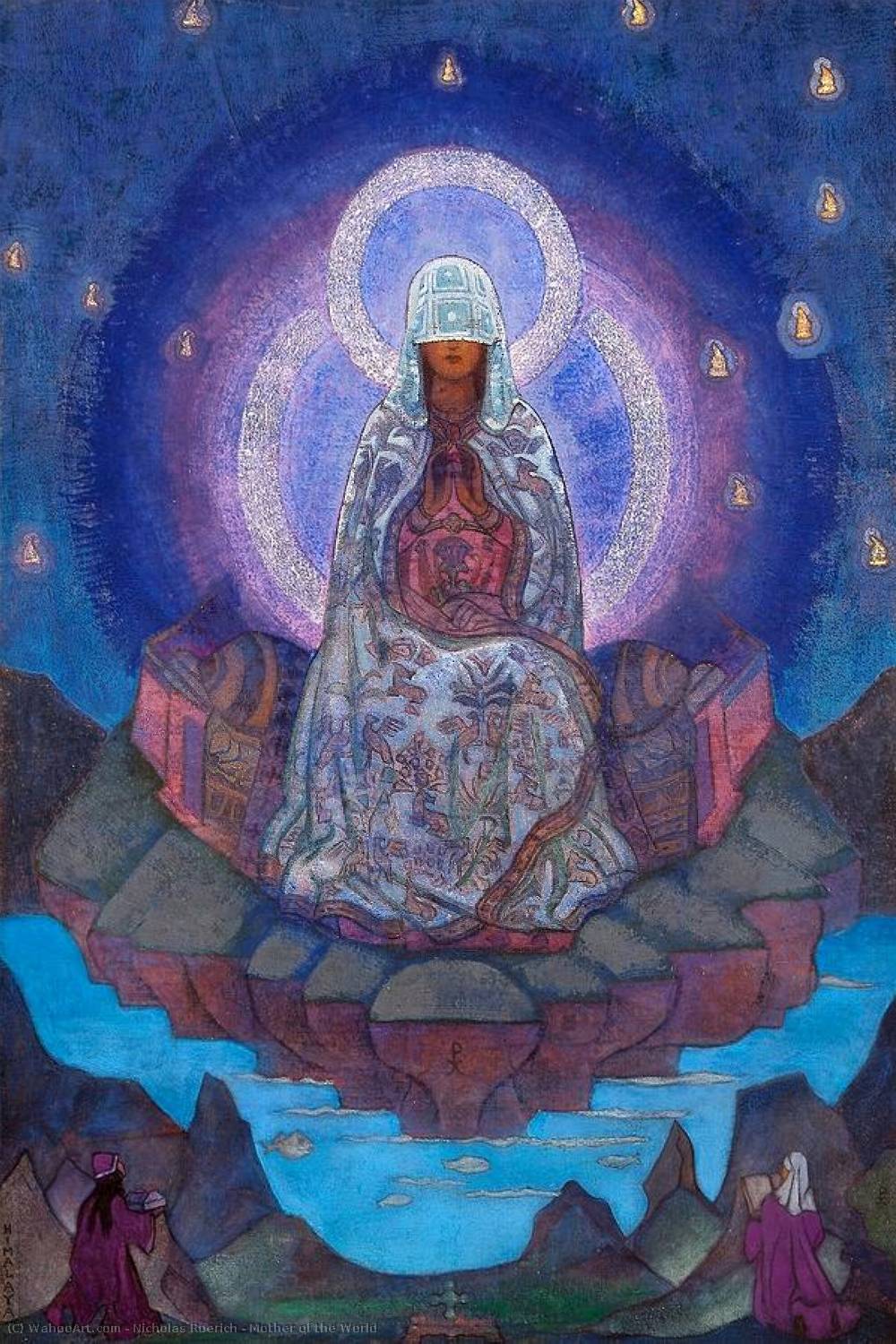
Mother of the World by Nicholas Roerich
I would like to interject here that based on the gospel story of Jesus in the temple, having left his parents for three days searching for him, it is believable that Jesus may have left without telling Mary and Joseph. In a dictation through the Summit Lighthouse, Saint Germain said: “When Jesus was thirteen, he secretly left our home in Nazareth “with the object of perfecting himself in the Divine Word and of studying the laws of the great Buddhas. He set out with a caravan of merchants, arriving in India when he was fourteen. For many years he traveled and studied in the East, where he was known as Saint Issa. At about age thirty, he returned to Palestine, where he was baptized by John in the river Jordan and began his public ministry. He had attained manhood, and his inner circle acknowledged him as the avatar of the Piscean age.”
In another dictation, Saint Germain said: “Remember me as I walked by the child Jesus, as I walked with Mary and as I guided them until the hour of my transition. Remember, then, how Jesus did go alone, joining the caravan to the East. Yes, beloved, the Son of God was overshadowed by angels and by the hierarchy of the dispensation of the Piscean age and by myself when I was no longer in embodiment.”
Mother Mary also gave a beautiful testimony to Jesus' travels in a dictation: “During the times when our beloved Jesus was away from the circle of our household, I became more and more aware of the wonderful magic of the power of divine love that eternally connects the hearts of all of God’s sons and daughters on earth. Back and forth, over and through love’s divine connection, thoughts and feelings of blessing can and do flow to each other even though the physical forms may be many miles apart.”
The ascended masters teach that the Buddha Lord Maitreya was the ascended master in the heaven-world who, on inner levels, directly sponsored Jesus' life and mission—East and West. In another Summit Lighthouse dictation, Maitreya states: “My beloved, I welcome you as I welcomed to my heart long ago the youth Issa, your Jesus, when he came to the Himalayas and touched the fire of Tibet and knew the ancient lamas and found me. For I was the one promised and known of him even before birth, as the entire drama of the mission of the avatar of the Piscean age was, of course, premeditated by God and directed from above. Sweet Jesus, the strong, when he said to his parents at the age of twelve, 'Wist ye not that I must be about my Father’s business?' he spake of the Teacher, the eternal Guru he must go and find. go to the East and, as all such saints, receive the anointing from the lineage of his descent.
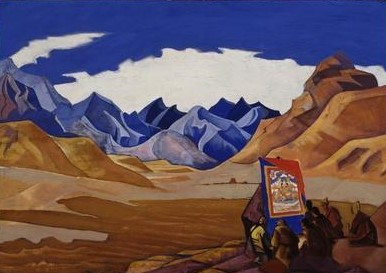
Banners of the Coming One by Nicholas Roerich
“Thus I unveil to you the real mission of the Savior, so truly stated by the apostles, for the redemption of the twin flames who took up the path of the Tree of Life in the ancient Mystery School and were turned aside by the cunning of the serpent philosophy, which was the philosophy of the fallen angels who were determined to subvert the Light of twin flames and misdirect the great gift of God to all generations who would come after them....
“Thus, the mission of Jesus was to go back to Eden, yet the Motherland was long gone. Therefore he came to Shamballa. And he came to the ancient repository of the tablets of Mu and the writings of Maitreya and Gautama and Sanat Kumara. He came for the redemption of those who had been turned aside from the law of the Divine Mother and to restore to them the true path of discipleship under the Cosmic Christ.”
The Life of Saint Issa says that in his fourteenth year, Issa, settled among the Aryas, and his fame spread to the northern Sindh, Radjipoutan, and where the Jain community lived. Jains, Notovitch explains, are a connecting link between Buddhism and Brahmanism, and preach the destruction of all other beliefs “corrupted by falsehood.” The Jain belief system is known for its extreme asceticism and fanaticism, and centers around ahimsā (non-violence), satya (truth), asteya (not stealing), brahmacharya (chastity), and aparigraha (non-possessiveness).
In the manuscript notes, Notovitch explains that the Jains admired Jesus, and asked him to stay with them, but Jesus left them to settle in Djagguernat, where he devoted himself to the study of religion and philosophy. Djagguernat was, and is, a city of great religious importance, where the ashes of Krishna, who lived in 1580 B. C., are preserved in the hollow of a tree near a magnificent temple, to which thousands make pilgrimage every year.
Here, says the manuscript, the white priests of Brahma welcomed Jesus joyfully and for six years, the priests taught him to read and to understand the Vedas that Krishna had reorganized into four books. The manuscript says he learned to expound on the sacred scriptures, cure physical ills by means of prayers, and drive out evil so that man could regain the likeness of God. The author notes explain that in Djagguernat is also found a very precious library of Sanskrit books and religious manuscripts, and that studying Sanskrit enabled Jesus to absorb the religious doctrines, philosophy, medicine and mathematics of the Brahmin culture.
The manuscript tell us that “the common people loved Issa, for he lived in peace with the Vaisyas and the Sudras, to whom he taught the Holy Scriptures.” These were the lowest castes. “But the Brahmins and the Kshatriyas told him that they were forbidden by the great Para-Brahma to come near to those who were created from his belly and his feet; That the Vaisyas might only hear the recital of the Vedas, and this only on the festal days, and that the Sudras were not only forbidden to attend the reading of the Vedas, but even to look on them; for they were condemned to perpetual servitude.”

Krishna (Spring in Kulu) by Nicholas Roerich
Notovitch expands on this in his notes. He explains that according to Brahmanism, God creates human beings into four castes, according to their karma and dharma, or service to life. The Brahmins, drawn from the mouth of Brahman, are the priests and preachers, and must practice celibacy. The Kshatriyas, issued from the hand of Brahma, are the warriors, kings and princes. The Vaisyas, issued from Brahma's belly, are destined to cultivate the ground, raise cattle, conduct commerce and practice trades. They are only authorized to enter the temple and listen to the recital of the Vedas on holidays, and at all other times, must attend to their business. The Sudras are the lowest caste, issued from the feet of Brahma to be the humble servants and slaves of the three preceding castes. They are prohibited from attending the reading of the Vedas and are deprived of all human rights.
They cannot even look at the members of the other castes, nor defend themselves, nor, when sick, receive the attendance of a physician. Death alone can deliver them from a life of servitude and after death, they may be raised to a superior caste. Notovitch further explains that if a Sudra has been lacking in obedience to a member of the privileged classes, or has in any way brought their disfavor upon himself, he sinks to the rank of a pariah, who is banished from all cities and villages, and is the object of general contempt, as an abject being who can only perform the lowest kind of work.
“Death alone can enfranchise them from their servitude. Leave them, therefore, and come to adore with us the gods, whom you will make angry if you disobey them.” But Issa, disregarding their words, says the manuscript, remained with the Sudras, preaching against the. Brahmins and the Kshatriyas. Notovitch adds: “Jesus found much to blame in Brahminical laws and usages, and publicly joined issue with the Brahmins, who in vain, endeavored to convince him of the sacred character of their established customs. Jesus, among other things, deemed it extremely unjust that the laborer should be oppressed and despised, and that he should not only be robbed of hope of future happiness, but also be denied the right to hear the religious services.
“He, therefore, began preaching to the Sudras, the lowest caste of slaves, telling them that, according to their own laws, God is the Father of all men; that all which exists, exists only through him; that, before him, all men are equal, and that the Brahmins had obscured the great principle of monotheism by misinterpreting Brahma's own words, and laying excessive stress upon observance of the exterior ceremonials of the cult.
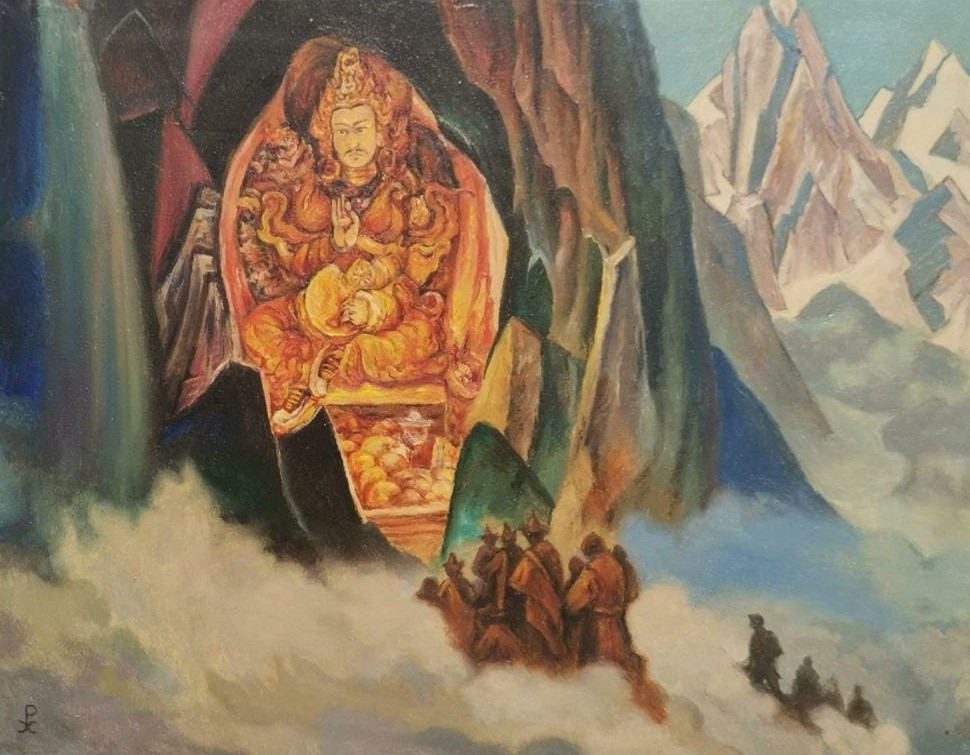
Siddartha's Intent by Nicholas Roerich
“Here are the words” he said, “in which, according to the doctrine of the Brahmins, God himself speaks to the angels: 'I have been from eternity, and shall continue to be eternally. I am the first cause of everything that exists in the East and in the West, in the North and in the South, above and below, in heaven and in hell. I am older than all things. I am the Spirit and the Creation of the universe and also its Creator. I am all-powerful; I am the God of the Gods, the King of the Kings; I am Para-Brahma, the great soul of the universe.'”
Jesus, writes Notovitch, declaimed strongly against man's arrogating to himself the authority to deprive his fellow-beings of their human and spiritual rights. “Verily,” he said, “God has made no difference between his children, who are all alike dear to Him.” This is the premise and mission of the Great White Brotherhood—an inner connection and spiritual fraternity of saints incarnate and saints ascended, whose auras shine with white light.
Even though the doctrine of Brahmanistic pantheism had originally derived from the understanding of one God, many faces—E Pluribus Unum, Unum Pluribus—the doctrine had evolved into the idolatry of hundreds, and even thousands of Hindu Gods. And even though the Hindu trinity of Brahma, Vishnu and Shiva was initially much like Western understanding of the three persons of the Godhead—Father, Son and Holy Spirit—Issa, much like Buddha before him, focused his teaching on reconnecting his followers to the one God.

Nicholas Roerich Song of Shamballa
“Fear the Lord, thy God; bend thy knees only before him and bring to him only the offerings which come from thy earnings....The eternal Judge, the eternal Spirit, constitutes the only and indivisible soul of the universe, and it is this soul alone which creates, contains and vivifies all. He alone has willed and created. He alone has existed from eternity, and his existence will be without end,” Issa taught, along with the law of karma. “Those who deprive their brothers of divine happiness will themselves be deprived of it; and the Brahmins and the Kshatriyas shall become the Sudras of the Sudras, with whom the Eternal will stay forever. In the day of judgment the Sudras and the Vaisyas will be forgiven for that they knew not the light, while God will let loose his wrath upon those who arrogated his authority.”
When the Vaisyas and the Sudras asked Issa how they should pray, in order not to lose their hold upon eternal life, he replied: “Pray not to idols, for they cannot hear you; hearken not to the Vedas where the truth is altered; be humble and humiliate not your fellow man. Help the poor, support the weak, do evil to none; covet not that which ye have not and which belongs to others.”
The Brahmins and the Kshatriyas, says the manuscript, who had learned of Issa's discourse to the Sudras, resolved upon his death and sent their servants to find the young teacher and slay him. But Issa, warned by the Sudras of his danger, left Djagguernat by night. He gained the mountain, and settled in the country of the Gautamides, where the great Buddha SakyaMuni came to the world, among a people who worshiped the only and sublime Brahma.” SakyaMuni is another name for Gautama Bbuddha. Nitovitch explains: “Jesus sojourned six years among the Buddhists, where he found the principle of monotheism still pure.”
The manuscript explains that the just Issa acquired the Pali language, and applied himself to the study of the sacred scrolls of the Sutras, until he could perfectly expound on the sacred scrolls containing Buddha's teachings. He then left Nepal and the Himalaya mountains, descended into the valley of Radjipoutan and directed his steps toward the West, everywhere preaching to the people the supreme perfection attainable by man, and the good he must do to his fellowmen, which is the sure means of speedy union with the eternal Spirit.
These are the two commandments Jesus also preached in Palestine, when the pharisees asked him which was the greatest commandment: “Master, which is the great commandment in the law? Jesus said unto him, Thou shalt love the Lord thy God with all thy heart, and with all thy soul, and with all thy mind. This is the first and great commandment. And the second is like unto it, Thou shalt love thy neighbor as thyself. On these two commandments hang all the law and the prophets.”
“He who has recovered his primitive purity,” said Issa, “shall die with his transgressions forgiven and have the right to contemplate the majesty of God.” Issa also preached against the Hindu concept of the transmigration of souls into animal bodies. “Even as a father shows kindness toward his children, so will God judge men after death, in conformity with His merciful laws. He will never humiliate his child by casting his soul for chastisement into the body of a beast.”
Issa continued to preach against the worshiping of idols as he crossed Pagan territories. He taught that the adoration of visible gods was contrary to natural law, a concept later taken up by Islam. “For to man,” said he, “it has not been given to see the image of God, and it behooves him not to make for himself a multitude of divinities in the imagined likeness of the Eternal. Moreover, it is against human conscience to have less regard for the greatness of divine purity, than for animals or works of stone or metal made by the hands of man. The eternal Lawgiver is One; there are no other Gods than He.”
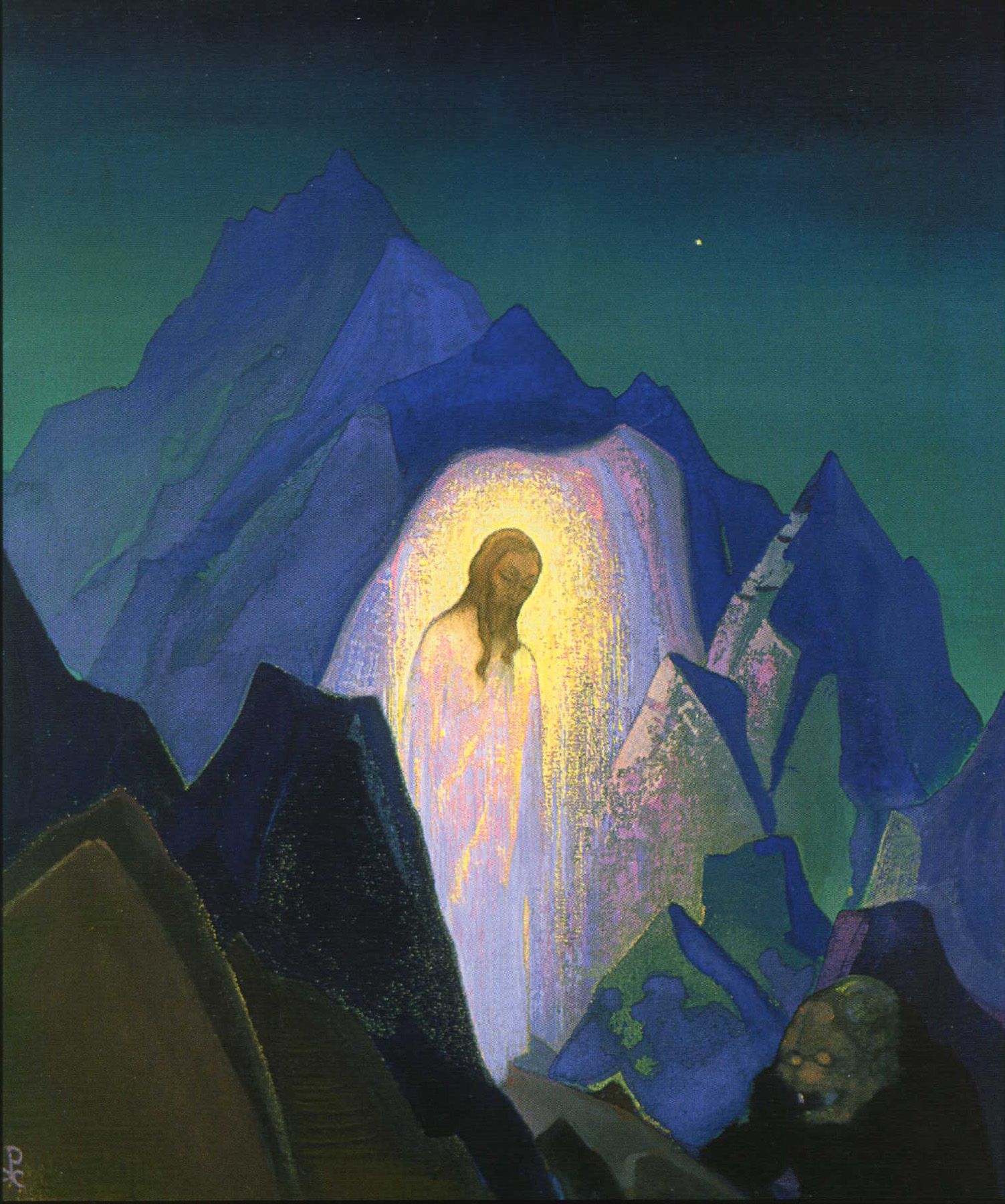
Christ by Nicholas Roerich
Issa also rebukes human and animal sacrifices, referring to words found in Genesis: “And God said, Let us make man in our image, after our likeness: and let them have dominion over the fish of the sea, and over the fowl of the air, and over the cattle, and over all the earth, and over every creeping thing that creepeth upon the earth. So God created man in his own image, in the image of God created he him; male and female created he them. And God blessed them, and God said unto them, Be fruitful, and multiply, and replenish the earth, and subdue it: and have dominion over the fish of the sea, and over the fowl of the air, and over every living thing that moveth upon the earth.”
The manuscript continues: “The heavenly laws,” said the Creator, through the mouth of Issa, “are opposed to the immolation of human sacrifices to a statue or an animal; for I, the God, have sacrificed to man all the animals and all that the world contains. Everything has been sacrificed to man, who is directly and intimately united to me, his Father; therefore, shall the man be severely judged and punished, by my law, who causes the sacrifice of my children. Man is naught before the eternal Judge; as the animal is before man. Therefore, I say unto you, leave your idols and perform not ceremonies which separate you from your Father and bind you to the priests, from whom heaven has turned away. For it is they who have led you away from the true God, and by superstitions and cruelty perverted the spirit and made you blind to the knowledge of the truth.”
And when the Brahmin priests demanded that Issa prove his power through miracles, Issa rebuked them like he did the Sadducees and Pharisees: Then Jesus said to the crowds and to his disciples, “The scribes and the Pharisees sit on Moses' seat, so do and observe whatever they tell you, but not the works they do. For they preach, but do not practice. They tie up heavy burdens, hard to bear, and lay them on people's shoulders, but they themselves are not willing to move them with their finger. They do all their deeds to be seen by others. For they make their phylacteries broad and their fringes long, and they love the place of honor at feasts and the best seats in the synagogues and greetings in the marketplaces and being called rabbi by others. But you are not to be called rabbi, for you have one teacher, and you are all brothers. And call no man your father on earth, for you have one Father, who is in heaven. Neither be called instructors, for you have one instructor, the Christ. The greatest among you shall be your servant. Whoever exalts himself will be humbled, and whoever humbles himself will be exalted.
“But woe to you, scribes and Pharisees, hypocrites! For you shut the kingdom of heaven in people's faces. For you neither enter yourselves nor allow those who would enter to go in.
.jpg)
And We See by Nicholas Roerich
“Woe to you, scribes and Pharisees, hypocrites! For you travel across sea and land to make a single proselyte, and when he becomes a proselyte, you make him twice as much a child of hell as yourselves.“Woe to you,blind guides, who say, ‘If anyone swears by the temple, it is nothing, but if anyone swears by the gold of the temple, he is bound by his oath.’ You blind fools! For which is greater, the gold or the temple that has made the gold sacred? And you say, ‘If anyone swears by the altar, it is nothing, but if anyone swears by the gift that is on the altar, he is bound by his oath. You blind men! For which is greater, the gift or the altar that makes the gift sacred?So whoever swears by the altar swears by it and by everything on it. And whoever swears by the temple swears by it and by him who dwells in it. And whoever swears by heaven swears by the throne of God and by him who sits upon it.
“Woe to you, scribes and Pharisees, hypocrites! For you tithe mint and dill and cumin, and have neglected the weightier matters of the law: justice and mercy and faithfulness. These you ought to have done, without neglecting the others. You blind guides, straining out a gnat and swallowing a camel!
“Woe to you, scribes and Pharisees, hypocrites! For you clean the outside of the cup and the plate, but inside they are full of greed and self-indulgence. You blind Pharisee! First clean the inside of the cup and the plate, that the outside also may be clean.
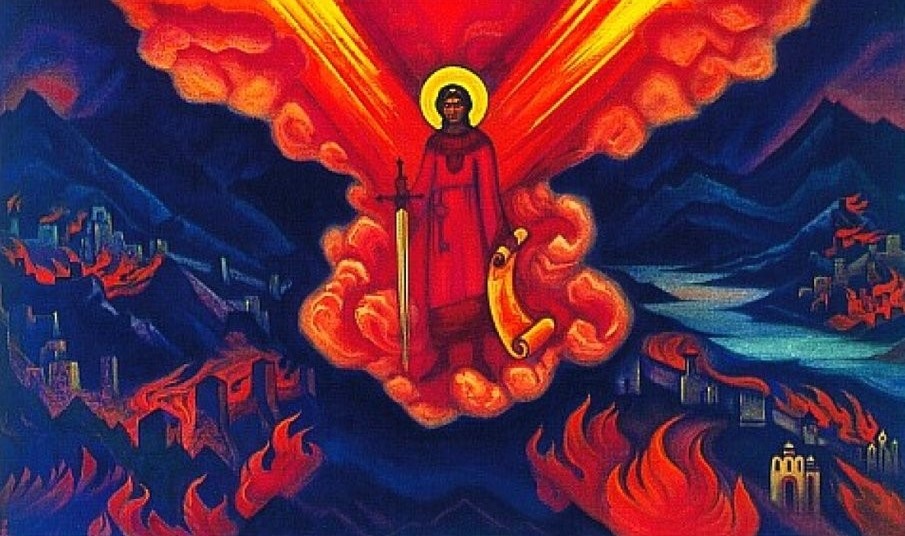
Last Angel by Nicholas Roerich
“Woe to you, scribes and Pharisees, hypocrites! For you are like whitewashed tombs, which outwardly appear beautiful, but within are full of dead people's bones and all uncleanness. So you also outwardly appear righteous to others, but within you are full of hypocrisy and lawlessness.
“Woe to you, scribes and Pharisees, hypocrites! For you build the tombs of the prophets and decorate the monuments of the righteous, saying, ‘If we had lived in the days of our fathers, we would not have taken part with them in shedding the blood of the prophets.’ Thus you witness against yourselves that you are sons of those who murdered the prophets. Fill up, then, the measure of your fathers. You serpents, you brood of vipers, how are you to escape being sentenced to hell? Therefore I send you prophets and wise men and scribes, some of whom you will kill and crucify, and some you will flog in your synagogues and persecute from town to town, so that on you may come all the righteous blood shed on earth, from the blood of righteous Abel to the blood of Zechariah the son of Barachiah, whom you murdered between the sanctuary and the altar. Truly, I say to you, all these things will come upon this generation.”
Likewise, Issa told the Brahmin priests: “But woe to you! ye adversaries of men, if it is not the favor you await, but rather the wrath of the Most High; woe to you, if you demand that He attest His power by a miracle! For it is not the idols which He will destroy in His wrath, but those by whom they were created; their hearts will be the prey of an eternal fire and their flesh shall be given to the beasts of prey. God will drive away the contaminated animals from his flocks; but will take to himself those who strayed because they knew not the heavenly part within them.”
When the Pagans saw that the power of their priests was naught, they put faith in the words of Issa. Fearing the anger of the true God, says the manuscript, they broke their idols to pieces and caused their priests to flee from among them.

Moses the Leader by Nicholas Roerich
Like Jesus told the Pharisees that the kingdom of God is within, so Issa taught the Pagans that they should not endeavor to see the eternal Spirit with their eyes; but perceive him with their hearts, making themselves worthy of his favors by the purity of their souls. He offered them a code of conduct: “Not only,” he said to them, “must ye refrain from offering human sacrifices, but ye may not lay on the altar any creature to which life has been given, for all things created are for man. Withhold not from your neighbor his just due, for this would be like stealing from him what he had earned in the sweat of his brow. Deceive none, that ye may not yourselves be deceived; seek to justify yourselves before the last judgment, for then it will be too late. Be not given to debauchery, for it is a violation of the law of God. That you may attain to supreme bliss ye must not only purify yourselves, but must also guide others into the path that will enable them to regain their primitive innocence.”
The Life of Saint Issa continues with Issa's return to the land of Israel at the age of twenty-nine. It describes the plight of the Israelites under the Roman occupation from an eastern perspective and understanding. It explains that since Issa had left at the age of thirteen, the Romans had caused even more Jewish suffering, and that any were turning from the law of Moses to obtain favor with their conquerors.
“Children, yield not yourselves to despair,” said the celestial Father through the mouth of Issa, “for I have heard your lamentations, and your cries have reached my ears. Weep not, O my beloved sons! for your griefs have touched the heart of your Father and he has forgiven you, as he forgave your ancestors. Forsake not your families to plunge into debauchery; stain not the nobility of your souls; adore not idols which cannot but remain deaf to your supplications. Fill my temple with your hope and your patience, and do not adjure the religion of your forefathers, for I have guided them and bestowed upon them of my beneficence. Lift up those who are fallen; feed the hungry and help the sick, that ye may be altogether pure and just in the day of the last judgment which I prepare for you.”
The Israelites, says the manuscript, came in multitudes to listen to Issa's words and he spoke: “Enter into your temple, into your heart; illuminate it with good thoughts, with patience and the unshakable faith which you owe to your Father. And your sacred vessels! They are your hands and your eyes. Look to do that which is agreeable to God, for in doing good to your fellow men, you perform a ceremony that embellishes the temple wherein abideth Him who has created you. For God has created you in his own image, innocent, with pure souls, and hearts' filled with kindness and not made for the planning of evil, but to be the sanctuaries of love and justice.
“Therefore, I say unto you, soil not your hearts with evil, for in them the Eternal Being abides. When ye do works of devotion and love, let them be with full hearts, and see that the motives of your actions be not hopes of gain or self-interest; For actions, so impelled, will not bring you nearer to salvation, but lead to a state of moral degradation wherein theft, lying and murder pass for generous deeds.”
Issa went from one city to another, and thousands of people followed him to hear his teachings, but the rulers were afraid of him. Meanwhile, Issa continued to preach: “The human race perishes, because of the lack of faith; for the darkness and the tempest have caused the flock to go astray and they have lost their shepherds. But the tempests do not rage forever and the darkness will not hide the light eternally. Soon the sky will become serene, the celestial light will again overspread the earth, and the strayed flock will re-unite around their shepherd. Wander not in the darkness, seeking the way, lest ye fall into the ditch; but gather together, sustain one another, put your faith in your God and wait for the first glimmer of light to re-appear.”
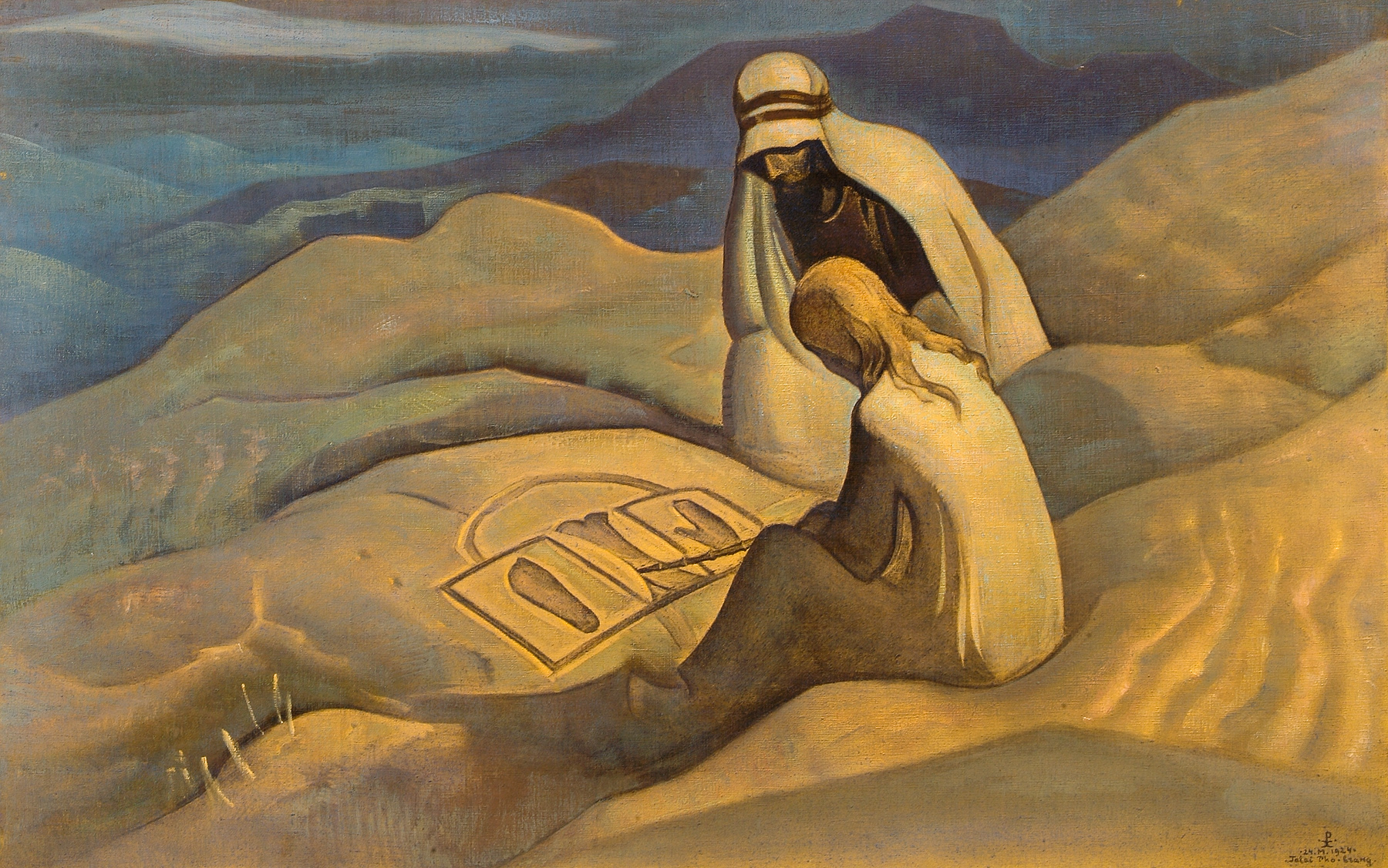
Signs of Christ by Nicholas Roerich
Echoing the words of Confucius, “To put the world in order, we must first put the nation in order; to put the nation in order, we must first put the family in order; to put the family in order; we must first cultivate our personal life; we must first set our hearts right. Issa says, “ He who sustains his neighbor, sustains himself; and he who protects his family, protects all his people and his country. For, be assured that the day is near when you will be delivered from the darkness. You will be re-united into one family and your enemy will tremble with fear, he who is ignorant of the favor of the great God.
Like the gospel statement Jesus made to Pilate that “my kingdom is not of this world,” so Issa says, “The power of this earth is not of long duration and is subject to numberless changes. It would be of no avail for a man to rise in revolution against it, for one phase of it always succeeds another.”
Then Issa describes his earthly point of origin and point of return: “I am an Israelite,” he says. “When a child, I left my father's house to go and settle among other people. But having heard it said that my brethren suffered even greater miseries now, I have come back to the land of my fathers, to recall my brethren to the faith of their ancestors, which teaches us patience upon earth in order to attain the perfect and supreme bliss above.”
Speaking of the Mosaic Law, Issa taught, “One does not demolish that which has been given by our Heavenly Father... As regards the laws of Mossa, I have endeavored to re-establish them in the hearts of men; and I say unto you that ye ignore their true meaning, for it is not vengeance but pardon which they teach. Their sense has been perverted.”
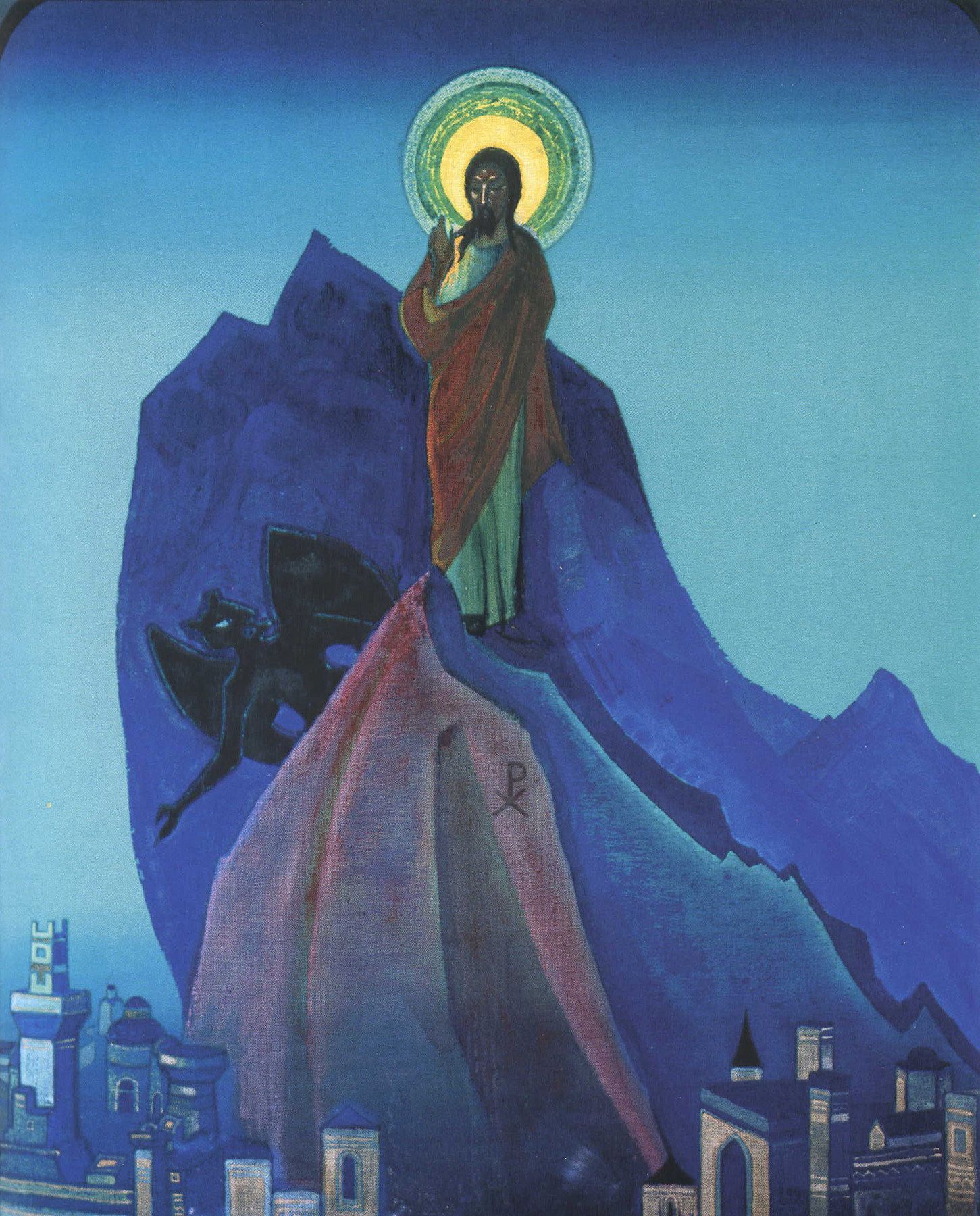
Temptation of Christ by Nicholas Roerich
Questioned about miracles, Issa said: “The secrets of nature are in the hands of God, for the whole world, before it was made manifest, existed in the bosom of the divine thought, and has become material and visible by the will of the Most High. Put not your faith in miracles performed by the hands of men, for He who rules nature is alone capable of doing supernatural things, while man is impotent to arrest the wrath of the winds or cause the rain to fall.
“One miracle, however, is within the power of man to accomplish. It is, when his heart is filled with sincere faith, he resolves to root out from his mind all evil promptings and desires, and when, in order to attain this end, he ceases to walk the path of iniquity. All the things done without God are only gross errors, illusions and seductions, serving but to show how much the heart of the doer is full of presumption, falsehood and impurity.”
Issa also warned against oracle fortune telling. “Put not your faith in oracles,” he said. “God alone knows the future. He who has recourse to the diviners soils the temple of his heart and shows his lack of faith in his Creator. Belief in the diviners and their miracles destroys the innate simplicity of man and his childlike purity.
Just like Jesus told his disciples, “Let the little children come to me, and do not hinder them, for the kingdom of God belongs to such as these,” so Issa said, “When ye pray to him, become again like little children, for ye know neither the past, nor the present, nor the future, and God is the Lord of Time. But the Lord our God, to whom none can be equaled, is one omnipotent, omniscient and omnipresent; He alone possesses all wisdom and all light. To him ye must address yourselves, to be comforted in your afflictions, aided in your works, healed in your sickness and whoso asks of him, shall not ask in vain.”
There is an exchange recorded in The Life of Saint Issa akin to Jesus' statement recorded in the Bible, “Give to Caesar what belongs to Caesar, and give to God what belongs to God” This was also in the context of many Jews hoping for freedom from Roman rule. “Just man,” said to him the disguised spies of the Governor of Jerusalem, “tell us if we must continue to do the will of Cæsar, or expect our near deliverance?”
And Issa, who recognized the questioners as the apostate spies sent to follow him, replied to them: “I have not told you that you would be delivered from Cæsar; it is the soul sunk in error which will gain its deliverance. There cannot be a family without a head, and there cannot be order in a people without a Cæsar, whom ye should implicitly obey, as he will be held to answer for his acts before the Supreme Tribunal.”
They persisted. “Does Cæsar possess a divine right?” the spies asked him again; “and is he the best of mortals?” “There is no one 'the best' among human beings;” Issa replied, “but there are many bad, who—even as the sick need physicians—require the care of those chosen for that mission, in which must be used the means given by the sacred law of our Heavenly Father.” This statement by Issa reminds us of the statement Jesus gave to Pilate, “You would have no authority over me at all unless it had been given to you from above.” Here Jesus is speaking of the karmic law that operates through Caesar, who is given the opportunity by God to exercise power over the people, and will then account for it.
Jesus elaborated on this principle in dictation given through the Summit Lighthouse: “Why did I say, then, “Render unto Caesar the things that are Caesar’s and unto God the things that are God’s”? It is for this, beloved ones: I did not come to be crowned a human king over Jerusalem and the Roman Empire. And many were disappointed that I came into Jerusalem riding the foal of an ass. They expected me to rise up in the full omnipotence of God and challenge the entire empire.
“They had lost sight of the mission. Judas and many followers lost sight of the mission because I would not come in the pomp and power of the human condition but rather in the stillness of the Presence of God that is the only real power there is.
“I forbade all to challenge the laws of Caesar and the governors and the rulers in the land. Why, beloved? Because this was not our cause. Our cause was not to reform human governments, human hierarchies and potentates. Nay, we came for the conversion of the human spirit, for the rescue of the soul, to show the way back to God through my own Sacred Heart.
“We came to reveal the path of mysticism. We came to make of our disciples mystics who would be capable of discovering the Inner Christ through our example and who would therefore mirror that Christ and live with the goal of becoming my twin. This was the goal Lord Maitreya set before me, beloved, and as my Father Maitreya worked with me, so I worked to accomplish that foundation of the Piscean age.

Empathy by Nicholas Roerich
“Therefore while ye are in the world, yet not of the world, I admonish you to obey the laws of the nations even if these laws be unrighteous. If ye would seek redress and move to have unrighteous laws overturned, then do so lawfully, within the framework provided for citizens such as it may be in your nation. Judge not the rulers of this world under whose powers ye serve but measure your necessary submission to their authority as a mark of your own karma.”
Just as Jesus taught in his Sermon on the Mount, “Blessed are the merciful, for they shall receive mercy,” so Issa continues with powerful advice for any head of state. “Mercy and justice are the high prerogatives of Cæsar, and his name will be illustrious if he exercises them. But he who acts otherwise, who transcends the limits of power he has over those under his rule, and even goes so far as to put their lives in danger, offends the great Judge and derogates from his own dignity in the eyes of men.”
Upon this, an old woman who had approached the group to better hear Issa, was pushed aside by one of the disguised men who were spies, so he could place himself before her. Issa rebuked him and gave us the most beautiful teaching of God's love for women. His words also indicate the love, respect and honor that he held for Mother Mary, and that many Christians have disregarded. It also softens Saint Paul's edification of the man's preeminence in Christian households.
Then said Issa: “It is not good for a son to push away his mother, that he may occupy the place which belongs to her. Whoso doth not respect his mother—the most sacred being after his God—is unworthy of the name of son. Hearken to what I say to you: Respect woman; for in her we see the mother of the universe, and all the truth of divine creation is to come through her. She is the fount of everything good and beautiful, as she is also the germ of life and death. Upon her, man depends in all his existence, for she is his moral and natural support in his labors.
“In pain and suffering she brings you forth; in the sweat of her brow she watches over your growth, and until her death you cause her greatest anxieties. Bless her and adore her, for she is your only friend and support on earth. Respect her; defend her. In so doing you will gain for yourself her love; you will find favor before God, and for her sake many sins will be remitted to you.
“Love your wives and respect them, for they will be the mothers of tomorrow and later the grandmothers of a whole nation. Be submissive to the wife; her love ennobles man, softens his hardened heart, tames the wild beast in him and changes it to a lamb. Wife and mother are the priceless treasures which God has given to you. They are the most beautiful ornaments of the universe, and from them will be born all who will inhabit the world.
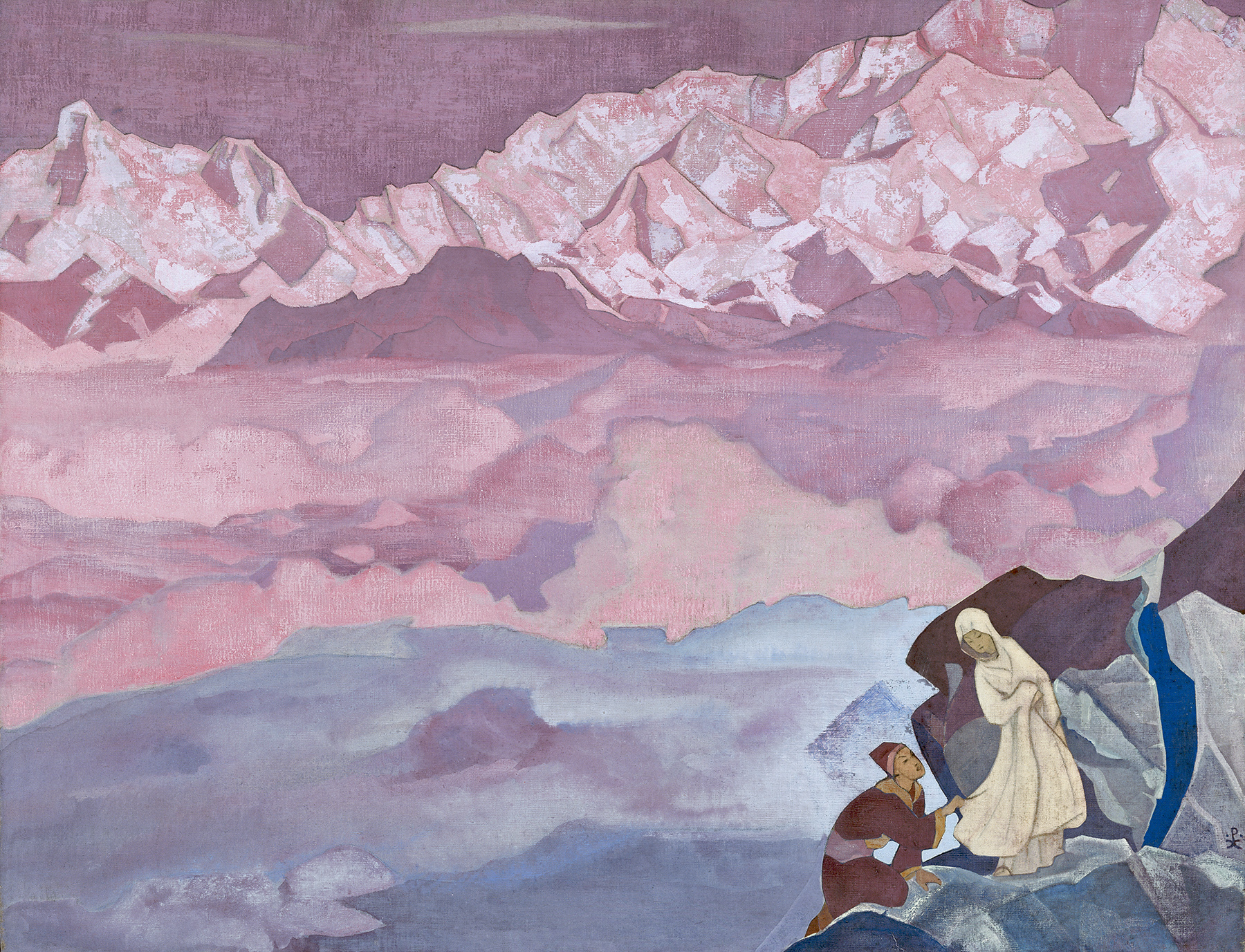
She Who Leads by Nicholas Roerich
“Even as the Lord of Hosts separated the light from the darkness, and the dry land from the waters, so does woman possess the divine gift of calling forth out of man's evil nature all the good that is in him. Therefore I say unto you, after God, to woman must belong your best thoughts, for she is the divine temple where you will most easily obtain perfect happiness. Draw from this temple your moral force. There you will forget your sorrows and your failures, and recover the love necessary to aid your fellow men.
“Suffer her not to be humiliated, for by humiliating her you humiliate yourselves, and lose the sentiment of love, without which nothing can exist here on earth. Protect your wife, that she may protect you—you and all your household. All that you do for your mothers, your wives, for a widow, or for any other woman in distress, you will do for your God.”
Saint Issa taught the people of Israel for three years, in every city and every village, on the highways and in the fields, and all he said came to pass. The manuscript describes how he was arrested and brought before Pilate for inciting the populace and making himself King of Israel, to which Issa replied: “One does not become king by one's own purpose thereto. They have told you an untruth when you were informed that I was inciting the people to revolution. I have only preached of the King of Heaven, and it was Him whom I told the people to worship. For the sons of Israel have lost their original innocence and unless they return to worship the true God they will be sacrificed and their temple will fall in ruins.”
Issa's message speaks of personal, national and planetary karma, and is as relevant now as it was two thousand years ago: “The worldly power upholds order in the land. I told them not to forget this. I said to them, 'Live in conformity with your situation and refrain from disturbing public order;' and, at the same time, I exhorted them to remember that disorder reigned in their own hearts and spirits. Therefore, the King of Heaven has punished them, and has destroyed their nationality and taken from them their national kings. 'But,' I added, 'if you will be resigned to your fate, as a reward the Kingdom of Heaven will be yours. The King of Heaven is greater and more powerful than the laws of man and his kingdom surpasses the kingdoms of this earth.”
Here, the manuscript variagates from the gospel narrative and assigns the responsibility of arresting Jesus to Pilate, Governor of Jerusalem. Issa is condemned and put to death by Pilate, and it is the Jews who wash their hands of his betrayal and death by the Romans. Even though I believe the gospel narrative that the high priests Annas and Caiphas set Pilate up, it made sense to me why Jewish merchants coming from Israel, who loved Jesus and relayed all of the testimonials that became The Life of Saint Issa, would have recorded Jesus' death in this way. According to them, many Jews were not happy about Jesus' torture and execution, and that is most likely true, seeing that he taught, fed and healed the multitudes. They likely did not have the information that the gospel writers had about what really took place from a political standpoint.
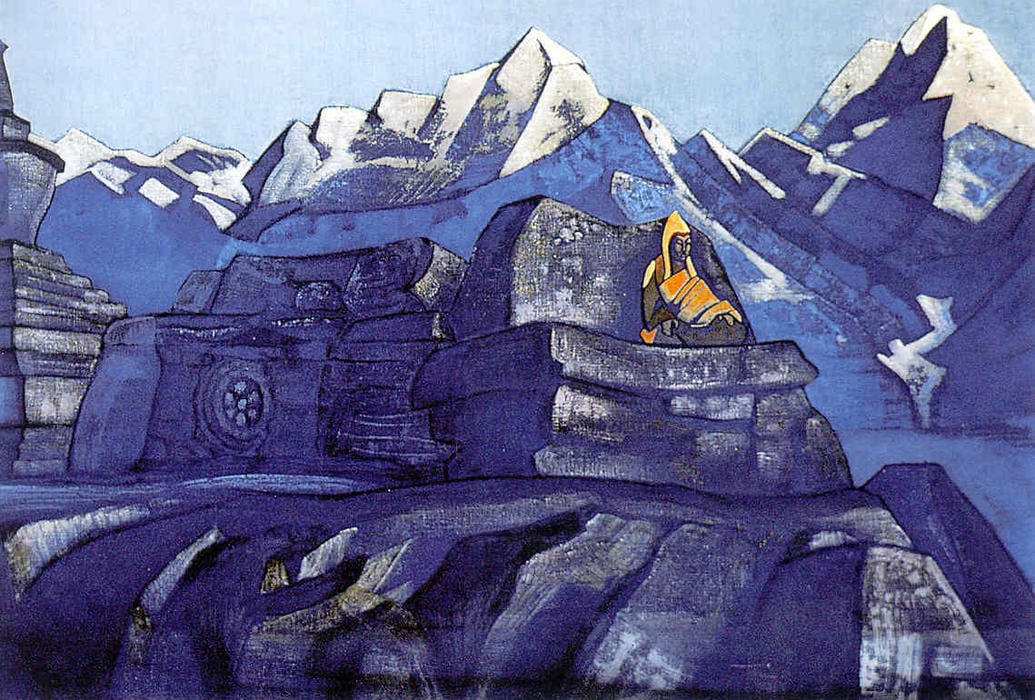
Tsong Kha Pa by Nicholas Roerich
In the end, what is most relevant about The Life of Saint Issa are the veracity of Issa's teachings—completely congruent with Jesus' teachings—and the detailed account of his so-called lost years, travels and training in the East. That, to me, is the gift of this extraordinary manuscript preserved for two thousand years in the Buddhist monasteries and rugged mountains of Tibet.
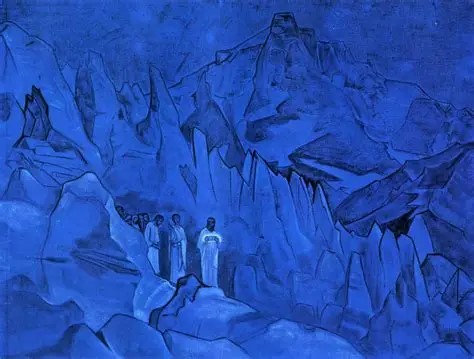
Burning of Darkness by Nicholas Roerich
The Life of Saint Issa concludes with the cross, the resurrection, the empty tomb and the Great Commission: “And the disciples of Saint Issa departed from the land of Israel and went in all directions, to the heathen—preaching that they should abandon their gross errors, think of the salvation of their souls and earn the perfect bliss which awaits human beings in the immaterial world, full of glory, where the great Creator abides in all his immaculate and perfect majesty. The heathen, their kings, and their warriors, listened to the preachers, abandoned their erroneous beliefs and forsook their priests and their idols, to celebrate the praises of the most wise Creator of the Universe, the King of Kings, whose heart is filled with infinite mercy.”
Another element that for me became an obvious confirmation of Jesus' life in the East was when I watched a Mormon Easter pageant that retraced the main elements of Jesus' life. What struck me is when Jesus appeared on the scene at the age of thirty and summoned his disciples. I realized that for the most part, the concept of gathering a band of disciples was not common in the Old Testament. Even though Isaiah mentions disciples, his statement—as far as I can tell—refers more to God's disciples than to his own. And when Elisha was the disciple of Elijah, it was a one-on-one relationship and apprenticeship, just like it was with Moses and Joshua.
What became clear to me was that while Jesus breaks the Judaic Old Testament mold by gathering to himself a band of roving disciples, he completely fulfills the Eastern way that was most commonly found among Indian teachers or “gurus.” We can see that, like Jesus, Buddha and Krishna had disciples—and in more modern times, Padma Sambhava, Ramakrishna and every respected yogi and spiritual sage. It therefore made complete sense to me that coming home from the East, Jesus would have established the same operational structure for his mission, gathering his disciples.
At least two of Jesus' disciples went to India following the resurrection—Bartholomew and Thomas. The story of how Jesus sent Thomas, who was also called Judas Thomas, to India is humorous, and points once again to the fact that Jesus knew the way there. We read at the beginning of the apocryphal Acts of Thomas that following the resurrection, all of the apostles were at Jerusalem and cast lots to see which region of the known world was God's will for each to proselytize. Thomas drew India, but refused to go. “I am a Hebrew man,” he said. “How can I go amongst the Indians and preach the truth?”
As he spoke, Jesus appeared to him and said, “Fear not, Thomas, go thou unto India and preach the word there, for my grace is with thee.” But like the prophet Jonah, Thomas would not obey: “Whither thou wouldst send me, send me,” said Thomas, “but elsewhere—for unto the Indians I will not go!”
It just so happened that at that time, there was a certain merchant from India whose name was Abbanes, sent from the King Gundaphorus to bring home a carpenter from Jerusalem. As the story unfolds, Jesus, seeing him walking in the marketplace at noon, said unto him, “Wouldst thou buy a carpenter?” And he said to him, “Yea.” And the Lord said to him, “I have a slave that is a carpenter and I desire to sell him.” And so saying, the master showed him Thomas afar off, and agreed with him for three litrae of silver unstamped, and wrote a deed of sale, saying:
“I, Jesus, the son of Joseph the carpenter, acknowledge that I have sold my slave, Judas by name, unto thee Abbanes, a merchant of Gundaphorus, king of the Indians.” And when the deed was finished, the Savior took Judas Thomas and led him away to Abbanes the merchant. And when Abbanes saw him, he said unto him, “Is this thy master?” And the apostle said, “Yea, he is my Lord.” And Abbanes said, “I have bought thee of him.” And Thomas held his peace.
On the following day, Thomas arose early, and prayed with a change of heart, beseeching the Lord: “I will go whither thou wilt, Lord Jesus: thy will be done.” And he departed unto Abbanes the merchant, taking with him nothing at all save only his price. For the Lord had given it unto him, saying, “Let thy price also be with thee, together with my grace, wheresoever thou goest.”
Thomas confirmed to Abbanes that he was skilled at carpentry, as they boarded a ship. “They began then to sail homeward; and they had a favorable wind, and sailed prosperously till they reached Andrapolis, a royal city.” Thus began Thomas' many adventures working for the Lord on the Indian subcontinent, midst royalty and midst the poor.
.jpg)
En No Gyoja, Friend of Travelers by Nicholas Roerich
In recent times, a number of Christian scholars and researchers have gathered information about Jesus' sojourn in the East, including the wonderful documentary movie “Jesus in India” produced by Edward T. Martin, who also wrote the book, Jesus: King of Travelers. Some of these scholars pick up on a topic that other scholars have covered—a tomb in Kashmir at Bal Rosaam that is said to be the tomb of Jesus, who went back to the East following the resurrection. Though it may be difficult for traditional Christianity to consider this possibility, we can remember the passages in the New Testament where Jesus literally disappears from the midst of those who wanted to harm him. Jesus had the ability to appear and disappear at will, and to assemble or disassemble the atomic structure of his physical body as needed, not unlike saints who were also known to bilocate, including Padre Pio, Saint Francis Xavier, Saint Anthony of Padua, Saint John Bosco, and Peruvian Saint Martin de Porres.
Padre Pio was seen across the world, including by a woman in the United States while he was in Italy. Porres was able to travel to France, China and Manila through bilocation. Bosco was seen by one of his priests in Spain, even while he was living in Italy. Saint Anthony was able to be in two churches at the same time that were several miles away from each other. And Xavier served as a missionary, preaching the gospel to natives in several places at once.
I bring this up because Jesus said to his disciples, in the largest sense of the word: “Verily, verily, I say unto you, He that believeth on me, the works that I do shall he do also; and greater works than these shall he do; because I go unto my Father.” Why then, would it surprise us if Jesus returned to the East and to his beloved Kashmir after his Palestinian mission was complete?
The tomb at Bal Rosaam, “Roza Bal” is a two thousand year-old tomb in Kashmir that contains an unusual Sword in the Stone, the “Rod of Jesse,”as well as a long staff wrapped in an ancient scroll containing the genealogy from Jesse—father of King David—to Jesus. There are also foot imprints in the tomb carved in stone that correspond to the crucifixion marks and that match the position of the nails on the Shroud of Turin. The tomb is attributed to a mysterious figure named Yuz Asaf, a foreign prophet who healed lepers and was called the “Leader of the Healed.” In this context, “Yuz” means leader, and “Asaf” means healed. Some interpret this figure as Gautama Buddha, while others, like the mystic Mirza Ghulam Ahmad — founder of the Ahmadiyya movement — argued that Yuz Asaf was, in fact, Jesus Christ.
To me, it seems highly unlikely that Jesus would put his body back in a tomb after having resurrected it from a tomb in the Holy Land. What it does point to, however, is the ongoing interest in the East for the person of Jesus, and the relics that connect to him. In a dictation through the Summit Lighthouse, Jesus rebuked scholars who intimated that he did not die on the cross before leaving for India. He said, “I AM that Presence that does reject the lie that Jesus was drugged on the cross, that Jesus never died on the cross but was taken by the disciples and revived. This is the lie that would refute the power of the resurrection flame!”

Mount of Five Treasures (Darjeeling) by Nicholas Roerich
“Why are these the only relics associated with Jesus, found in this tomb in India?” writes Suzanne Olsson in Jesus in Kashmir. “Why would they be here instead of Israel? I followed the Old Silk Road across the Persian Empire to Afghanistan, Pakistan, Kashmir, India, and deep in the Himalaya countries of Nepal, then the lands of the Sikhs, Hindus, Jains, Buddhists and Zoroastrians. More has been written about the life and death of Jesus here than anywhere else in the world.” She also speaks of a family in Kashmir that claims Jesus was their ancestor, and Edward T. Martin also interviewed people who claimed to be descendants of Jesus in his research in Kashmir.
It is interesting to note that according to these scholars, some of the Essenes in the Holy Land had very similar genetic characteristic to the Jews in Kashmir—the fair skin and light eyes that we can still find even in Palestine today. Based on this premise, Mother Mary and Jesus may have been more fair skinned than other middle easterners. Olsson writes in Jesus in Kashmir that the same held true for Gautama Buddha and his wife Yashodara, who also came from Kashmir. She states that the beauty of the women of Kashmir was known in ancient times, from Alexander the Great to Marco Polo.
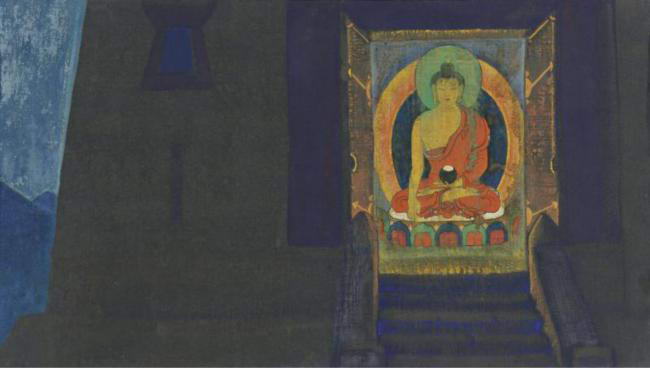
Buddha by Nicholas Roerich
“Buddha is one of the few sages for whom we have physical characteristics in written records,” says Olsson. “His physical characteristics were described by his wife Yasodara to his son Rahula in one central Pali text.” Yasodara and Gautama were cousins, and they were both born on the same day, on the full moon in May. “The Digha Nikaya or Thirty-Two Signs of a Great Man states that he was tall, stunning, well-built in appearance, even as a youth. His hands and fingers were long and graceful. His complexion and hair were light. His bright blue eyes always sparkled.” Perhaps a similar description could be made for Jesus, whose physical image was imprinted on the Shroud of Turin.
The ascended masters in dictations through the Summit Lighthouse—including Jesus himself—have confirmed that Jesus lived in Kashmir until the age of eighty-one and had a family life, before ascending from the etheric retreat of Shamballa, over the Gobi desert, which was once a part of the Gobi Sea. The ascended master El Morya revealed that Jesus made his ascension from Shamballa after his passing in Kashmir at the age of 81 in A.D. 77. Gautama Buddha also spoke of this.
“Therefore,” said Gautama Buddha, “what a joy it is to know that the blessed one, Jesus, did walk the earth in the resurrection flame from the hour when he did quit the area of Palestine, did take his leave for other assignments and ultimately did finish out that beautiful life on earth at the age of eighty-one in the power of the nine and the nine-times-nine and the three-times-three. Such a beautiful fulfillment, beloved! All of these years the earth received the anchoring of his resurrection flame through the mountain chains and the waters, through the vastnesses of the Himalayas.
“Thus, the Lord and the Savior did fulfill all things, even the fullness of the law of the resurrection, that you might follow in his footsteps. Thus did the blessed one abide in Kashmir. Thus did the blessed one ascend from the very heart of Shamballa.”
Jesus confirmed this in another dictation: “But if there be not sufficient individuals who understand the necessity of intensification, of passing through the dark night of the soul and the Dark Night of the Spirit, of passing through those initiations and then walking the earth as I did in my resurrected body until the age of eighty-one as I did move on to the East and remain in Kashmir–-if you, then, beloved, are not willing to walk the earth in your resurrected body, as has been done before and may be done in this age, then how will we have a resurrection of the earth body itself?
“Yes, beloved ones, I desire to see you walk with the mantle of the apostle Paul or of the apostle John or of the others, each of you in your own turn becoming more and more of myself until you are fully prepared for the ascension as I was by the time I did reach the age of eighty-one. Having fulfilled my worldwide mission from my base in Kashmir, I took my ascension from Shamballa, the retreat of the Lord of the World, Sanat Kumara.”
The ascended master Justinius, Captain of Seraphic Bands dictated: “Your Lord did walk the earth in the spiral of resurrection’s flame to the age of eighty-one. He did not pass from the screen of life at thirty-three but took up his abode in Kashmir and there had a great following of disciples. And the Light and the presence of the Lord Christ filled the temples, the hearts and the chakras of a people who were ready for his message.
“Know, then, that when the crucifixion comes to you early in life and you pass all the tests involved in that initiation, you may have a full life ahead of you of walking in the garments of the resurrected Christ, this while you are yet in physical embodiment in preparation for your ascension. This truly is the Way, the Truth and the Life, following in the footsteps of your Lord!
“Fear not, then. Death is the last enemy. Defeat it now! Get it out of the way! And accept the glory of your eternal Life. This is my message to you. Defeat Death and Hell today and get on with living the Life everlasting here on earth while you yet enjoy being in full health in physical embodiment yet caught up in resurrection’s flame.”
The Elohim Cyclopea said, “Blessed hearts, you know the history of the final incarnation of your Lord. You know that he went on and did deliver his message in many octaves and levels of being and did settle in the East and there did live many years beyond the hour of the crucifixion. Yet from that hour on, his Ascended Master Light Body superimposed upon his flesh body was the open door of the Light flowing from God that held the balance for the karma of the world. And that Light has been sustained for two thousand years. In his footprints, walk ye. In his footprints, walk ye!”
And the unascended Himalayan master Babaji also spoke about Jesus' return to the East: “Remember that it is recorded that the tribes of Israel and Judah once lived on that subcontinent. It is also recorded that Jesus retired there after his thirty-three-year mission in Palestine. Thus, he spent the rest of his life there to the age of eighty-one, was married, had children and now has descendants who will claim that they are the descendants—and they truly are—of Jesus. Thus, you have a profile of a Guru and you understand that marriage and child-bearing are part of that path. So you may understand this and see how valuable it is, even to the Lord Jesus Christ and to many other masters that have come out of the East, to have the East restored to its reason for being.
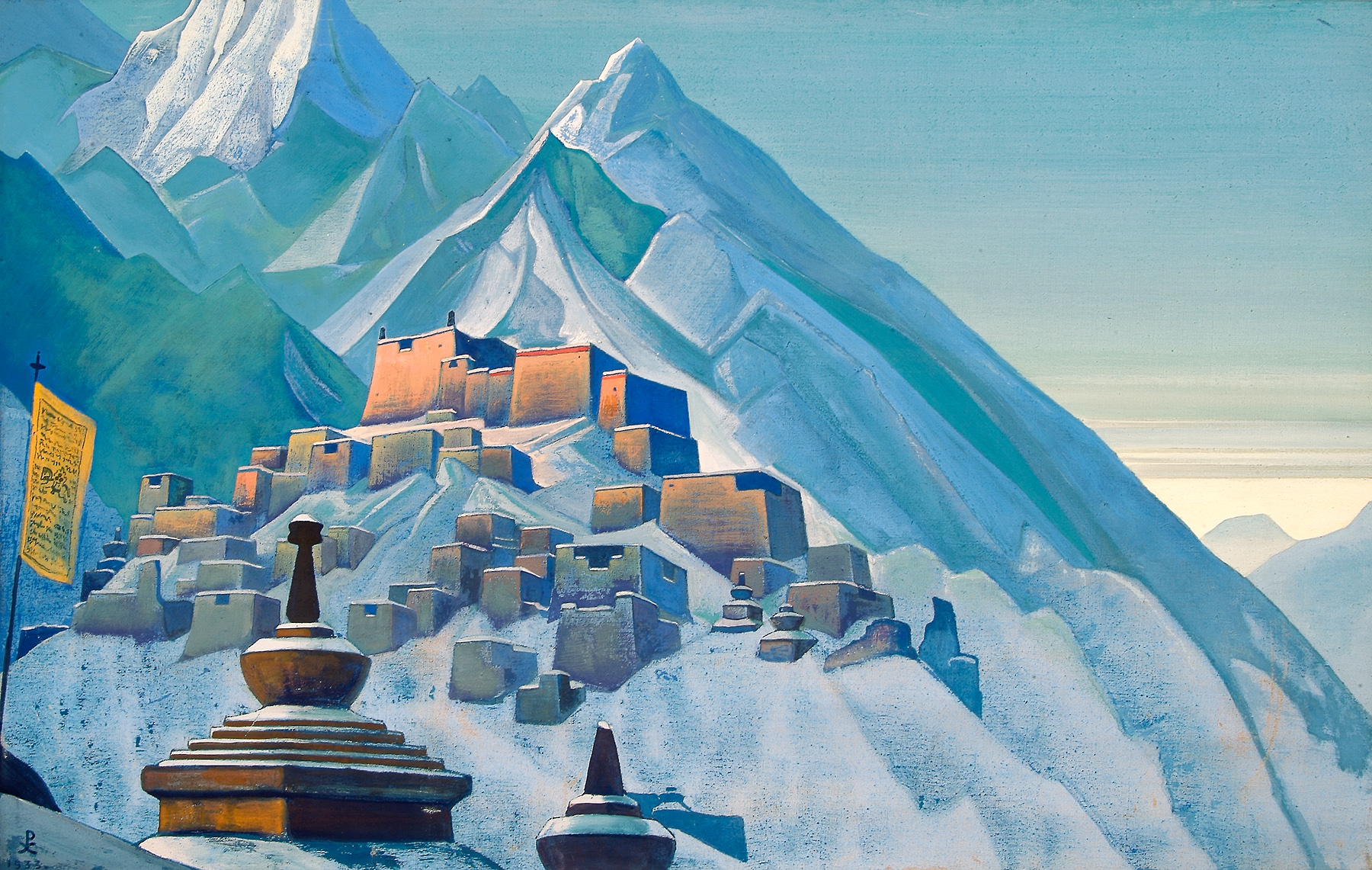
Tibet Himalaya by Nicholas Roerich
“You have read over and over and over the Gospel accounts of this period of Jesus’ life, and yet there is a record that will one day be unfolded that will reveal how in some points, some points, circumstances were not as they have been portrayed. Indeed, the fullness of the picture will then become clear.”
What is also clear to me is that to understand the years and the mission of Jesus in the East, means to appreciate that Jesus taught about reincarnation, and that reincarnation was, through and through, an accepted premise shared by Jesus and his disciples. Perhaps this is the greatest roadblock for modern-day Christians who assert that believing in Jesus precludes them from the necessity of balancing karma, or having to reincarnate again.
Jesus himself told his followers that he did not come to destroy the law but to fulfill it, and that every jot and tittle of the law would have to be fulfilled. He also told his disciples that the man born blind was not the fault of the parents or of the child—which would have implied past life karma—but for the glory of God. Some Christians will point to the statement in Hebrews, “And as it is appointed unto men once to die, but after this the judgment,” to deny reincarnation.
This makes sense, but is speaking of the human person, the personality together with the body, which dies at the end of each lifetime. The soul, however, is what which reincarnates and has lived many lives, accruing experience in time and space through a number of past-life personalities. The ascended masters teach that at the end of each life, the mental, emotional and physical bodies disintegrate. The etheric memory body is preserved and will carry the soul forward with a succeeding blueprint from the higher self, as well as with a lower karmic blueprint that determines the environmental and physical conditions for each subsequent life.
Like his spiritual predecessor Gautama Buddha, Jesus also taught freedom from rebirth by balancing karma, loving God and practicing the Golden Rule. Jesus, however, took it one step further than Gautama and demonstrated for all time the victory over death for those who would pick up their cross and follow him. He never promised an easy way out, even though he died for our sins. Saint Paul reminds the Galatians: “Do not be deceived: God cannot be mocked. A man reaps what he sows. Whoever sows to please their flesh, from the flesh will reap destruction; whoever sows to please the Spirit, from the Spirit will reap eternal life...Because you are his sons, God sent the Spirit of his Son into our hearts, the Spirit who calls out, Abba, Father.”
The ascended masters explain that what “died for our sins” means is that Jesus balanced world karma by going through the crucifixion. Mother Mary explained in a dictation that Jesus was born almost karma-free. She said, “Understand that if the son born almost karma-free to me took thirty years of preparation, you can take a few months or even a few years to pause now for that spiritual preparation. The better the preparation, the mightier the mission; the better the balance of the threefold flame, the more lifestreams you can touch and heal. Thus it is written, beloved, in your very heart.”

Song of the Waterfall by Nicholas Roerich
Jesus took on of the karma of the world, and opened the door for new opportunity in the dawning Piscean Age. This opportunity was to manifest as the gospel of love that he demonstrated, but was thwarted again and gain by the reincarnated foes of his mission. These foes are the Antichrist—worldly and ecclesiastical powers represented by both the Brahmin priests and the Pharisees and Sadducees, that he encountered East and West. For two thousand years, these ones have controlled and warped the message Jesus brought to the world, of our joint-heirship with Christ, that Saint Paul proclaimed to the Romans: “And if children, then heirs; heirs of God, and joint-heirs with Christ; if so be that we suffer with him, that we may be also glorified together.”
The life of Jesus was a demonstration of personal Christhood for all who would open their heart, take his hand and follow in his footsteps. Instead, throughout the Piscean Age, most rulers in church and state made him into the only son of God—an exception to the rule that no one could completely follow—and sequestered most of the literature that would prove otherwise.
Traveling through the East, Nicholas Roerich discovered an ancient manuscript that speaks of Jesus teaching reincarnation. Roerich published a segment of this manuscript in his book Himalaya. “Said Jesus of skilled singers: Whence is their talent and their power? For in one short life, they could not possibly accumulate a quality of voice and the knowledge of harmony and of tone. Are these miracles? No, because all things take place as a result of natural laws. Many thousands of years ago, these people already molded their harmonies and their qualities. And they come again to learn still more from varied manifestations.”
In the landmark book Reincarnation:The Missing Link in Christianity, Elizabeth Clare Prophet writes about the Greek and Jewish influencers around the time of Jesus who professed reincarnation, like Jewish mystic Philo of Alexandria. Philo wrote: “Those which are influenced by a desire for a mortal life again return to it.” Belief in reincarnation also held sway in the Greco-Roman world, that merged with Jewish and Egyptian traditions in the ideological melting pot of the Alexandrian world, and also spilled into Jerusalem, of which child Jesus was a part.
The Roman philosopher and mystic Cicero was a mystery school initiate who lived a half century before Christ. He observed that the ease with which children absorbed difficult subjects was an indicator and “strong argument that men's knowledge of numerous things antedates their birth.” He wrote On Old Age that children learn innumerable things so quickly that “they seem to not be then learning them for the first time, but recalling and remembering them.” And Roman poet Virgil, a contemporary of Cicero, wrote in Aeneid that after death, souls are purified of their sins, sent to the Elysian Fields and then called to the river Lethe “where memory is annulled and souls are willing once more to enter into mortal bodies.”
Three hundred years earlier, Plato described reincarnation in recounting a soldier's near-death experience. He writes of a man Er, killed in battle, who twelve days later, revived on the funeral pyre. Er told the story of what happened to him during those twelve days and how he was brought before a group of judges, who told him he would return to earth to tell people what he had seen. He said there were souls going upward into heaven and others descending beneath the earth for punishment. He further explained that after their period or reward or punishment had been completed, they were sent back to earth into new bodies “like stars shooting.”
Plato was heavily influenced by Orphism, a mystery school of poetry and songs. Orpheus, like the Hindus, taught that within each of us resides a divine particle, that the ascended masters tell us is the threefold flame that beats our heart. Orpheus, like Buddha, taught his students that through mystic initiations and righteous living, one could be freed of the “sorrowful weary wheel;” the wheel of Samsara and rebirth that Gautama Buddha described and taught his students to transcend by following the eightfold path. Interestingly, Elizabeth Clare Prophet told students in one of her lectures that Orpheus was a previous life of Gautama Buddha.

Star of the Hero by Nicholas Roerich
In Reincarnation:The Missing Link in Christianity, she also writes about the two main Jewish sects at the time of Jesus—the Essenes and the Pharisees—and how they both believed in reincarnation. Jesus came from an Essene family and conversed with Pharisees throughout his mission. In other words, reincarnation was a given in the understanding that Jesus shared with his disciples, even when speaking to Nicodemus who was a Pharisee. Here, Jesus contrasted the principle of reincarnation and being born again in a mother's womb, to being born again in Spirit.
Jesus tells Nicodemus, “Truly, truly, I say to you, unless one is born of water and the Spirit, he cannot enter the kingdom of God.” Understanding the initiation of baptism revealed to us by Sanat Kumara truly sheds light on this statement. I believe that Jesus is explaining that one must be baptized by water and fire—which is the initiation under Lord Maitreya and the Office of the Lion on the North Gate—to enter the kingdom of heaven. This fiery baptism then ushers the soul into the initiation of the Calf on the West Gate, which is the initiation of the Holy Spirit given to us by Lord Gautama Buddha.
Thus Jesus explains: “Do not marvel that I said to you, ‘You must be born again.’ The wind blows where it wishes, and you hear its sound, but you do not know where it comes from or where it goes. So it is with everyone who is born of the Spirit.” The initiation under the Office of the Calf is followed by the initiation under the Office of the Man occupied by Jesus on the East Gate, and finally the initiation of the Flying Eagle on the South Gate under the Lord Sanat Kumara. This advanced mystery school teaching involving the elements of fire, earth, air and water is published in the book Sanat Kumara on the Path of the Ruby Ray, and is summarized and clarified in the book I wrote Sanat Kumara and the Initiations of the Ruby Ray.
Now back to Reincarnation:The Missing Link in Christianity. First-century Jewish historian Josephus tells us that the Essenes lived the “same kind of life” as the followers of Pythagoras, who believed in reincarnation. Josephus also writes that the Pharisees believed the souls of bad men were punished after death, but the souls of good men were “removed into other bodies and would have the “power to revive and relive again.” The book also presents other Jewish texts that allude to reincarnation like the Testament of Naphtali and the Wisdom of Solomon, whose author writes: “I was, indeed a child well-endowed, having had a noble soul fall to my lot, or rather being noble I entered an undefiled body.”
This is also why when Jesus healed the man who was born blind, the disciples asked him if the blindness was his fault of the fault of his parents. Jesus replied that his soul had volunteered to take on this conditions to be healed for the glory of God, and that it was neither his karma, nor the karma of his parents. From the Gospel of John: As he went along, he saw a man blind from birth. His disciples asked him, “Rabbi, who sinned, this man or his parents, that he was born blind?”
“Neither this man nor his parents sinned,”said Jesus, “but this happened so that the works of God might be displayed in him.” After saying this, he spit on the ground, made some mud with the saliva, and put it on the man’s eyes. “Go,”he told him,“wash in the Pool of Siloam.” So the man went and washed, and came home seeing.
Reincarnation is also mentioned in the Gnostic text Pistis Sophia, when Jesus says, “Many souls will undergo the cycle of reincarnation in order to return to the world.” We find numerous references to reincarnation from Jesus in this Gnostic text.
In Pistis Sophia, Jesus teaches many souls will undergo the cycle of reincarnation in order to return to the world, and describes the process of reincarnation for virtuous souls and sinning souls. He also speaks of old souls and newer souls, something the teachings of the ascended masters, starting with Theosophy, also teach. Specific soul group mandalas were created on specific rays—or emanations of God—and incarnate together in distinct cycles under the tutelage of a Manu. These souls mandalas are known as “root races.”
Ascended master teachings describe that the first three root races completed their cycles of evolution in earth's schoolroom and ascended home to God. The fall of the angels occurred during the fourth root race. The souls of the fourth root race experienced earth's history as far back as Lemuria. Those who did not ascend were joined by souls of the fifth root race during the time of Atlantis. Both of these groups were then joined by souls of the sixth root race, who began incarnating during the time of Jesus. These are the many Christians that Mark Prophet described as “babes asleep in the arms of Christ,” who are extremely loyal to Jesus, and have no direct experience or remembrance of ancient civilizations. They tend to reject anything outside of a traditionally Christian world view.
The ascended masters have also announced that souls of the seventh root race are beginning to incarnate in South America. These new souls have great purity, spiritual ability and are unmarred by negative karma. They will intrinsically be drawn to New Age concepts like the teachings of Saint Germain on the violet flame.
In the world today, we find old souls of the fourth and fifth root races co-existing with young souls of the sixth and seventh root races. This means that at the soul level, we are evolving side by side to either precipitate God's final judgment, or bring in a golden age of peace, prosperity and enlightenment for all. Souls who will remain beyond the tribulation of our time will be granted further opportunities to reincarnate—in order to balance karma and gain mastery—on their path to the ascension, which is the soul's graduation from earth's schoolroom that Jesus and Elijah demonstrated.
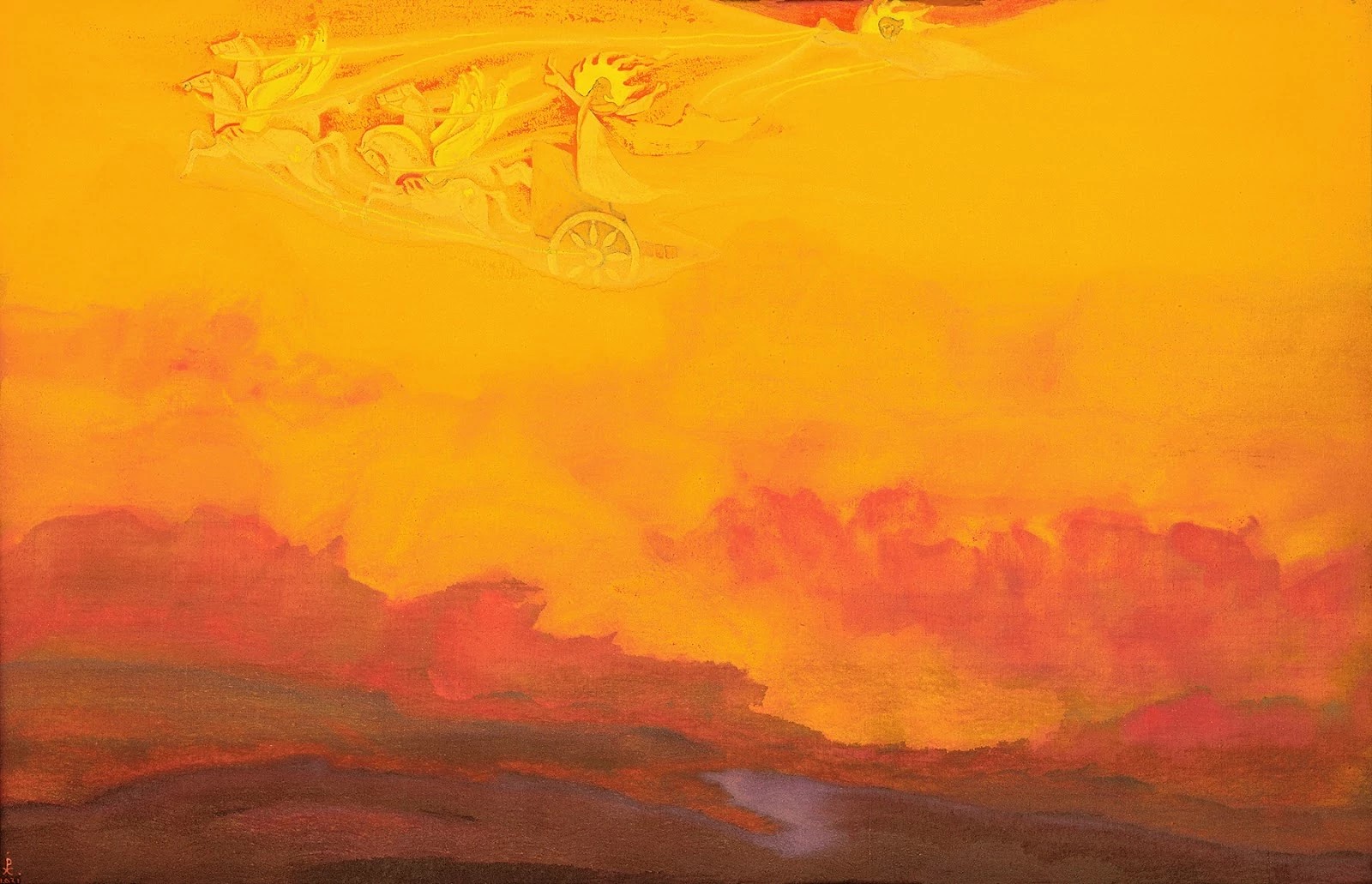
Elijah the Prophet by Nicholas Roerich
Pistis Sophia records Jesus speaking about incoming souls drinking the drink of forgetfulness, thereby forgetting all past-life experiences. “Upon drinking from this cup,” he says,
“the soul forgets past experiences and chastisements.” Echoing the words of Gautama Buddha, Jesus explains to his disciples, “You transmigrate from one body to another, experiencing diverse forms of suffering.” The process of embracing virtue and overcoming sin ultimately frees the soul from having to reincarnate. In the Apocryphon of John, another Gnostic text, Jesus speaks of the soul guided by another in whom the spirit of life resides. “Through this,” he says, “it will be spared from reentering a body.”
We have discussed many proofs for the widespread belief in reincarnation, that support and reinforce the eastern influences in Jesus life. Perhaps the most compelling evidence of all will now be found in the relationship between Jesus and John the Baptist, that we will discuss in the next chapter.
Regarding Jesus' sojourn in India, I would like to share a beautiful meditation that was brought forth in a dictation by the ascended master John the Beloved through the Messenger Mark Prophet on December 13, 1968 at the Retreat of the Resurrection Spiral in Colorado Springs,. The ascended master John the Beloved said: “And as I speak to you now, I would like to give you a little exercise that we learned from Jesus concerning his trip to India when he himself explored in the temples there the mystic teachings of that land.
“This is the exercise he gave to us. He said to us: “In India the lotus is revered; but as you know, all flowers are manifestations of genuine purity. And born out of their purity, descending from the Mind of God in that transient form is the fire of God’s ideal. Therefore, the true lotus is a white flame; and if you would understand that, you would also understand that there is a lotus of the heart, a lotus of the mind, and a lotus of the hand.”
“And when he spake to us thusly, he said: “Visualize the white-flame lotus around your heart; and as its glow begins to illumine your form and being, visualize the white-flame lotus rising from the heart to enfold the mind. Then as you reach out your hand in service, see resting upon it–-upon the hand of God’s servant–-the pulsations of the white-flame lotus.” And he said to us, “As you understand this, it shall become tangible unto you all; and when you envision the white-flame lotus around your heart, it will consume the dross that exists in consciousness and you shall understand what it means to be the pure in heart.”

“His words “Blessed are the pure in heart, for they shall see God”came to our minds. And then he spoke to us and said: “When the flaming lotus blazes around the mind, it will burn up the negative thoughts–the thoughts of darkness–and your hearts will rejoice as you behold the purification of the mind. And so there will arise from the heart a flaming thread connecting the heart to the mind and head, and there will arise from the mind an extension of the flame of the mind upon the hand in action. Thus the leap of the flame of purity will begiven to other parts of Life–an endowment through yourselves and a power to heal, a power to resurrect, and a power to perfect by the laying on of hands.”
“And as he went on speaking to us our hearts glowed as with a cosmic fire....“Lo,” he said, I AM with you alway even unto the end.” This is Christ's promise for all time, also recorded in the Gospel of Matthew.
Before we move forward with our study of the Old Testament to the story of Elijah and Elisha, I would like to say a few words about idols. We see the word “idol” and the divine rebuke of idols by God and by Jesus, in both the Old and New Testament, as well as in the apocryphal gospels and in the Eastern manuscripts about Jesus. We can deduce from all of these accounts, that Jesus lived in a very cosmopolitan time. Jesus was a polyglot—speaking, reading and writing many languages—including Hebrew, Aramaic, Egyptian hieroglyphs, Persian, Greek, Latin, Pali, Sanskrit and Kharosthi. Scholars also agree that, based on the wedding in Cana to his relationship with Joseph of Arimathea, he was as comfortable in well-to-do circles as he was walking among the poor.
Jesus understood the world cultures of his time. In some of the Gnostic gospels, he mentions the spirituality of the Zoroastrians and the Greeks and does not disparage them. What this leads me to believe is that like Jesus, we must differentiate between idols and spiritual focuses. Islam, for instance, has often rejected the representation of religious figures, a practice known as aniconism, which prohibits the spiritual reproductions of God in human form. In Christianity today, we find focuses of Jesus and other Biblical figures. In Catholicism, we also find focuses of Mary and the archangels. In Buddhism, we find focuses of Buddha and in Hinduism, we find focuses of Krishna and other divine ones.
The same was true in Egypt, but the Egyptian ritual, which originally came from Atlantis, devolved into dark rituals, fueled by dark priests. That was the battle Akhenaten faced when he challenged the priests and led Egypt back to the worship of the one true God—Aten, the Sun/Son of God.
We see this battle of light and darkness also taking place in the Druidic religion and priests that Saint Patrick challenged, when he cast the “snakes” out of Ireland. By the time of Saint Patrick, Druidism was no longer championing the pursuit of divine Light, as it had in the time of Pythagoras. Its rituals had devolved into satanism. We recognize the same battle that Jesus also took on, in the lives of Moses, Daniel, Jeremiah, Ezekiel, Elijah, and all of the prophets of the Old Testament-- who challenged the worship of dark idols and foreign gods antithetical to the nation of Israel and her worship of Yahweh, Yod He Vav He.
Since the fall of the angels on the ancient continent of Lemuria, subsequently influencing Atlantis and Egypt, then Old and New Testament times, and leading to present day, the most offensive rituals to God have always been the perversions and taking of the life force. This includes rituals of human sacrifice, child abuse, and unholy and perverted sexuality, denounced as fornication in the Bible and other religions. All of these practices attack and destroy the divinity latent in man, woman and child. Jesus said, “Woe to the world because of the things that cause people to stumble! Such things must come, but woe to the person through whom they come! ”
The idols that are denounced by the Father and the Son are the Nephilim gods that go hand-in-hand with excessive materialism and its communist counterpart, as well as all satanic practices that we find in church, state, banking, music and entertainment. This includes child sacrifice, ritualistic murder, temple prostitution and normalized degeneration. These abominations can be found around the world. They were, and are still a part, of the fallen religions and cultures of Egypt and the Middle East, Central and South America, Africa, the Pacific islands and the Caribbean, the European monarchies, the Chinese communist machine, and even the corruption found in India, South East Asia, the United States and the Western world. This includes the worship of Baal, modern-day satanism, perverted Hinduism—even the historical abuse of children in the Catholic and Anglican church. It also includes human sacrifices in the MesoAmerican native religions, and in the African and Oceanic tribal cultures. It even includes the government-sanctioned slaughter of children—from modern-day Gaza, to the war in Ukraine, to the organ harvesting of Falun Gong practitioners in China, and to legalized abortion.
From ancient biblical times to modern-day fashion, people turn all things of this world into idols—music, sports, Hollywood actors, entertainers, and the ultra-rich. There was even a dark musician called “Billy Idol.” This is the worship of idols that must be stopped. When Satan offered Jesus the kingdoms of this world if he would fall down and worship him, Jesus refused: “Get thee behind me, Satan: for it is written, Thou shalt worship the Lord thy God, and him only shalt thou serve.”
What we must understand here, is that God has revealed himself in many different times and through many different prophets and avatar, to remind his children of the basic laws of eternal life. When the Bible asks us to cast down our idols, it is not speaking of Buddha, or encouraging the divide-and-conquer of God's children East and West. I bring this up because unfortunately, many Christians still believe that buddhas are idols. The historical Buddha Gautama did not want to be worshiped as a deity. He never suggested that he was above other men. Early Buddhist art only depicted him by his footprints, or a wheel to represent his teaching. It was several hundred years after his death that statues and thangkas of him began to appear. These were created out of love and respect and devotion for Buddha, just like Christians make pictures of Jesus.
Just like Buddha, Jesus did want to be idolized. When a man came to him and called him “good master,” he replied, “Why callest thou me good? there is none good but one, that is, God.” Neither did he want to be above other men. This is why he said, “These things I do shall ye do, and greater, because I go unto my Father.” Your Father. Our Father, who art in heaven.
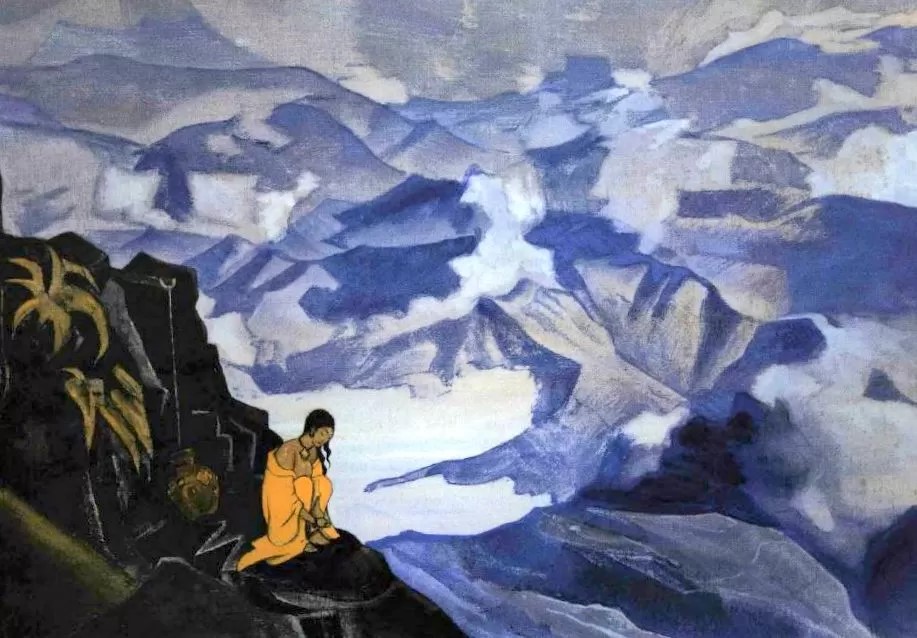
Drops of Life by Nicholas Roerich
The ascended master Saint Germain gave a beautiful decree about removing idolatry from ourselves. He encourages us to declare: “I will forsake all idols, and I will forsake the idol of my outer self.” Ultimately, the removal of the inflated ego and its accompanying pride is the idol we must do way with. It is the last battle. Like C.S. Lewis said, “Don't shine so that others can see you. Shine so that through you, others can see HIM.”
Once we understand the international visage of Jesus—who was also good at carpentry, agriculture, fishing and mending his clothes—we can even better appreciate his universal mission. We see him following the footsteps of the saints, avatars and holy ones who went before him in the service of the one true God—East and West, North and South, and in every age. We see him adding his unique flame and mastery to enhance all holiness that preceded him. We begin to perceive that the Christ manifest in Jesus is also the latent Christ in each of us, now intended to manifest, and that we are truly one body of God's children.
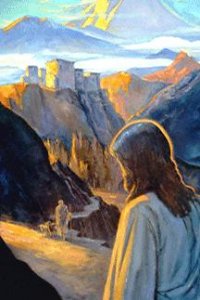
Jesus approaching Ladakh
This is Balm of Gilead, the universal salvation and solution to the problems of the world announced by Saint Paul: “Christ in you the hope of Glory.” This is the one Body of Christ, broken for the many, described in the words of Saint Teresa of Avila, “Christ has no body now on earth but yours. No hands, no feet on earth but yours. Yours are the eyes through which he looks compassion on this world. Yours are the feet with which he walks to do good. Yours are the hands with which he blesses all the world.”
In a dictation through Elizabeth Clare Prophet, the ascended master Padma Sambhava, who is known to the Tibetans as Guru Rinpoche, said: “In the light of the Buddha, I salute the eternal Issa—Sun-emanation of Ishwara, Light of Krishna, Beautiful One of the Buddha. Thy light and thy path is a herald unto the East and the West. By thy light, O Saint Issa! Thy light has truly illumined a path of compassion with Maitreya, a compassion that does stand for the judgment of those who oppress the people of God.
“By thy light, Jesus, there is, therefore, in the earth in this hour and in the sign of the spring again and again, the encounter of the Buddha with Mara, with the seed of the wicked. As thou hast placed thyself between the innocent and the enemy, so all bodhisattvas call to thee in this hour for the defense of the Light against world atheism and the fallen angels yet with us for a little while.
“The cries for mercy and for intercession are heard from the very hearts of the devotees of Tibet and of the Christians in the Middle East and the lovers of Mary in Central America. Everywhere where Light is oppressed, O come, Saint Issa, thou the Buddha unto the East, the Saviour of all nations, thou the One and the present, the emanation, the brother of Gautama.”
In another dictation, Padma Sambhava exhorts us to truly become the Christ, in the footsteps of Issa, our Lord Jesus. He said, “Jesus said to his disciples, “Why call ye me, Lord, Lord, and do not the things which I say?”Let his disciples of today know that many continue to cry, “Lord, Lord,” professing to love him, to know him and to be a Christian, but their actions belie their words.
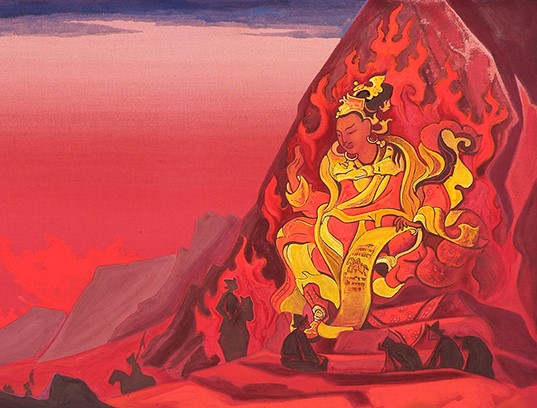
Shambhalla by Nicholas Roerich
“Beloved, there is more to the discipline of being a Christian than crying, “Lord, Lord.” You must be able to continually keep the flame of your emergent Christhood and to live according to God’s will. As Jesus said: Not every one that saith unto me, “Lord, Lord,” shall enter into the kingdom of heaven, but he that doeth the will of my Father which is in heaven.
“Now, I ask you to call to me that you might be made whole at all levels of your being so that in that wholeness you might sit at your Lord’s feet and neither offend him nor be offended in him. And I remind you of your vow to the Lord Jesus Christ and to your Holy Christ Self to tend and balance the threefold flame of Life that pulsates as the unfed flame on the altar of your heart.
“Have you often thought that you would see the wonders of the Holy Christ Self imposed upon you right now, this moment, perhaps in past lives and years to come? Think of yourself walking the earth as many did when Jesus was on Atlantis. They had balanced 51 percent of their karma; they walked as Christs in the earth. And there were thousands of Christs in the earth in that golden age of Jesus.”
Padma Sambhava is part of a lineage of ascended masters who serve God's Ruby Ray, which is the most intense divine love and judgment. Padma Sambhava describes how in that life, the soul of Elizabeth Clare Prophet served him as his female disciple Yeshe Tsogyal in the establishment of Tibetan Buddhism. He gave Elizabeth Clare Prophet the title and spiritual mantle of “Guru Ma,” which was also earned at the soul level from their previous life serving the principles of God in the East together. He explained that the teachings and blessings of the Ruby Ray lineage can be accessed through the service and mantle of “Guru Ma.” The Ruby Ray lineage begins with Sanat Kumara. The light is then transferred in hierarchical order through Gautama Buddha, Lord Maitreya, Jesus Christ, Padma Sambhava and finally Guru Ma. Padma Sambhava's prophecy came to pass through the thousands of teachings and dictations that Elizabeth Clare Prophet delivered over several decades, to help better connect us to the heaven-world, and to the Sacred Heart and mission of Jesus Christ in the Aquarian Age. Now, let us explore the very special guru-chela relationship between Elijah and Elisha.