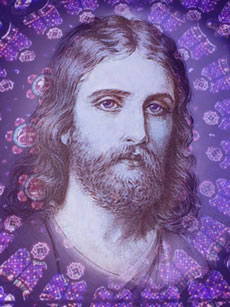
The Guru and the Chela
Guru is a word of Sanskrit origin that means spiritual teacher, especially one who imparts initiation. Chela is the Sanskrit word for the disciple, student or devotee of a guru.
The two most beautiful stories in the Bible of guru and chela are the relationship between Elijah and Elisha in the Old Testament, and the relationship between Jesus and John the Baptist in the New Testament. The teachings of the ascended masters reveal that Jesus and John the Baptist were actually the reincarnation of the souls of Elisha and Elijah, respectively. Thus we can observe how the relationship unfolds from one life to the next in a most divine way.
We begin in the Old Testament in the Northern Kingdom of Israel, as reported in the two books of Kings. The kingdom of Israel was infested with the worship of idols when Ahab became king. Ahab reigned in Samaria over Israel twenty-two years, and did more evil in the eyes of the Lord than any of the kings who had preceded him. He married Jezebel, daughter of Ethbaal, king of the Sidonians, and began the satanic worship of Baal, building a temple of Baal. His rebellion against the laws of God brought forth the karma of drought for his people. This karmic recompense was announced to Ahab by the Prophet Elijah: “As the Lord, the God of Israel, lives, whom I serve, there will be neither dew nor rain in the next few years except at my word.”
The Lord, our beloved Sanat Kumara, the Ancient of Days, told Elijah to go hide in the wilderness east of Jordan, to escape retribution: “You will drink from the brook, and I have directed the ravens to supply you with food there.” Ravens brought Elijah bread and meat in the morning, and bread and meat in the evening, and he drank from the brook.
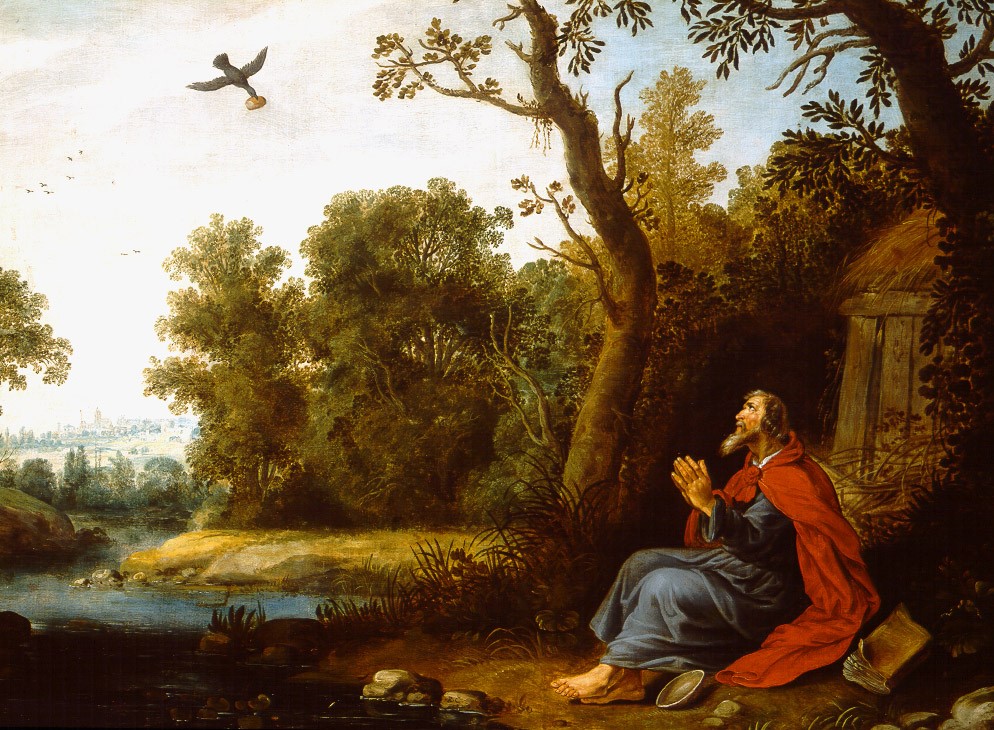
Elijah Fed by Ravens
Eventually, the brook dried up because there had been no rain, and the Lord said to Elijah, “Go at once to Zarephath in the region of Sidon and stay there. I have directed a widow there to supply you with food.” So he went to Zarephath, and found a widow gathering sticks at the town gate. “Would you bring me a little water in a jar so I may have a drink?” he asked. “And bring me, please, a piece of bread.”
The widow replied, “I don’t have any bread—only a handful of flour in a jar and a little olive oil in a jug. I am gathering a few sticks to take home and make a meal for myself and my son, that we may eat it—and die.”
Elijah said to her, “Don’t be afraid. Go home and do as you have said. But first make a small loaf of bread for me from what you have, and bring it to me, and then make something for yourself and your son. For this is what the Lord, the God of Israel, says: ‘The jar of flour will not be used up and the jug of oil will not run dry until the day the Lord sends rain on the land.’”
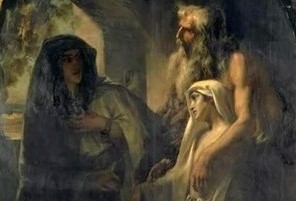
The widow went away and did as Elijah had told her, and there was food every day for Elijah, and for her and for her family. Some time later, the son of the woman became ill. He grew worse and worse, and finally stopped breathing. The widow was upset with Elijah, and asked if his divine connection had accelerated her return of karma: “What do you have against me, man of God? Did you come to remind me of my sin and kill my son?”
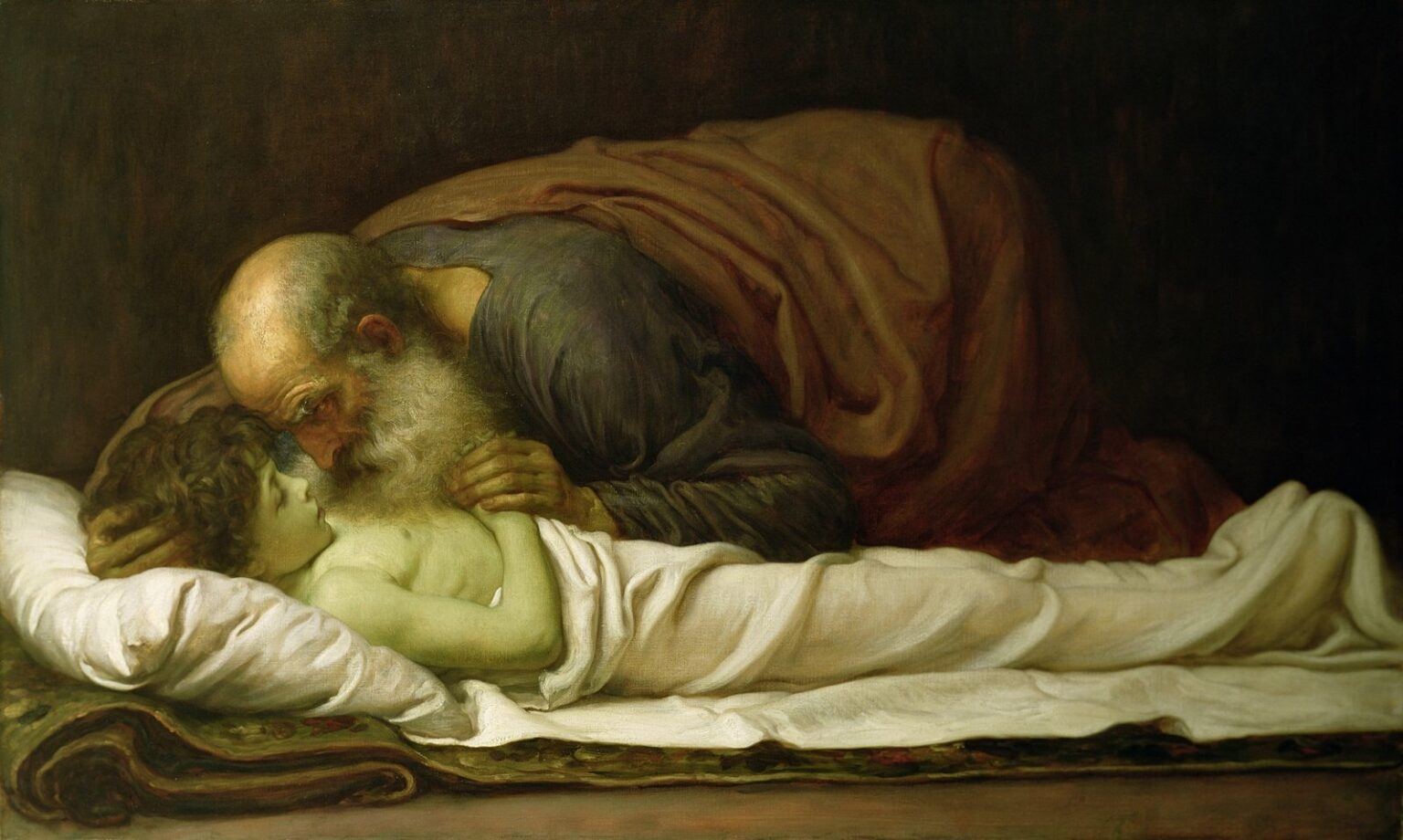
“Give me your son,” Elijah replied. He took him from her arms, carried him to the upper room where he was staying, and laid him on his bed. He cried out, “Lord my God, have you brought tragedy even on this widow I am staying with, by causing her son to die?” Then he stretched himself out on the boy three times and cried out, “Lord my God, let this boy’s life return to him!” Elijah was using the power of the three—of Father, Son and Holy Spirit anchored in Matter. .
The Lord heard Elijah’s cry, and the boy’s life returned to him, and he lived. Elijah picked up the child and carried him down from the room into the house. He gave him to his mother and said, “Look, your son is alive!” Then the woman said to Elijah, “Now I know that you are a man of God and that the word of the Lord from your mouth is the truth.”
Three years went by and the Lord came to Elijah: “Go and present yourself to Ahab, and I will send rain on the land.” So Elijah went. The famine was severe in Samaria, and Ahab had summoned Obadiah, his just palace administrator, to go through the land to all the springs and valleys to find grass to keep the horses and mules alive. As Obadiah was walking along, Elijah met him.
Obadiah was a devout believer in the Lord. While Jezebel was killing off the Lord’s prophets, Obadiah had taken a hundred prophets and hidden them in two caves, and had supplied them with food and water. Obadiah recognized Elijah and bowed down to the ground: “Is it really you, my lord Elijah?” “Yes,” replied Elijah. “Go tell your master, ‘Elijah is here.’”
“What have I done wrong,” asked Obadiah, “that you are handing your servant over to Ahab to be put to death? As surely as the Lord your God lives, there is not a nation or kingdom where my master has not sent someone to look for you. And whenever a nation or kingdom claimed you were not there, he made them swear they could not find you. But now you tell me to go to my master and say, 'Elijah is here.' I don’t know where the Spirit of the Lord may carry you when I leave you. If I go and tell Ahab and he doesn’t find you, he will kill me. Yet I your servant have worshiped the Lord since my youth. Haven’t you heard, my lord, what I did while Jezebel was killing the prophets of the Lord?” Elijah answered, “As the Lord Almighty lives, whom I serve, I will surely present myself to Ahab today.”
Sanat Kumara spoke of this interchange in a Summit Lighthouse dictation. He said, “When Obadiah took those hundred prophets whom Jezebel had cut off and hid them by fifty in a cave and fed them with bread and water, in feeding them, he fed me. In giving them to drink, he did it unto me. Therefore I sent my servant Elijah to meet him, and he fell on his face and received him as the Lord’s representative. But when Elijah gave him his first initiation which was to announce to Ahab that the Lord’s prophet would see him, Obadiah, fearing for his life, did not immediately obey the Lord’s chosen one but instead entered into the human questioning of the divine master.
“Though in the end he obeyed Elijah’s command, Obadiah’s own fear and doubt, his sense of injustice, and his questioning of Elijah’s wisdom—inferring that the prophet by his command would place Obadiah’s life in jeopardy—revealed that he was not truly willing and able to drink of the cup that his master was about to drink, nor to be baptized with the baptism of mount Carmel. Nevertheless he had taken the first step, feeding the Ancient of Days as he fed the prophets. And when his soul should prove ready, he would again be given the opportunity to obey the Word of the Lord without fear and doubt or human questioning and thereby pass through from the records of death unto the Lord’s cup of the resurrection and the life.” This is an important teaching on obedience and trust, that the will of God will not take you where the grace of God cannot keep you.
So Obadiah went to meet Ahab and told him, and Ahab went to meet Elijah. And when he saw Elijah, he said to him, “Is that you, you troubler of Israel?”
“I have not made trouble for Israel,” Elijah replied. “But you and your father’s family have. You have abandoned the Lord’s commands and have followed the Baals. Now summon the people from all over Israel to meet me on Mount Carmel, and bring the four hundred and fifty prophets of Baal and the four hundred prophets of Asherah, who eat at Jezebel’s table.”
So Ahab sent word throughout all Israel and assembled the prophets on Mount Carmel. Elijah went before the people and said, “How long will you waver between two opinions? If the Lord is God, follow him; but if Baal is God, follow him.” And the people said nothing.
Then Elijah said to them, “I am the only one of the Lord’s prophets left, but Baal has four hundred and fifty prophets. Get two bulls for us. Let Baal’s prophets choose one for themselves, and let them cut it into pieces and put it on the wood but not set fire to it. I will prepare the other bull and put it on the wood but not set fire to it. Then you call on the name of your god, and I will call on the name of the Lord. The god who answers by fire—he is God.”
Elijah echoed the words of Moses before him: “Our God is a consuming fire! Then all the people said, “What you say is good.” The prophets of Baal prepared their bull, and called on the name of Baal from morning till noon, and danced around the altar, but there was no response.
At noon, Elijah began to taunt them. “Shout louder!” he said. “Surely he is a god! Perhaps he is deep in thought, or busy, or traveling. Maybe he is sleeping and must be awakened.” So they shouted louder and slashed themselves with swords and spears, as was their custom, until their blood flowed. Midday passed, and they continued their frantic prophesying until the time for the evening sacrifice. But there was no response.
Then Elijah said to all the people, “Come here to me.” They came to him, and he repaired the altar of the Lord, which had been torn down. Elijah took twelve stones, one for each of the tribes descending from Jacob, to whom the word of the Lord had come, saying, “Your name shall be Israel.” With the stones he built an altar in the name of the Lord, like Jacob of old, and dug a trench around it large enough to hold two seahs of seed, which is approximately fifteen liters. He arranged the wood, cut the bull into pieces and laid it on the wood. Then he said to them, “Fill four large jars with water and pour it on the offering and on the wood.”
“Do it again,” he said, and they did it again. “Do it a third time,” he ordered, and they did it the third time. The water ran down around the altar and even filled the trench. Then, Elijah stepped forward and prayed: “Lord, the God of Abraham, Isaac and Israel, let it be known today that you are God in Israel and that I am your servant and have done all these things at your command. Answer me, Lord, answer me, so these people will know that you, Lord, are God, and that you are turning their hearts back again.”
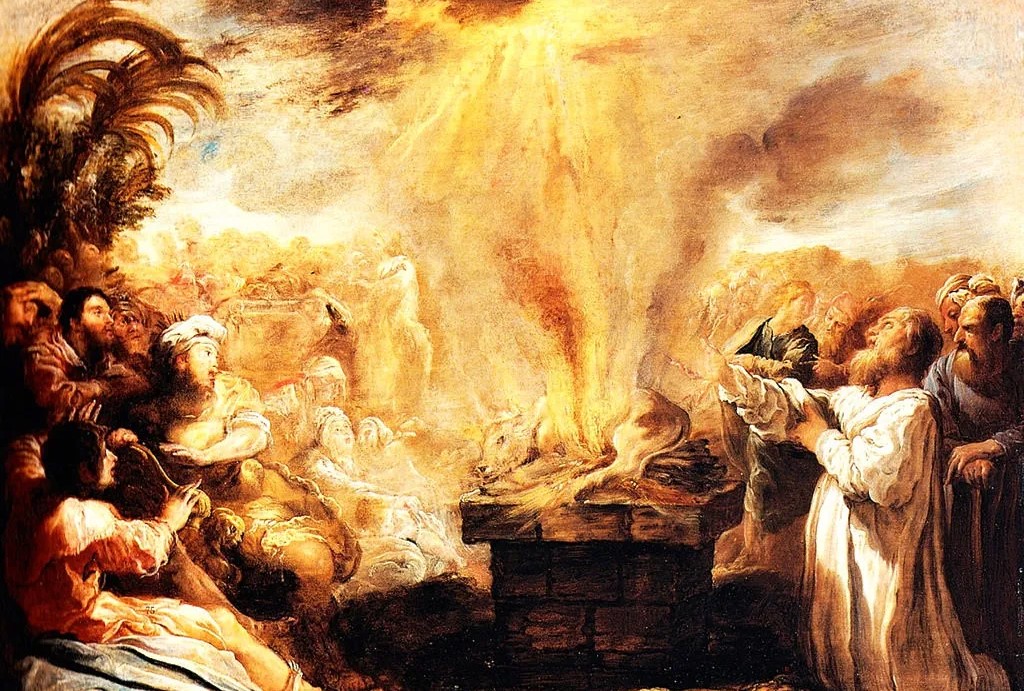
Then the fire of the Lord fell and burned up the sacrifice, the wood, the stones and the soil, and also licked up the water in the trench. When all the people saw this, they fell prostrate and cried, “The Lord—he is God! The Lord—he is God!”
Elijah commanded them, “Seize the prophets of Baal. Don’t let anyone get away!” They seized them, and Elijah had them slaughtered. Then he said to Ahab, “Go, eat and drink, for there is the sound of a heavy rain.” So Ahab went off to eat and drink, but Elijah climbed to the top of Carmel, bent down to the ground and put his face between his knees. He was concerned about whether his prophecy about the rain would come true. He asked his servant to go scout for rain, “Go and look toward the sea,” he said. Elijah's servant went up and looked but no rain was forthcoming.
Elijah sent him back to look seven times, and on the seventh time, which is the alchemy of the seventh ray—the violet flame ray of forgiveness—a cloud as small as a man’s hand was seen rising from the sea. Then Elijah said, “Go and tell Ahab, ‘Hitch up your chariot and go down before the rain stops you.’” He understood the alchemy of the seventh ray and knew this small cloud would be multiplied by the power of Spirit to bring forth much rain.
The sky grew black with clouds, the wind rose, and a heavy rain started falling. Ahab told Jezebel what had happened and how Elijah had killed all the prophets with the sword. Instead of gratitude for the rain, Jezebel sent a message of retaliation back to Elijah: “May the gods deal with me, be it ever so severely, if by this time tomorrow I do not make your life like that of one of them.”
Elijah was afraid and ran for his life. He left his servant in Judah and journeyed on by himself into the wilderness. He sat under a broom bush, and prayed that he might die. “I have had enough, Lord,” he said. “Take my life. I am no better than my ancestors.” Then he lay down under the bush and fell asleep.
All at once, an angel touched him and said, “Get up and eat.”He looked around, and there by his head was some bread baked over hot coals, and a jar of water. He ate and drank and then lay down again.
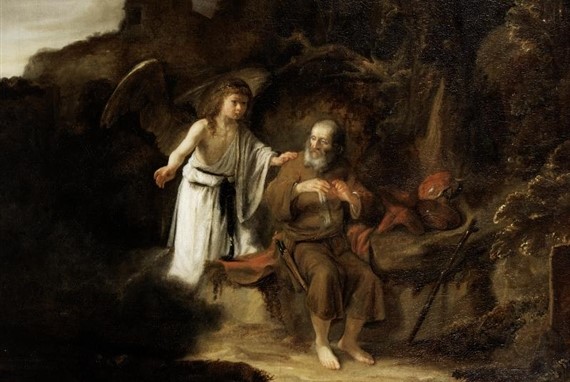
Elijah and the Angel by Cornelis Bisschop
The angel of the Lord came back a second time and touched him and said, “Get up and eat, for the journey is too much for you.” So he got up, and ate and drank again. Strengthened by that food, he traveled forty days and forty nights until he reached Horeb, the mountain of God where Moses had received the ten commandments. He went into a cave and spent the night, and the word of the Lord came to him.“What are you doing here, Elijah?”
“I have been very zealous for the Lord God Almighty,” Elijah said. “The Israelites have rejected your covenant, torn down your altars, and put your prophets to death with the sword. I am the only one left, and now they are trying to kill me too.” The Lord replied, “Go out and stand on the mountain in the presence of the Lord, for the Lord is about to pass by.”
Then a great and powerful wind tore the mountains apart and shattered the rocks, but the Lord was not in the wind. After the wind there was an earthquake, but the Lord was not in the earthquake. After the earthquake came a fire, but the Lord was not in the fire. And after the fire came a gentle whisper—a still, small voice, even the voice of conscience, the voice of his Christ self. When Elijah heard it, he pulled his cloak over his face and went out and stood at the mouth of the cave.
The voice said to him again, “What are you doing here, Elijah?” And Elijah replied again, “I have been very zealous for the Lord God Almighty. The Israelites have rejected your covenant, torn down your altars, and put your prophets to death with the sword. I am the only one left, and now they are trying to kill me too.”
Then the Lord said to him, “Go back the way you came, and go to the Desert of Damascus. When you get there, anoint Hazael king over Aram, and anoint Jehu king over Israel, and anoint Elisha, son of Shaphat, to succeed you as prophet. Jehu will put to death any who escape the sword of Hazael, and Elisha will put to death any who escape the sword of Jehu. Yet I reserve seven thousand in Israel—all whose knees have not bowed down to Baal and whose mouths have not kissed him.”
So Elijah went from there and found Elisha, plowing with twelve yoke of oxen, and driving the twelfth pair. Elijah went up to him and threw his cloak around him. Elisha then left his oxen and ran after Elijah. “Let me kiss my father and mother goodbye,” he said, “and then I will come with you.”
So Elisha took his yoke of oxen and slaughtered them. He burned the plowing equipment to cook the meat and gave it to the people, and they ate. Then he set out to follow Elijah and became his servant.
The Lord spoke through Elijah a number of times to warn, rebuke and guide the king, even in warfare. We can see the love of Sanat Kumara even for Ahab, who was continuously engaging with other gods, while his wife Jezebel counseled him and committed acts of greater disobedience, deception and evil. At one point, the Lord through Elijah helped Ahab win battles to prove he was the one true God, to no avail. It was only when God cursed Ahab, Jezebel and their descendants through Elijah, that Ahab had some remorse. Ahab died in battle, as had been prophesied. And Jezebel was eaten by dogs. His son Ahaziah ruled Israel and also served and worshiped Baal, arousing God's wrath again.
I would like to interject here, that even though these are Old Testament stories, history continues to repeat itself. America is at a crossroads, where so much of the politics, finances and entertaining of our time are influenced by the same worship of Baal, including abortion and child trafficking, rape, murder, organ harvesting and satanic blood rituals. Calling for our Lord Sanat Kumara, the Ancient of Days, and the Ruby Ray lineage to deliver America—the I AM Race—and the people of light, worldwide of any and all allegiance or complicity with these nefarious practices, that have plagued the children of God since ancient times.
The Lord then sent Elijah to warn and rebuke the king of Samaria for his satanic involvement. The king asked his messengers to describe the prophet. They replied, “He had a garment of hair and had a leather belt around his waist,” just like John the Baptist would wear in the river Jordan. The king recognized him: “That was Elijah the Tishbite.” He sent a captain and fifty men to get Elijah to come down from the mountain, but Elijah would not budge.
“Man of God, the king says, ‘Come down!’” Elijah answered the captain, “If I am a man of God, may fire come down from heaven and consume you and your fifty men!” So the fire fell from heaven and consumed the captain and his men.
The king sent another captain and another fifty men. “Man of God,” said the captain, “Come down at once!”“If I am a man of God,” said Elijah, “may fire come down from heaven and consume you and your fifty men!” And the fire of God fell from heaven and consumed them all.
So the king sent a third captain with his fifty men. This third captain fell on his knees before Elijah. “Man of God,” he begged, “please have respect for my life and the lives of these fifty men, your servants! See, fire has fallen from heaven and consumed the first two captains and all their men. But now have respect for my life!”
The angel of the Lord said to Elijah, “Go down with him; do not be afraid of him.” So Elijah got up and went down with him to the king and told the king he would die for consulting Baal-Zebub, and he did. The fallen angel Baal-Zebu is also known as Beelzebub, “lord of the flies.” The ascended master Cuzco describes his influence on the education of the youth and the economies of the nations in a dictation through the Summit Lighthouse. “Thus, beloved, it is the seed of Beelzebub and the fallen ones who have gone forth to corrupt the mind, to corrode the soul of your children, yea, of yourselves. Now, beloved, be willing to abide with us as earth and other systems of worlds pass through this travail of being divested of these fallen ones who have infiltrated all systems of society to corrupt even the abundant life in the houses of banking and commerce. And even the economies of the nations are nigh destroyed by their interference and their greed. There is not an area of life, beloved, whether in the schoolhouses of the land, whether in the depths of the sea, whether in defense, whether in energy, that there is not pollution of water, air, fire, earth–hearts, bodies.”
Speaking of Beelzebub and the fallen ones, El Morya explains, “Since the fall of the Luciferians, the Satanists, and their cohorts, they have determined that as long as they were doomed to die, the children of God should die also. For the fallen ones have but one fear, and that is to die alone. Thus the archdeceivers of mankind, by their divide-and-conquer tactics, have devised all manner of witchcraft and black magic to torment the children of God and to draw their energies into alignment with their negative spirals, their defeatism, their despair, their despondency–their will to fail.”
This association with Baal, or Beelzebub, is what leads to the death of the king, prophesied through Elijah and his angel. Though the Bible does not say this implicitly, Elisha likely witnessed all of these events. Then, when it came time for the Lord to take Elijah back unto himself in the ascension, Elisha would not leave him.
Elijah said to Elisha, “Stay here; the Lord has sent me to Bethel.” Elisha replied, “As surely as the Lord lives and as you live, I will not leave you.” When the two arrived in Bethel, a company of prophets came out to Elisha and said, “Do you know that the Lord is going to take your master from you today?” This means that just as the three kings knew of the birth of Christ thousands of miles away, so the prophets all knew it was time for Elijah's ascension.
“Yes, I know,” Elisha replied, “so be quiet.” Again Elijah encouraged Elisha to stay behind. “Stay here, Elisha” he said. “The Lord has sent me to Jericho.” And Elisha replied, “As surely as the Lord lives and as you live, I will not leave you.” So they went to Jericho.
When they arrived, the company of prophets at Jericho went up to Elisha and asked him, “Do you know that the Lord is going to take your master from you today?” “Yes, I know,” said Elisha, “so be quiet.”
Then Elijah said to Elisha, “Stay here; the Lord has sent me to the Jordan.” These initiations are unfolding in the pattern of the number three. Elisha replied, “As surely as the Lord lives and as you live, I will not leave you.” So the two of them walked on.
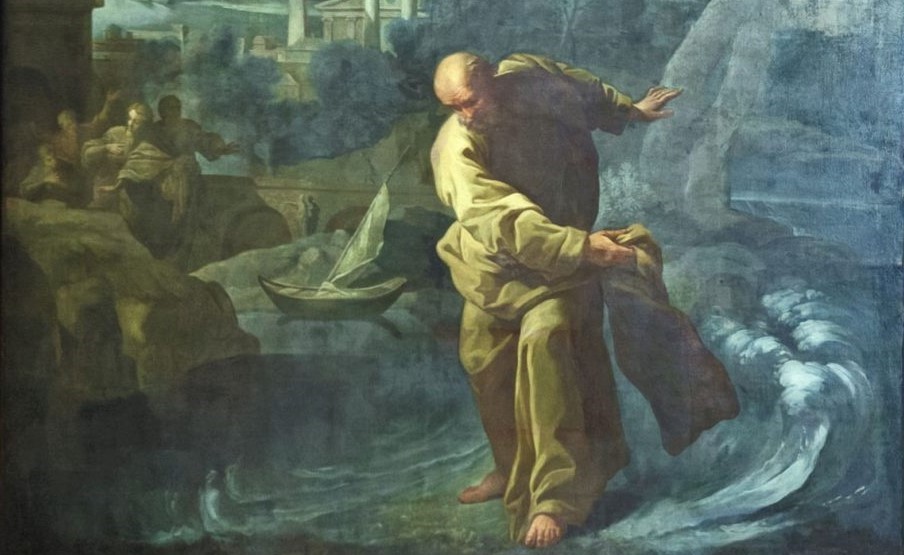
Fifty men from the company of prophets went and stood at a distance, facing the place where Elijah and Elisha had stopped by the Jordan river. Elijah took his cloak, rolled it up and struck the water with it. The water divided to the right and to the left, and the two of them crossed over on dry ground. We make note here that Elijah came back as John the Baptist for his next mission, right where he had left off—by the river Jordan. This is often the case in reincarnation where, souls return to familiar places and kin.
When they had crossed, Elijah said to Elisha, “Tell me, what can I do for you before I am taken from you?” Elisha said, “Let me inherit a double portion of your spirit.” “You have asked a difficult thing,” Elijah said, “yet if you see me when I am taken from you, it will be yours—otherwise, it will not.” What Elijah meant by this was that Elisha would have to raise his consciousness where he too, would see heaven open and Elijah ascend. If he succeeded, then the mantle of Elijah would naturally be transferred because he had demonstrated enough attainment.
What is beautiful to me is that in the next life, when it came time for Jesus to ascend, he also made sure that his disciples would be able to see his ascension, recorded in the Book of Acts. “While they beheld, he was taken up; and a cloud received him out of their sight. And while they looked steadfastly toward heaven as he went up, behold, two men stood by them in white apparel.”
Now as Elijah and Elisha were walking along and talking together, suddenly a chariot of fire and horses of fire appeared and separated the two of them, and Elijah went up to heaven in a whirlwind. Elisha saw this and cried out, “My father! My father! The chariots and horsemen of Israel!” And Elisha saw him no more. Then he took hold of his garment and tore it in two, meaning, he took hold of Elijah's spiritual mantle of light and made it his own, appropriating to himself the virtues and abilities of his guru.
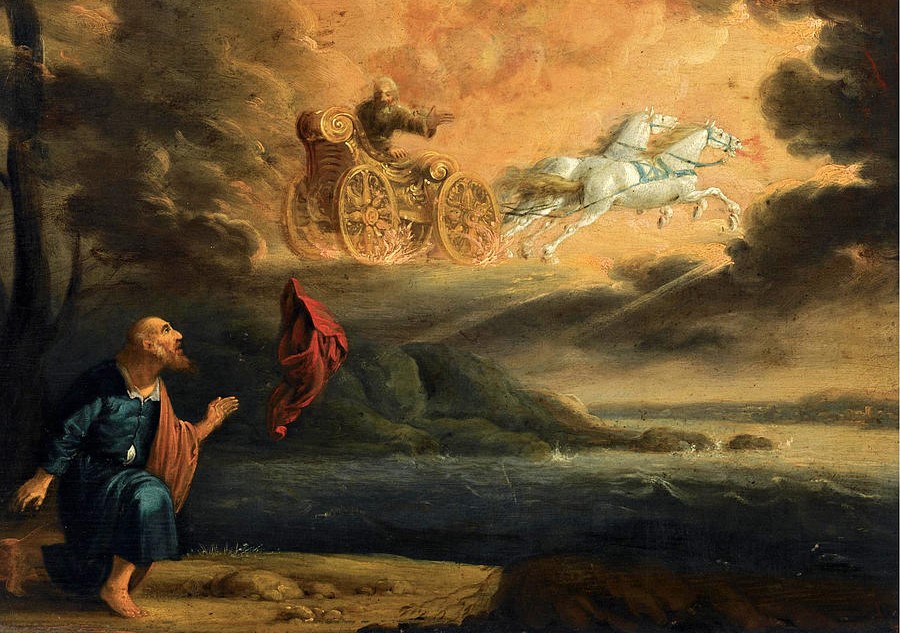
Ellijah Taken Up to Heaven in a Chariot of Fire by Pieter Symonsz Potter
Elijah was not the first person in the Old Testament to ascend. In Genesis, we read about Enoch, who walked and talked with God, and then one day ascended. “Enoch walked faithfully with God; then he was no more, because God took him away.” The Old Testament tells us clearly when people died. This was not the case with Enoch.
After Elijah ascended into the heavens, Elisha picked up Elijah’s cloak that had fallen from him and went back and stood on the bank of the Jordan. He took the cloak and struck the water with it, just as he had seen Elijah do. “Where now is the Lord, the God of Elijah?” Elisha asked. As he struck the river, it divided right and left, and he crossed over.
The company of prophets from Jericho who were watching said, “The spirit of Elijah is resting on Elisha.” And they went to meet him and bowed to the ground before him. They insisted on looking for Elijah, in the event that the Lord had dropped Elijah off somewhere like a tornado, and Elisha refused, but they persisted so much that he relented. After three days, they returned empty handed. “Didn’t I tell you not to go?” said Elisha.
It is important to understand the relationship that the Lord had with Elijah, that was transferred to Elisha, not just in that life but the next. The fiery spirit of Elijah, rebuking the worshipers of Baal, was transferred to Elisha. Then, in the next life, it was unleashed by John the Baptist and Jesus against the Pharisees and other religious potentates. These were the fallen ones known as serpents—generations of vipers.
We can see in the life of Elisha now, how many miracles were about to take place, and how many of those miracles were similar to the miracles Jesus wrought. Elisha's ability to work miracles through the mantle of Elijah was transferred from one life to the next and became completely internalized by his soul.
Jesus told his disciples, “Verily, verily, I say unto you, He that believeth on me, the works that I do shall he do also; and greater works than these shall he do; because I go unto my Father.” So Elisha did even greater works than Elijah, because the spirit of his guru was working in him from the ascended state. This is an ancient law of the Brotherhood of Light, that the teacher rejoices when the student surpasses the teacher. In The Mahabharata, we read that when a student does better than his Master, the true Master rejoices: “Thus, the great Parashurama, who was taught by Shiva the supreme art of archery and warfare, decided to teach earnest Drona all that he knew. Drona went on to become his Master’s worthy disciple and surpassed even. The legacy was passed on to Arjuna by Drona.”
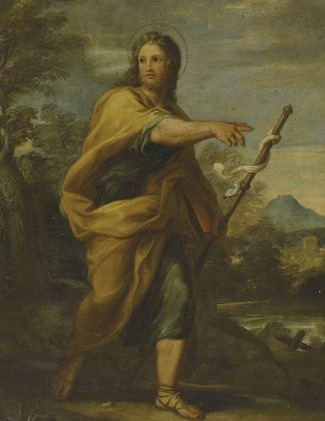
Elisha Returns
Elisha went to a city and the people said, “Look, our lord, this town is well situated, as you can see, but the water is bad and the land is unproductive.” “Bring me a new bowl,” said Elisha, “and put salt in it.” So they brought him a bowl of salt. Then he went out to the spring and threw the salt into it, saying, “This is what the Lord says: ‘I have healed this water. Never again will it cause death or make the land unproductive.’”And the water has remained pure to this day. This is also what child Jesus did to Maryam's Spring in Egypt near the Baramous Monaster. He extended his hands in the salty water, and a single spring of sweet water emerged from the salty water, that exists to this day.
From the spring, Elisha went up to Bethel, where he was jeered by a great number of boys. Elisha called upon the Lord and their karma returned upon them instantly, as it did to those who sought to harm the child Jesus. Two bears came out of the woods and mauled forty-two of the boys. Then Elisha, retracing Elijah's footsteps, went on to Mount Carmel and then returned to Samaria.
Now the new king of Israel, Ahab's son, together with the king of Judah and the king of Edom, decided to go to war against the king of Moab, who was refusing to pay tribute to Israel. They asked Elisha for a prophecy, and Elisha, like David, asked for a harpist to play so that he could commune with God. While the harpist was playing, the hand of the Lord came on Elisha, like it had upon King David—the soul of Elisha—and the Lord agreed to deliver Moab to the king of Israel.
Elisha also had an encounter similar to Elijah's encounter with the widow of Zeraphat. The wife of a man from the company of the prophets cried out to him, “My husband is dead, and you know that he revered the Lord. But now his creditor is coming to take my two boys as his slaves.”
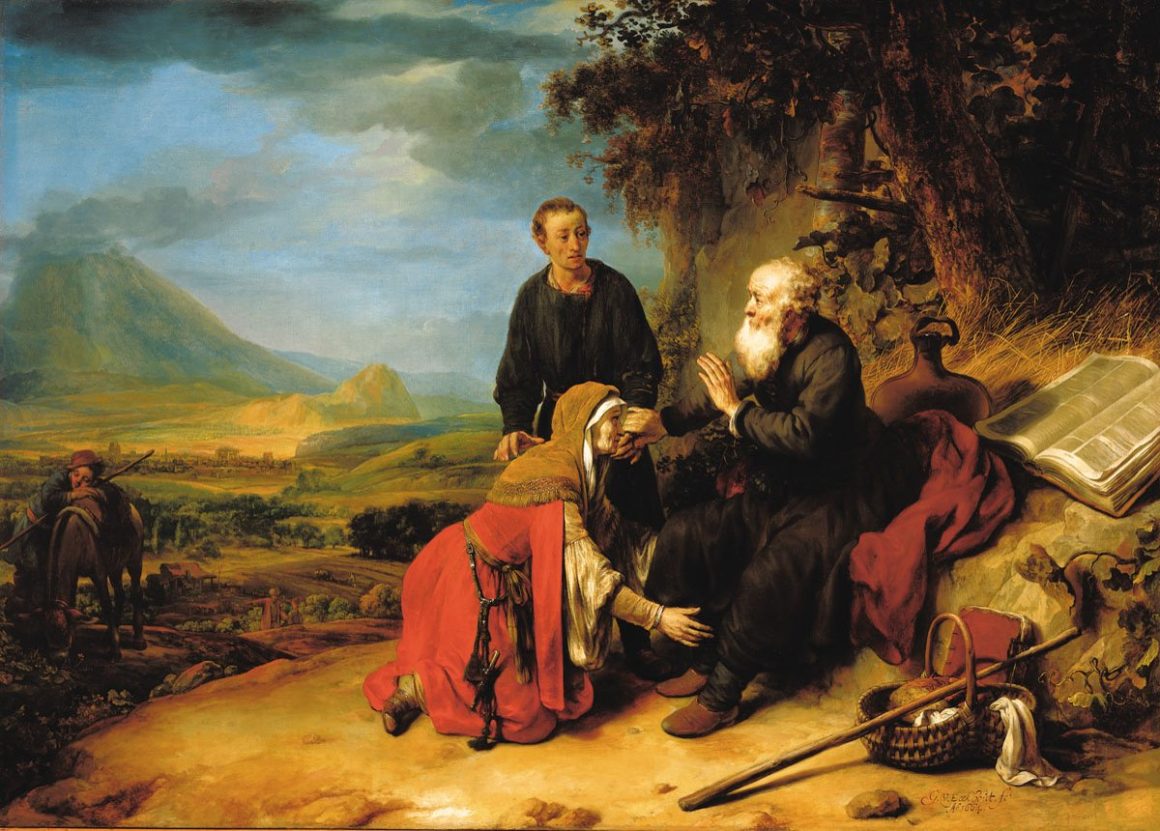
The prophet Elisha and the woman of Shunem
Elisha replied to her, “How can I help you? Tell me, what do you have in your house?”“Your servant has nothing there at all,” she said, “except a small jar of olive oil.”
Elisha said, “Go around and ask all your neighbors for empty jars. Don’t ask for just a few. Then go inside and shut the door behind you and your sons. Pour oil into all the jars, and as each is filled, put it to one side.” The widow did as a Elisha told her until all the jars were full, and there was not an empty jar left when the oil stopped flowing. Elijah said: “Go, sell the oil and pay your debts. You and your sons can live on what is left.”
The next miracle that Elisha manifested was like Elijah raising the widow's dead son by breathing on him. It is also like many of the miracles Jesus performed—raising the dead from Jairus' daughter to Lazarus, and even as a child.
One day Elisha went to Shunem, and a well-to-do woman was there, who urged him to stay for a meal. So whenever he came by, he stopped there to eat. Now she said to her husband, “I know that this man who often comes our way is a holy man of God. Let’s make a small room for him on the roof where he can stay whenever he wants.”
So one day when Elisha went up to his room and lay down there. He asked his servant Gehazi to find out what action of gratitude he could give her in return for her kindness. Gehazi told him the woman had no son, and that her husband was old. “About this time next year,” Elisha said, “you will hold a son in your arms.” It happened as Elisha said and the next year about the same time, she gave birth to a son.
The child grew, and one day went out to his father, who was reaping in the field. The child was injured on the head and died in his mother's arms. She laid him at the foot of Elisha's bed. Then she went to Mount Carmel to find Elisha and took hold of his feet. Gehazi tried to push her away, but Elisha said, “Leave her alone! She is in bitter distress!” When Elisha found out what happened, he said to Gehazi, “Tuck your cloak into your belt, take my staff in your hand, and run. Don’t greet anyone you meet, and if anyone greets you, do not answer. Lay my staff on the boy’s face.”
Elisha and the mother followed. Gehazi came back and told them, “The boy has not awakened.” Elisha reached the house, and found the boy lying dead on the couch. Like Elijah before him, he prayed to the Lord. Then he lay on the boy, mouth to mouth, eyes to eyes, hands to hands. As he stretched himself out on the boy, the boy's body grew warm. Elisha turned away and walked back and forth in the room, then stretched out on the boy again. The boy sneezed seven times, one for each of his chakras, and opened his eyes. Elisha returned the son to his mother.
Elisha then went to Gilgal, where there was a famine, to meet a company of prophets. He told Gehazi, “Put on the large pot and cook some stew for these prophets.” So Gehazi went into the fields to gather herbs, and found a wild gourd vine. He picked as many gourds as his garment could hold, cooked them and poured the stew for the men. As they began to eat, they cried out, “Man of God, there is death in the pot!” They could not eat it, so Elisha told Gehazi to add some flour to the poisonous gourds before serving it to the people. Now when the prophets ate, there was nothing harmful.
On another occasion, a man brought Elisha twenty loaves of barley bread baked from the first ripe grain, along with some heads of new grain. “Give it to the people to eat,” Elisha told Gehazi. “How can I set this before a hundred men?” asked Gehazi. Elisha answered, “Give it to the people to eat, for the Lord says: ‘They will eat and have some left over.’” Then, just like when Jesus multiplied the five small loaves of barley and the two fish to feed the five thousand, so the hundred men ate and had some left over.
Like Jesus, Elisha also healed leprosy. Naaman was commander of the army of the king of Aram. He was a highly regarded, valiant soldier, but he had leprosy. His bands captured a young girl from Israel to serve Naaman’s wife. She said to her mistress, “If only my master would see the prophet who is in Samaria, he would cure him of his leprosy!”The king of Aram wrote to the king of Israel and sent him gifts, asking him to cure Namaan, but the king could not do it, and tore his robes in despair.
Elisha heard of this and sent a message to the king: “Why have you torn your robes? Have the man come to me and he will know that there is a prophet in Israel.”So Naaman went with his horses and chariots and stopped at the door of Elisha’s house. Elisha invoked the sacred number of the seventh ray of God, the divine color band of the violet flame associated with purification, forgiveness and the remission of sins, which is the transmutation of karma. “Go, wash yourself seven times in the Jordan, and your flesh will be restored and you will be cleansed,” he said.
Naaman was childishly disappointed. He went away angry, with mismatched expectations: “I thought that he would surely come out to me and stand and call on the name of the Lord his God, wave his hand over the spot, and cure me of my leprosy! Are not the rivers of Damascus better than all the waters of Israel?” he reasoned. “Couldn’t I wash in them and be cleansed?” His servants said, “If the prophet had told you to do some great thing, would you not have done it? How much more, then, when he tells you, ‘Wash and be cleansed.’”
So Naaman went down and dipped himself in the Jordan seven times, as Elisha said, and his flesh was restored—clean like that of a young boy. Then, like the one healed leper who went back to thank Jesus, Namaan went back to Elisha and said, “Now I know that there is no God in all the world except in Israel. So please accept a gift from your servant.” But Elisha refused. “Go in peace,” he said.
After Naaman had traveled some distance, Gehazi said to himself, “My master was too easy on Naaman by not accepting from him what he brought. As surely as the Lord lives, I will run after him and get something from him.” So Gehazi hurried after Naaman. When Naaman saw him running toward him, he got down from the chariot to meet him. “Is everything all right?” Naaman asked.
“Everything is all right,” Gehazi answered. “My master sent me to say, ‘Two young men from the company of the prophets have just come to me from the hill country of Ephraim. Please give them a talent of silver and two sets of clothing.’”
“By all means, take two talents,” said Naaman. He urged Gehazi to accept them, and then tied up the two talents of silver in two bags, with two sets of clothing. He gave them to two of his servants, and they carried them ahead of Gehazi. When Gehazi came to the hill, he took the things from the servants and put them away in the house. Then he sent the men away. When he went in and stood before his master, Elisha asked him, “Where have you been, Gehazi?” “Your servant didn’t go anywhere,” Gehazi answered sheepishly.
Elisha replied, “Was not my spirit with you when Naaman got down from his chariot to meet you? Is this the time to take money or to accept clothes—or olive groves and vineyards, or flocks and herds, or male and female slaves?Naaman’s leprosy will cling to you and to your descendants forever.” Then Gehazi went from Elisha’s presence and his skin was leprous and white as snow. Still, Gehazi continued to serve Elisha.
What may seem as a harsh lesson for lying to the guru was to teach the soul. By misrepresenting the guru and taking the gifts for the healing which were not his to take, Gehazi also had to take on the karma that his guru had lifted from Naaaman. Without the spiritual mastery to transmute the karma of leprosy, it came upon his own house.
This reminds me of a dictation by Helios through the Summit Lighthouse where he speaks of the karmic return of those who align themselves with evil: “So long as you deny the living Word in the Universal Christ incarnate in all children of the one God and focused in the threefold flame within their hearts, so long as you kill and maim and destroy and take life in revenge, you shall not pass!
“And you who commit your crimes and murders in the name of God or Allah or Israel or Persia or Iran or any belief system or any philosophy whatsoever, whether it be Communistic or satanic or otherwise, you who perform these deeds shall not find yourselves in the heavenly kingdom when you pass from life but rather before the judgment seat.
“You who are the embodiment of the Lie, you who are the embodiment of the Murderer, you who are the laggards who have corrupted this planetary body, and all who are like you throughout the planetary body, you shall not pass!
“For the plug is pulled this day on the seed of the Wicked One, regardless of their race or religion, and you may no longer have the source or the cosmic force to move against the children of the Sun. And your day is done. And you may weep and gnash your teeth and snarl and direct your black magic and your satanic rite and your blood-drinking ceremonies and your voodoo and your witchcraft against this Messenger and against Almighty God, and it shall come upon your own house.”
Elisha performed other miracles, like making an iron axhead float that had dropped in the water, in order to recover it. He also helped the king of Israel in the most wondrous way.
When Ben-Hadad, King of Aram, was at war with Israel, Elisha kept warning the king of their whereabouts so they could not succeed. This enraged Ben-Hadad, who thought his men were betraying his location. “No” said one of his officers, “but Elisha, the prophet who is in Israel, tells the king of Israel the very words you speak in your bedroom.”
The king sent orders to capture Elisha and surrounded the city. Gehazi was afraid. “Don’t be afraid,” said the prophet. “Those who are with us are more than those who are with them. Open his eyes, Lord, that he may see.” Then the Lord opened Gehazi's eyes, and he looked and saw the hills full of horses and chariots of fire all around Elisha, just like the one that took away Elijah. As the enemy came toward him, Elisha prayed, “Strike this army with blindness.”So he struck them with blindness, as Elisha had asked. We can see through all of these experiences how the Lord was continually strengthening Elisha's faith. This strength of faith was also in Jesus.
Once they were blind, Elisha told them, “This is not the road and this is not the city. Follow me, and I will lead you to the man you are looking for.” Instead, he led them to Samaria, and after they entered the city, Elisha said, “Lord, open the eyes of these men so they can see.” When the king of Israel saw them, he asked Elisha, “Shall I kill them?”
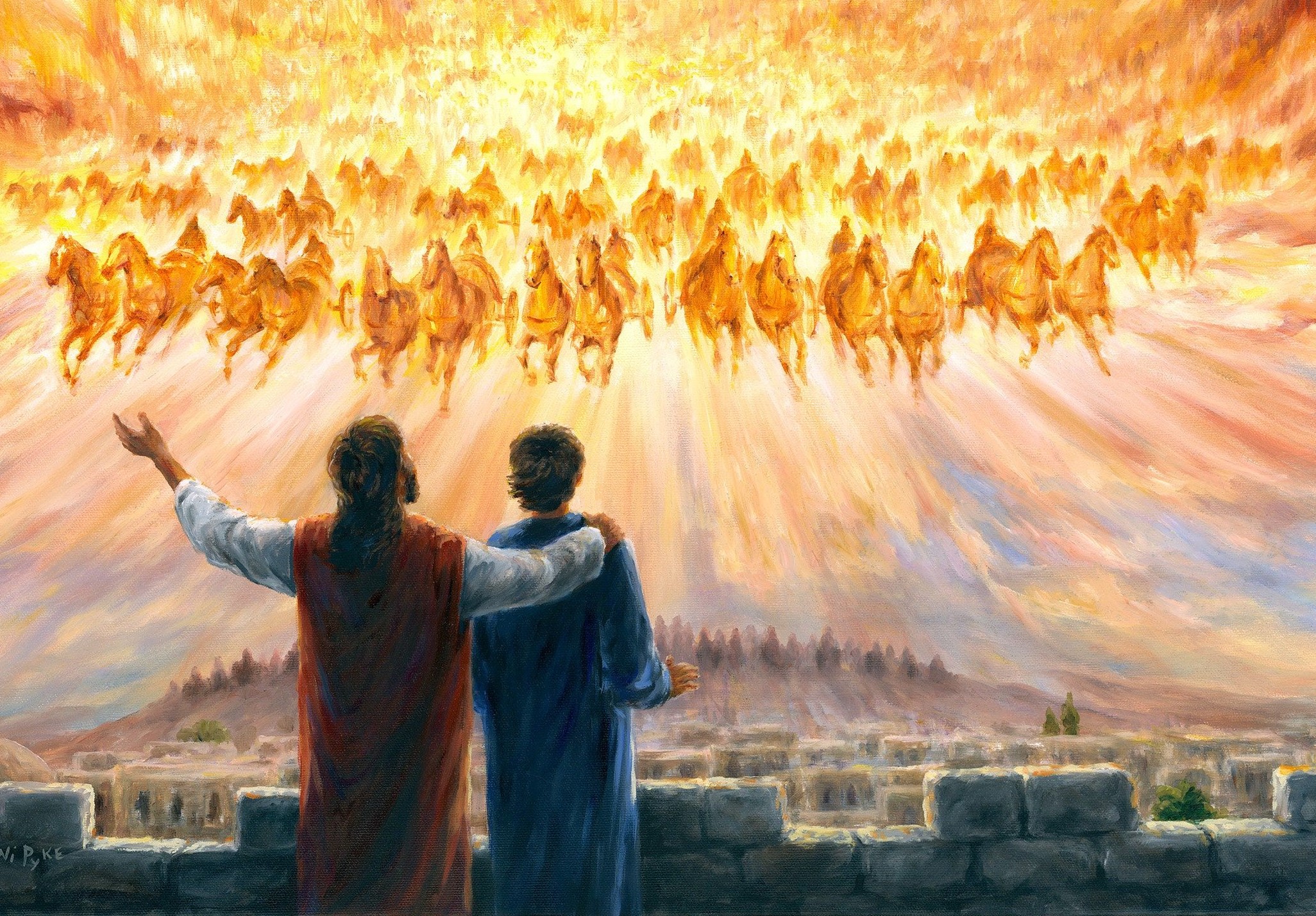
“Do not kill them,” Elisha answered. “Set food and water before them, so that they may eat and drink and then go back to their master.” The king prepared a great feast for them, and after they had finished eating and drinking, he sent them away, and they returned to their master. And that was the end of the war!
Then another war with the Arameans ensued in famine. Two starving women decided to kill their sons and eat them. The first was killed and the second disappeared, so the Mother of the first asked the king of Israel for help. The king was so distraught that he wanted Elisha's head for revenge. Elisha told the king the siege would be lifted, but that he would die. It happened exactly as Elisha said. Then Elisha restored the son's life and told the mother to leave the country because a seven-year famine was coming. When she returned seven years later, she went back to the king to appeal for her house and land.
The king was talking to Gehazi when the woman appeared. “Tell me about all the great things Elisha has done, ” said the king. Just as Gehazi was telling the king how Elisha had restored the dead to life, the woman whose son Elisha had brought back to life came to appeal to the king for her house and land. Gehazi said, “This is the woman, my lord the king, and this is her son whom Elisha restored to life.” The king asked the woman to confirm.
Then he assigned an official to her case, saying, “Give back everything that belonged to her, including all the income from her land from the day she left the country until now.”
The Book of Kings continues with a rapid succession of kings, and with more battles and wars and prophecies from Elisha. Jehu, a new king anointed by the Lord through Elisha, went to destroy all of the servants of Baal and put Jezebel and all of Ahab's family to death as Elijah prophesied. “How can there be peace,” Jehu said to them with the zeal of the Lord, “as long as all the idolatry and witchcraft of your mother Jezebel abound?”
The temple of Baal became a latrine, and then was torn down. Their sacred stone was brought out of the temple and burned. Nevertheless, some of Israel's kings still worshiped a golden calf and the battles with Aram continued.
Elisha was now suffering from an illness from which he died. In one of his last moments, he put his hands over the king’s hands. “Shoot!”Elisha said, and the king shot his bow out the window. “The Lord’s arrow of victory,” Elisha declared. “The arrow of victory over Aram!” And Aram was destroyed three more times.
We revisit the life record of Elisha and Elijah because the past is prologue. Approximately eight hundred and thirty years later, the souls of Elisha and Elijah reappear in the physical plane for a cosmic mission—two cousins in the wombs of Elisabeth and Mary, ready to turn the world right side up!
John chose to reincarnate, even though he was an ascended master free from the wheel of rebirth. This is the only instance recorded where a soul who has already earned the ascension and become one with their God Presence, chooses to leave his spiritual estate in the kingdom of heaven to come back into these lower realms of Kal Desh—time and space—to prepare the way for Jesus' mission. This is why Jesus said to his disciples, “Truly, I say to you, among those born of women there has arisen no one greater than John the Baptist. Yet the one who is least in the kingdom of heaven is greater than he.”
When Mary visited Elisabeth who was already pregnant, in spite of her old age, and announced her pregnancy, John leaped for joy in the womb of his mother. “And it came to pass, that, when Elisabeth heard the salutation of Mary, the babe leaped in her womb; and Elisabeth was filled with the Holy Ghost: And she spake out with a loud voice, and said, Blessed art thou among women, and blessed is the fruit of thy womb. And whence is this to me, that the mother of my Lord should come to me? For, lo, as soon as the voice of thy salutation sounded in mine ears, the babe leaped in my womb for joy.” Such is the love of the guru for the chela, and the master for the disciple.
The relationship between the two babies is beautifully depicted by Raphael. This image was treasured by Maria Montessori, who founded the Montessori method and who was a Theosophist. She insisted that this picture be placed in every Montessori classroom. Dr. Elizabeth Caspari, who studied and served with Maria Montessori in India, explained to me why.
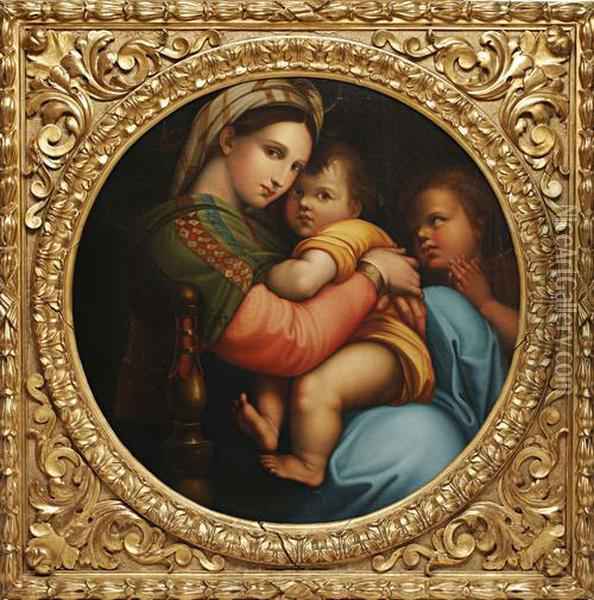
Madonna by Raphael
Maria Montessori told Dr. Caspari that just as John led people to Jesus, so the intellect leads to the Christ. This is why Saint Paul said, “Let this mind be in you that was also in Christ Jesus.” The purpose of the Montessori method—that was inspired by Mother Mary from the heaven-world—was to develop the child mind to become a vessel for that light which, “lighteth every man, woman and child, that cometh into the world.”
Mother Caspari and Maria Montessori are now ascended lady masters, who work with Mother Mary from heavenly planes to help the children of the world. I had a very beautiful conversation with Mother Caspari in her later years when I announced to her that I was pregnant with my first child. She told me that when she went to India and the Himalayas, the masters in the East taught her that the child always chooses their mother. Then she revealed to me that she had been Elizabeth, the Mother of John, to whom Mary announced the conception of our Savior. She had returned in this life with the same name to facilitate Mother Mary's love for children through the Caspari Montessori method.
Now after the birth of John and Jesus, both Elizabeth and Mary had to flee from Herod. Not much is said of their relationship until Jesus returns to Galilee to be baptized by John. John, in the meanwhile, was baptizing in the river Jordan, dressed in camel hair with a thick leather belt, just like Elijah.
John was announcing the coming of the Messiah as he baptized. He did not draw attention to himself or declare that he had Christ within himself. He did not reveal his past life as Elijah when questioned by the Pharisees, though he was surely aware of it. Nevertheless, people would make the connection.
The Gospel of John says, “And this is the record of John, when the Jews sent priests and Levites from Jerusalem to ask him, Who art thou? And he confessed, and denied not; but confessed, I am not the Christ. And they asked him, What then? Art thou Elijah? And he saith, I am not. Art thou that prophet? And he answered, No. Then said they unto him, Who art thou? that we may give an answer to them that sent us. What sayest thou of thyself? He said, I am the voice of one crying in the wilderness, Make straight the way of the Lord, as said the prophet Isaiah.”
The Pharisees persisted in their questioning. “Why baptizest thou then, if thou be not that Christ, nor Elijah, neither that prophet?” John answered them, saying, “I baptize with water: but there standeth one among you, whom ye know not.” Like Elijah before him, John denounced the “Pharisee consciousness.” “Then said he to the multitude that came forth to be baptized of him, O generation of vipers, who hath warned you to flee from the wrath to come? Bring forth therefore fruits worthy of repentance, and begin not to say within yourselves, We have Abraham to our father.”
Sanat Kumara explained in a Summit Lighthouse dictation: “Serpent is the Wicked One whose seed, along with Satan’s, is sown as tares among the good wheat of the Christic seed. It is this seed who are called the offspring of the vipers. “Viper” is from the Greek translation of the proper name “Serpent” who, together with the fallen ones of his band, was cast out of heaven and took embodiment on earth where they have continued to reincarnate since the Great Rebellion.
“When John the Baptist saw the Pharisees and Sadducees coming to his baptism, he knew who they were: not only the offspring of that original band of fallen ones, but the very wicked ones themselves reembodied. When he denounced them as the “generation of vipers,” he was speaking of them collectively as the original band who had followed Serpent, the cohort of Satan and Lucifer. When he exposed their real motive in coming to his baptism as “fleeing from the wrath to come,” he spoke of the wrath of God as the white fire of his judgment that should come upon Serpent and his seed in the last days. Therefore he demanded that they bring forth fruits meet for repentance—evidence of humility, love, and obeisance before the Lord’s Christ—whereby they might yet repent of their sworn enmity with the Woman and her Manchild.”
In accordance and demonstration of the teaching Jesus shared that the first shall be last, and the last shall be first, so John said with the complete humility of God: “He it is, who coming after me is preferred before me, whose shoe's latchet I am not worthy to unloose.” Jesus and John were demonstrating, once again, as did Elijah and Elisha, that the student should surpass the teacher. Mother Mary explained in a dictation through the Summit Lighthouse, “This is the desire that every hierarch holds for every chela. For every teacher worthy of the name desires that his students shall excel him in the mastery of the art, the science, and the subject matter at hand.”
John was also referring here to the law of assumption , that all who are equal to, or one with Christ, are equal to, or one with each other—because things equal to the same are equal to each other. Euclid of Alexandria, “Father of Geometry” taught this fundamental principle of God in mathematics: the transitive axiom in algebra. If a = b and b = c, then a = c. In this case the expressed identity of Christ in Jesus and in John was equal to the Father, meaning both Jesus and John were in direct communion and congruency through their oneness with the Father.
The ascended master Saint Germain speaks of the law of assumption in a dictation published by the Summit Lighthouse: “The law of assumption,” he says, “will be understood by you—the law whereby you assume with joy and happiness the qualities of your great winged God Self! And its great wings of freedom will buoy you upward into the understanding of brotherhood and the understanding of fatherhood and the majesty of the cosmic domain!”
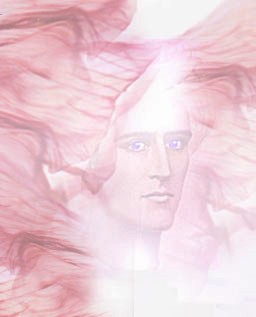
The ascended master known as the Maha Chohan is the representative of the Holy Spirit. He gave a beautiful example to students about how an unascended individual can become congruent with an ascended master. He relates this in a Pearl of Wisdom published in 1962 by the Summit Lighthouse:
“Blessed ones, the fullness of God is your own I AM Presence and you need not go out any more to find it elsewhere!
The Maha Chohan
“Think what this means if you will give authority to the Holy Spirit to order and ordain your life according to the plan of the Immaculate Silent Watcher of your own blessed being! Sin, condemnation, and judgment must all yield to the pressure of the Holy Spirit, whose light and radiance sustain the feeling of such closeness and comfort to God that an actual transference of identity takes place which enables the chela to know and declare with conviction, “I and my Father are one!”
“This is the true law of assumption and must be diligently used before the student can become like his master, his Holy Christ Self, the Holy Spirit, or any other aspect of each one’s own divinity. Let the entire round of earth’s people acknowledge the Presence of God within themselves—so shall the triumph of light over darkness occur and manifest!
“I well recall how that once a laborer here on the Island of Sri Lanka Ceylon approached me without knowing that I am an ascended being. He stated that because he could not remember any previous rebirths and had never witnessed a miracle that he was plagued with doubts and asked me to pray for the strengthening of his faith. This I did most earnestly and that evening the young man had a transcendent religious experience which lifted him out of himself and his doubts to a state of spiritual exaltation which persisted for hours.
“During this religious ecstasy he promised the powers of light that he would never doubt again and that the remainder of his life would be filled with virtue. When the experience ceased and he returned once again to a normal state, he found it increasingly difficult to carry out his intended service to the light. He struggled with himself for years and without much success, eventually abandoning his vows for the same currents of materialism which had existed before my intercession.
“Subsequently he became pricked in conscience and deeply troubled. On one of these occasions he chanced to meet me and once again invoked my aid. I informed him of the truth of all that had taken place, reminding him of how he had himself established the conditions under which he would serve. I showed him that life had granted him his request to fulfill the conditions in the manner he had outlined and still the seed of fulfillment fell on “stony ground” with little or no fruit in manifestation. I inquired as to whether or not he wished to let me suggest how he could best find emancipation and he gladly accepted. I showed him that neither miracles nor knowledge were essential or requisite to the acquiring of an exquisite faith and a victorious experience with the Holy Comforter.
“I exhorted him rather to seek the acquaintance of his inner self—the Christ light, the Holy Spirit, the Father Above, and to let God add to him the experiences which the Father knew would best serve to develop his spiritual nature. I explained to him that no humanly established condition could keep him from the good which the Father had ordained for all to have. When he understood this, his application was once again hastily made, but not without patience to await the fullness of good’s expression.
“He sought not so much the sustaining of exotic experiences; on the contrary, he strove to sustain communion with the Father—and attained such a position of merit in India as to become a revered scholar in religious matters. His ascension has been promised to him and he lives in joyful expectancy and the peace that love fulfills all of its promises in the holy order of obedience to the simple law of good itself.”
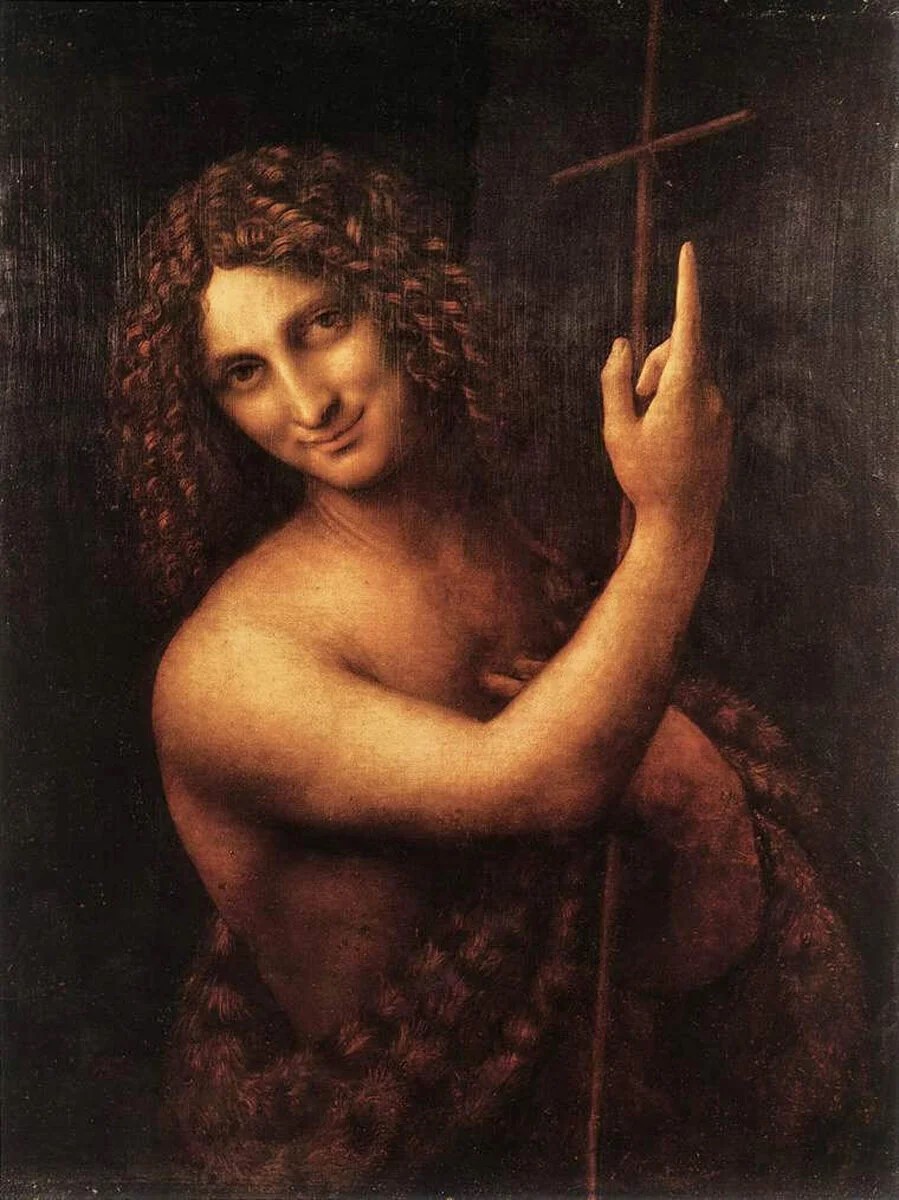
Back to our gospel story. The discussion as to whether John was Elijah continued among the people, perhaps because of Malachi's prophecy: “I will send you the prophet Elijah before that great and dreadful day of the Lord comes. He will turn the hearts of the fathers to their children, and the hearts of the children to their fathers; or else I will come and strike the land with a curse.” Elijah's prophesied return was to bring forth reconciliation to Israel, and Jesus, later in the scriptures, reveals that John the Baptist was the fulfillment of Malachi’s prophecy: “For all the Prophets and the Law prophesied until John,” Jesus said. “And if you are willing to accept it, he is the Elijah who was to come”
Saint John the Baptist by Leonardo de Vinci
The Gospel of Matthew clarifies the reincarnation of Elijah even further: ““The disciples asked him, ‘Why then do the teachers of the law say that Elijah must come first?’ Jesus replied, ‘To be sure, Elijah comes and will restore all things. But I tell you, Elijah has already come, and they did not recognize him, but have done to him everything they wished.' Then the disciples understood that he was talking to them about John the Baptist.”
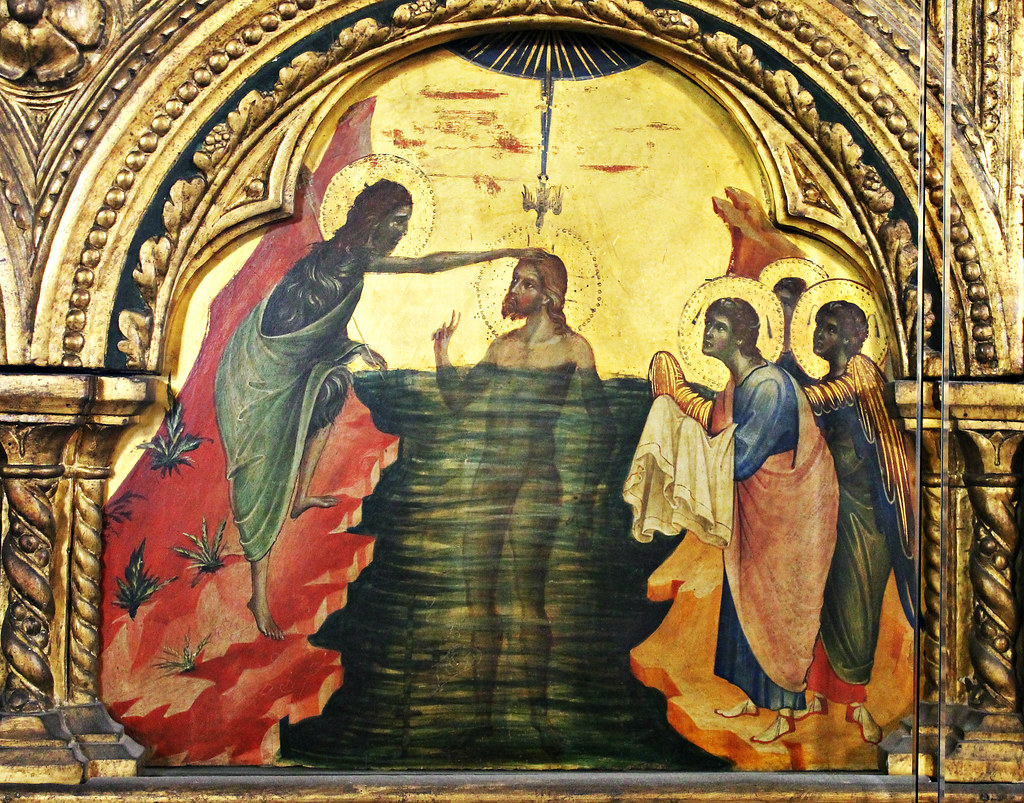
Our story continues in the Gospel of John, where John the Baptist, in the Presence of the Father, witnesses to the Holy Spirit descending upon Jesus.
“The next day John seeth Jesus coming unto him, and saith, Behold the Lamb of God, which taketh away the sin of the world. This is he of whom I said, After me cometh a man which is preferred before me: for he was before me. And I knew him not: but that he should be made manifest to Israel, therefore am I come baptizing with water.
“And John bare record, saying, I saw the Spirit descending from heaven like a dove, and it abode upon him. And I knew him not: but he that sent me to baptize with water, the same said unto me, Upon whom thou shalt see the Spirit descending, and remaining on him, the same is he which baptizeth with the Holy Ghost. And I saw, and bare record that this is the Son of God.”
John the Baptist introduced Jesus to his first two disciples. “Again the next day after John stood, and two of his disciples; And looking upon Jesus as he walked, he saith, Behold the Lamb of God! And the two disciples heard him speak, and they followed Jesus. Then Jesus turned, and saw them following, and saith unto them, What seek ye? They said unto him, Rabbi, (which is to say, being interpreted, Master,) where dwellest thou? He saith unto them, Come and see. They came and saw where he dwelt, and abode with him that day.”
After Jesus gathered his disciples, he also began baptizing people in the Jordan river. People observing tried to instill a competition between him and his cousin—to no avail. John describes his role as a best man for Jesus, who attends the wedding of the soul with Christ.
“After this, Jesus and his disciples went out into the Judean countryside, where he spent some time with them, and baptized. Now John also was baptizing at Aenon near Salim, because there was plenty of water, and people were coming and being baptized.(This was before John was put in prison.)
“An argument developed between some of John’s disciples and a certain Jew over the matter of ceremonial washing. They came to John and said to him, “Rabbi, that man who was with you on the other side of the Jordan—the one you testified about—look, he is baptizing, and everyone is going to him.”
The Baptism of Jesus by Paolo Veneziano
To this John replied, “A person can receive only what is given them from heaven. You yourselves can testify that I said, ‘I am not the Messiah but am sent ahead of him.' The bride belongs to the bridegroom. The friend who attends the bridegroom waits and listens for him, and is full of joy when he hears the bridegroom’s voice. That joy is mine, and it is now complete. He must become greater; I must become less. He must increase, and I must decrease.”
John's personal statement of self-effacement indicates that Jesus is now fully prepared and ready to complete his mission. As we observe the gospels before and after John's departure, we see the acceleration of Jesus' fiery nature, and we can perceive, as in the case of Elijah and Elisha, the master's spirit working through his disciple.
John explains the responsibility of Word and the Work of the Son of God—speaking the words of God and working the works of God on earth: “The one who comes from above is above all; the one who is from the earth belongs to the earth, and speaks as one from the earth. The one who comes from heaven is above all. He testifies to what he has seen and heard, but no one accepts his testimony. Whoever has accepted it has certified that God is truthful. For the one whom God has sent speaks the words of God, for God gives the Spirit without limit. The Father loves the Son and has placed everything in his hands. Whoever believes in the Son has eternal life, but whoever rejects the Son will not see life, for God’s wrath remains on them.”
It is beautiful to note here that the Holy Spirit that descended upon Jesus in the form of the two white wings of a dove, also descended upon the disciples on the day of Pentecost as twin flames of Alpha and Omega The baptism by water and fire facilitated by John for the one who had been Elisha, his disciple, is now facilitated through Jesus for his disciples, to further complete and expand the guru and the chela's mission to usher in the Christian dispensation for the Age of Pisces. This was their joint mission—to bring God's kingdom on earth as it is in heaven.
In a 1966 Pearl of Wisdom, the Maha Chohan taught, “The Holy Spirit is often depicted in symbolic lore as a dove descending through the air with the point downward. In reality, blessed ones, this dove of light is the flame shape of the Paraclete and the snowy coloring thereof is actually the intense whiteness of the holy flame of the Holy Spirit as it descends. The brilliancy of the descent is not always visible to all, for certain conditions must be met which make it possible for the optic nerve to respond to the high vibrations of the descending Spirit of the one God.”
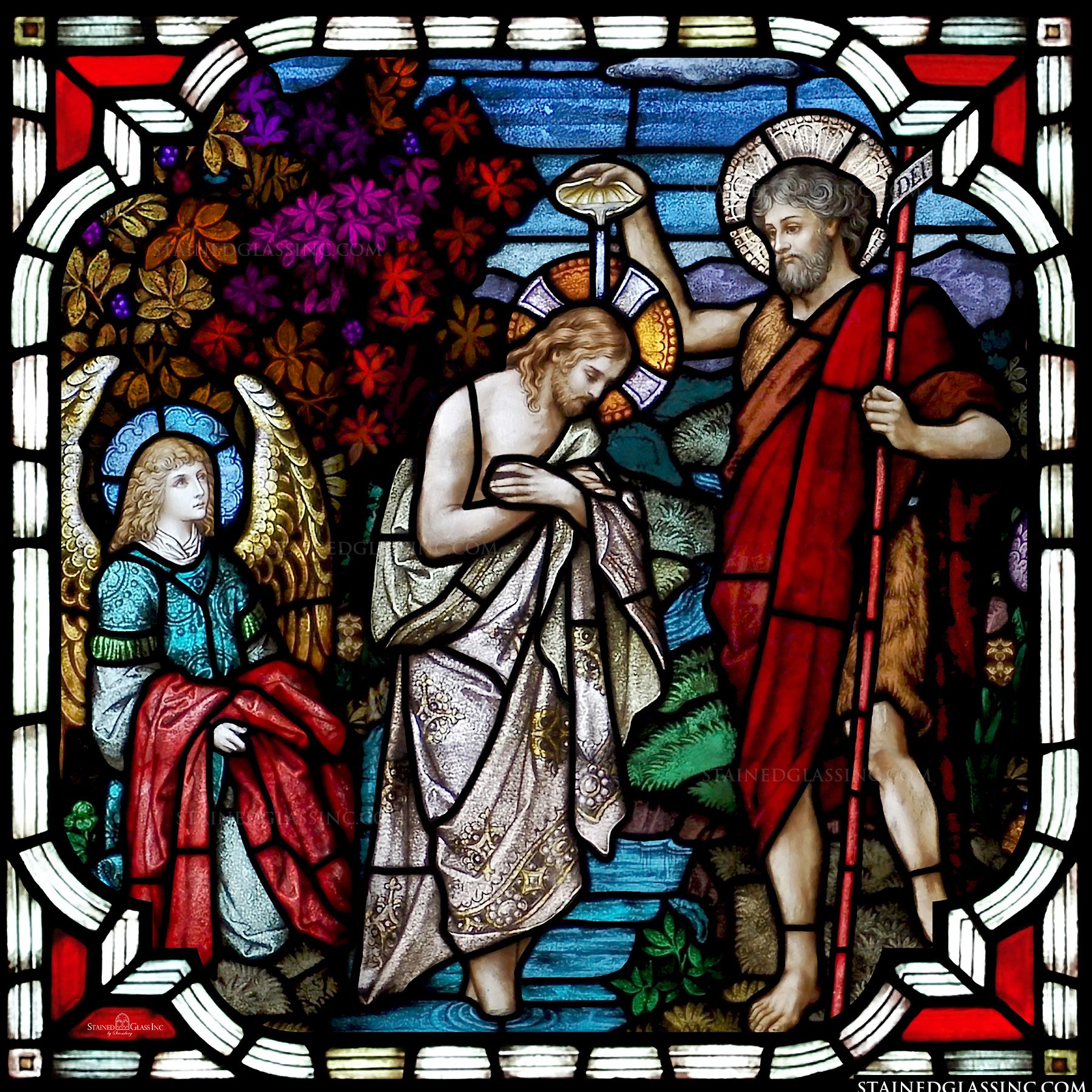
King Herod Antipas was the son of King Herod the Great, who had ordered the massacre of all of the baby boys at the time of the birth of both Jesus and John. The ascended masters teach that this was a truly satanic event, like the practice of abortion today. Herod Antipas lived from 21 BC to 39 AD during the Roman occupation of Jerusalem. Like his father, Herod Antipas, he also gave orders to have both Jesus and John the Baptist arrested.
Herod had John bound and put in prison, because John had rebuked his wife Herodias for her divorce, and he confronted Herod for marrying his half-brother's wife. “It is not lawful for you to have your brother’s wife,” John told Herod. The scripture says Herodias nursed a grudge against John and wanted to kill him, but she was not able to, because “When Herod heard John, he was greatly puzzled; yet he liked to listen to him.” Herod—who had converted to Judaism—both feared and protected John, knowing him to be a righteous and holy man.
The gospels say that when John was in prison and heard about the deeds of the Messiah, he sent his disciples to ask him, “Are you the one who is to come,or should we expect someone else?” Perhaps John was in a moment of human weakness and deep discouragement, looking for consolation and confirmation that his life had served a purpose.
Jesus replied,“Go back and report to John what you hear and see: The blind receive sight, the lame walk, those who have leprosy are cleansed, the deaf hear, the dead are raised, and the good news is proclaimed to the poor. Blessed is anyone who does not stumble on account of me.”
As John’s disciples were leaving, Jesus began to speak to the crowd about John: “What did you go out into the wilderness to see? A reed swayed by the wind? A man dressed in fine clothes? A prophet? Yes, I tell you, and more than a prophet. This is the one about whom it is written: ‘I will send my messenger ahead of you, who will prepare your way before you.’”
Jesus, once again, confirmed that John was the reincarnation of Elijah. “From the days of John the Baptist until now,” he said, “the kingdom of heaven has been subjected to violence and violent people have been raiding it. For all the Prophets and the Law prophesied until John. And if you are willing to accept it, he is the Elijah who was to come. Whoever has ears, let them hear.”
Jesus then denounced the levity of consciousness of the people, that is so prone to fickle dissatisfaction and criticism. “To what can I compare this generation?” he says. “They are like children sitting in the marketplaces and calling out to others:“‘We played the pipe for you, and you did not dance; we sang a dirge, and you did not mourn.’ For John came neither eating nor drinking, and they say, ‘He has a demon.’ The Son of Man came eating and drinking, and they say, ‘Here is a glutton and a drunkard, a friend of tax collectors and sinners.’ But wisdom is proved right by her deeds.”
Then Jesus began to denounce the towns in which most of his miracles were performed, because they did not repent. This reminds me of preacher Kathryn Kuhlman pleading, “Do not grieve the Holy Spirit,” because people would come to her revivals to experience physical healing, but would not truly integrate the Holy Spirit into their daily lives.
“Woe to you, Chorazin!” Jesus said, rebuking the lack of responsive change. “Woe to you, Bethsaida! For if the miracles that were performed in you had been performed in Tyre and Sidon, they would have repented long ago in sackcloth and ashes. But I tell you, it will be more bearable for Tyre and Sidon on the day of judgment than for you. And you, Capernaum, will you be lifted to the heavens? No, you will go down to Hades. For if the miracles that were performed in you had been performed in Sodom, it would have remained to this day. But I tell you that it will be more bearable for Sodom on the day of judgment than for you.”
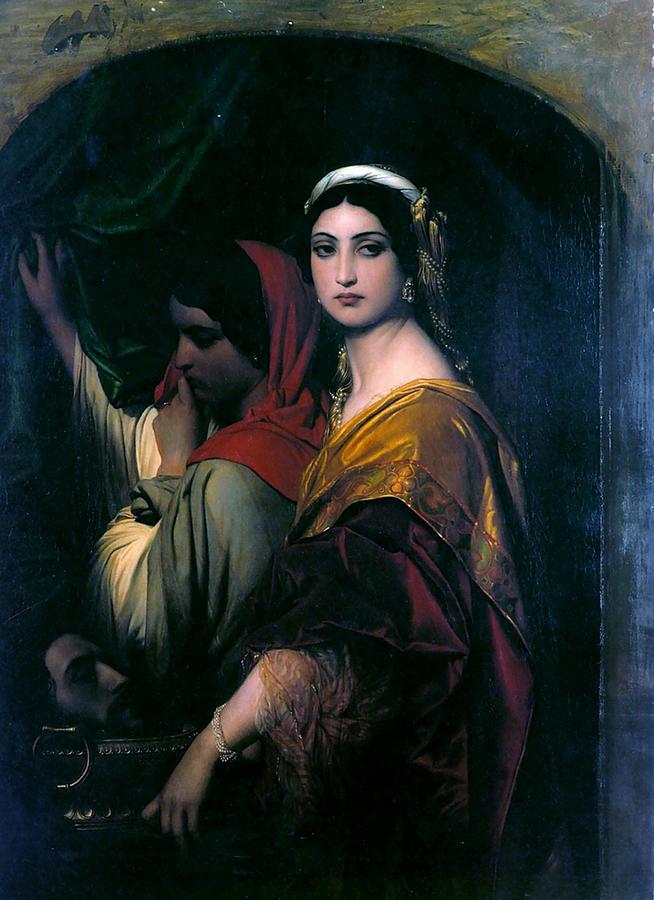
Paul Delaroche Herodias with the Head of St. John the Baptist
Finally the opportune time came for Herodias to do away with John the Baptist. On his birthday, Herod gave a banquet for his high officials and military commanders, and for the leading men of Galilee. When the daughter of Herodias came in and danced, she pleased Herod and his dinner guests. The king said to the girl, “Ask me for anything you want, and I’ll give it to you.”And he promised her with an oath, “Whatever you ask I will give you, up to half my kingdom.”
The girl went out and said to her mother, “What shall I ask for?” “The head of John the Baptist,” the Mother answered. The girl hurried back to the king and said, “I want you to give me right now the head of John the Baptist on a platter.”
The gospels tell us the king was greatly distressed, but because of his oaths and his dinner guests, he did not want to refuse her. So he immediately sent an executioner with orders to bring John’s head. The man went, beheaded John in the prison, and brought back his head on a platter. He presented it to the girl, and she gave it to her mother. Then John’s disciples came and took his body and laid it in a tomb, and went and told Jesus.
When I read these biblical records, it is deeply plausible to me that Herodias was the reincarnation of Jezebel, who wanted Elijah dead, and Herod, the reincarnation of Ahab, who still had a soft spot for Elijah and repented in sackcloth, when he was cursed and rebuked by the prophet. Even if these two were not Elijah's tormenters reembodied, the spirit of Jezebel was certainly in Herodias. Both used sensuality and devious means to seek revenge against the man of God who once again, said “no” to their lusts.
The story also reminds me of Saint Thomas More, the “man for all seasons” who became the ascended master El Morya. Thomas More was beheaded by Henry VIII for not acquiescing to the Henry's divorce and subsequent marriage to Anne Boleyn—reneging the pope and the Catholic church in the process. Following the footprints of John the Baptist, Thomas More said, “I die the king's good servant, but God's first.” And when he stepped up to the scaffold, he said to his executioner: “I pray you, I pray you, Mr Lieutenant, see me safe up and for my coming down, I can shift for myself.”

Sir Thomas More by Hans Holbein the Younger
Another heroic beheaded martyr worthy of mention is Saint Denis, patron saint of France. Having been executed in the second century A.D. by order of pagan Roman emperor Decius, persecutor of Christians, Denis picked up his severed head in what is now Montmartre and carried it for several miles, preaching a sermon of repentance all the way!
These ones come to show us, like Jesus and John, that death is not real. Echoing the words of Paul, who was also beheaded for Christ's sake, “O death, where is thy sting? O grave, where is they victory?”
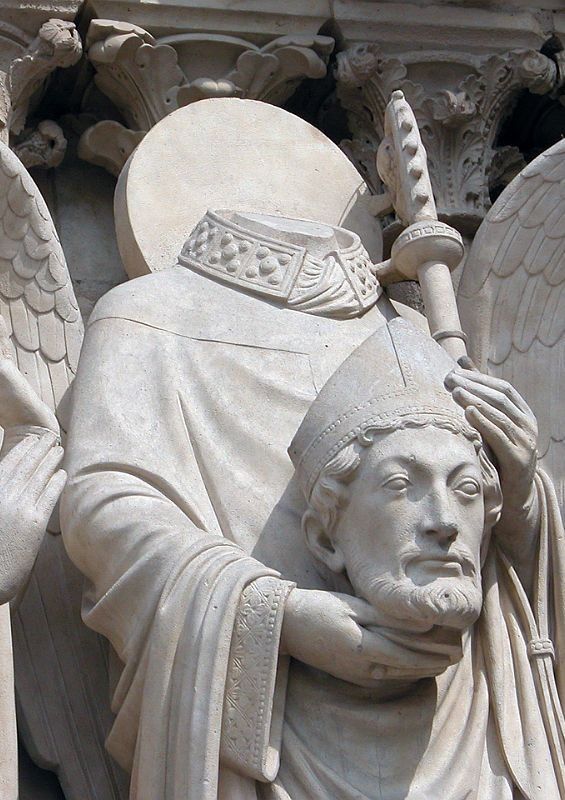
Saint Denis on the facade of the Notre Dame Cathedral
Following his burial, John the Baptist appeared one more time in the life of Jesus, this time as an ascended master once again. The gospels record that following his beheading, John regained his heavenly identity as the ascended Elijah, and appeared to converse with Jesus and Moses, who was also ascended, on Transfiguration's Mount. This was to prepare him for his upcoming trial and initiation of the crucifixion, the resurrection and the ascension. Jesus raised the consciousness of three of his disciples so that they could also witness this supernatural event:
Sanat Kumara explains that the transfiguration is the cosmic interchange of Spirit and Matter, bathing every crystal of the matter chalice of the Son of God with the fiery baptism of the Holy Ghost. From the gospels, we read: “Six days later Jesus took Peter and the two brothers, James and John, and led them up a high mountain to be alone. As the men watched, Jesus’ appearance was transformed so that his face shone like the sun, and his clothes became as white as light. Suddenly, Moses and Elijah appeared and began talking with Jesus.
Peter exclaimed, “Lord, it’s wonderful for us to be here! If you want, I’ll make three shelters as memorials—one for you, one for Moses, and one for Elijah.” But even as he spoke, a bright cloud overshadowed them, and a voice from the cloud said, “This is my dearly loved Son, who brings me great joy. Listen to him.”
The disciples were terrified and fell face down on the ground. What was terrified was their untransmuted human substance. Then Jesus came over and touched them.“Get up,” he said.“Don’t be afraid.”And when they looked up, Moses and Elijah were gone, and they saw only Jesus.
Following this, the disciples again questioned Jesus about Elijah. “Why do the teachers of religious law insist that Elijah must return before the Messiah comes?” Jesus responded, “Elijah is indeed coming first to get everything ready. Yet why do the Scriptures say that the Son of Man must suffer greatly and be treated with utter contempt? But I tell you, Elijah has already come, and they chose to abuse him, just as the Scriptures predicted.”
The ongoing debate about the incarnation and reincarnation of Jesus and John had not yet abated among the people. One day Jesus left the crowds to pray alone. Only his disciples were with him, and he asked them, “Who do people say I am?”
“Well,” they replied, “some say John the Baptist, some say Elijah, and others say you are one of the other ancient prophets risen from the dead.” Then he asked them, “But who do you say I am?”
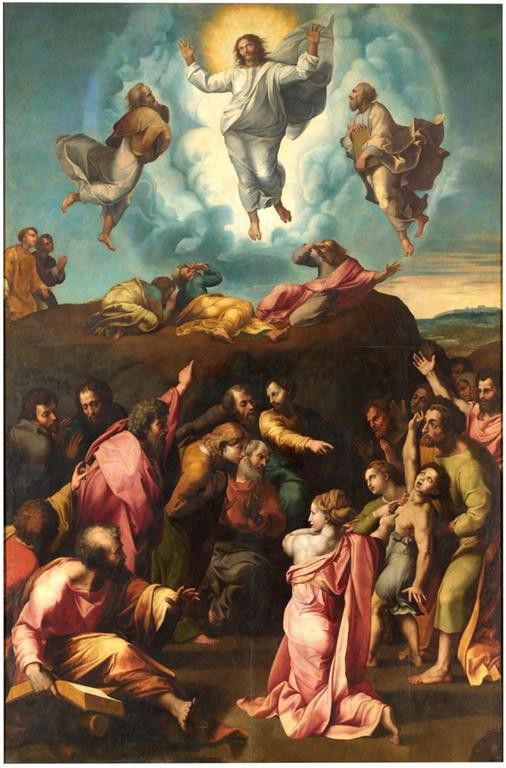
The Transfiguration by Raphael
In The Gospel of Mark we read that Peter replied, “You are the Messiah sent from God!” In The Gospel of Luke we read that Peter replied, “The Christ of God.” These two translations indicated that for the disciples, the Messiah and the Christ were one and the same. And it was on this rock—the rock of Christ in Peter, his name meaning rock or stone—that Jesus said he would build his church.
We find another statement about the reincarnation of John the Baptist in the Gnostic Pistis Sophia, where Jesus is identifying with the Logos of the universal Christ, before coming into embodiment. Jesus says: “As I found myself amidst the rulers of the aeons, under the command of the First Mystery, I directed my gaze towards humanity. I identified Elizabeth, who would eventually become the mother of John the Baptist, even before she had conceived him.
“I infused her with a power. This power would enable John to herald my coming, prepare the way, and administer baptism through the purifying waters of forgiveness. I encountered the soul of the prophet Elijah. The soul of the prophet Elijah became integrated within the body of John the Baptist. Recognizing your misunderstanding regarding my discourse on the soul of Elijah, which now resides within John the Baptist, I addressed you directly, explaining: If you are willing to accept John the Baptists, he is the embodiment of Elijah, as I had foretold.”
After John the Baptist left this world, King Herod heard of the ministry of Jesus, for “Jesus’ name had become well known.” The spirit of Jesus was so much like the spirit of John that people were saying, “John the Baptist has been raised from the dead, and that is why miraculous powers are at work in him.” Others claimed Jesus was a prophet, “like one of the prophets of long ago.” And some maintained that he was Elijah.
When Herod heard this, he questioned, “John, whom I beheaded, has been raised from the dead?” When he realized, it was Jesus—not John—he also sought out Jesus' arrest. Some Pharisees came to Jesus and said to him, “Leave this place and go somewhere else. Herod wants to kill you.”
And Jesus replied, in fulfillment of prophecy, “Go tell that fox, ‘I will keep on driving out demons and healing people today and tomorrow, and on the third day I will reach my goal.’ In any case, I must press on today and tomorrow and the next day—for surely no prophet can die outside Jerusalem!”
Herod later spurred and oversaw the trial and crucifixion of Jesus. In The Report of Pontius Pilate, Pilate writes of his regret and says: “I saw that greater marvels had been wrought by him than by the gods whom we worship. Then Herod and Archelaus and Philip and Annas and Caiphas, with all the people, delivered up to me to put him on his trial. And because many raised a tumult against me, I commanded that he should be crucified.”
We read of the karmic conclusion to John the Baptist's beheading in the Letter of Herod to Pilate the Governor. The letter describes Herod's karmic contrition about his stepdaughter Salome, who was sometimes called Herodias like her Mother. “I am in great anxiety,” Herod writes. “As my daughter Herodias who is dear to me, was playing upon a pool of water which had ice upon it. It broke under her, and all her body went down, and her head was cut off and remained on the surface of the ice. And behold, her mother is holding her head upon her knees in her lap, and my whole house is in great sorrow.” Herod is confessing to Pilate that Salome was accidentally beheaded to balance the karma of having John the Baptist beheaded.
“For I, when I heard of the man Jesus, wished to come to thee, that I might see him alone, and hear his word, whether it was like that of the sons of men. And it is certain that because of the many evil things which were done by me to John the Baptist, and because I mocked the Christ, behold I receive the reward of righteousness, for I have shed much blood of others' children upon the earth. Therefore the judgments of God are righteous; for every man receives according to his thought.
“But since thou wast worthy to see that God-man, therefore it becometh you to pray for me. My son Azbonius also is in the agony of the hour of death. And I too am in affliction and great trial, because I have the dropsy; and am in great distress, because I persecuted the introducer of baptism by water, which was John. Therefore, my brother, the judgments of God are righteous.
“And my wife, again, through all her grief for her daughter, is become blind in her left eye, because we desired to blind the Eye of righteousness. There is no peace to the doers of evil, saith the Lord. For already great affliction cometh upon the priests and upon the writers of the law; because they delivered unto thee the Just One....For already do worms begin to issue from my body, and lo, I am receiving temporal judgment, and I am afraid of the judgment to come. For in both we stand before the works of the living God; but this judgment, which is temporal, is for a time, while that to come is judgment for ever.”
Sharing now two dictation excerpts published in Pearls of Wisdom by The Summit Lighthouse. The first is a teaching from the ascended master Jesus about the mission of John the Baptist. The second is a dictation by the ascended John the Baptist about his mission in that life.
Jesus said: “ By special dispensation from the Hierarchy, John the Baptist came forth from the ascended state to set the stage for the coming of the Christ, for the descent of the Fire of the Logos, and to initiate the spiral whereby all mankind might attain Christhood according to the example that the Father had given me to exemplify on earth as it truly is in heaven.
“And so I explained to my disciples, “Among them that are born of women there hath not risen a greater than John the Baptist.” For not in ten thousand years had the dispensation been given for an Ascended Being of his level of attainment to take on physical form in a mission for the Hierarchy. And thus he truly walked the earth as the greatest of Masters, a karma-free being who laid down his life not only that I might live to fulfill the mission of the Christ, but that all who followed after might have the momentum of his mantle of purity and self-sacrifice. He lived that we might leave testimony upon the sands of time, an indelible mark in akasha of the unspeakable love that exists between guru and chela, Master and disciple.”
John the Baptist said: “I did embody through Zacharias and Elizabeth. I came forth, beloved, for I came as an example. I came face-to-face with the seed of the fallen ones who went out into the desert to be baptized, knowing they were evil. I came knowing the end from the beginning, blessed hearts. Truly, I desired to stand between those fallen ones and the living Christ that he might confront them in his own good time and that I might challenge them to come forth with fruits meet for repentance. They had no desire for repentance. They knew it. I knew it. It was a sham. And yet I went through the ritual that they might be judged, whereas Jesus had others in his time who must be judged by his presence in the earth.
“So, beloved, I was willing to challenge Herod for the sake of the business of Herodias. I was willing to rebuke that fallen one, knowing it would cost my life. Yet I knew from the beginning that I must set the example, and the example is of principle.
“When you stray from your highest principles, you have nothing to stand upon. Thus, my head was borne on a charger brought to the daughter and then to the mother. This was my exit, beloved. I ask you, was it worth it? Of course it was worth it, for I have left a record for all time that I should stand for truth, for honor, for the love of God and for the challenging of these fallen angels once and for all.”