Jesus and the
Egyptian Mysteries
Mary and Joseph departed for Egypt, a journey described in the Gospel of Matthew, in the First Gospel of the Infancy of Jesus Christ and in the teachings of the ascended masters given through the Bridge to Freedom and the Summit Lighthouse. The impression that Jesus left on the land of Egypt was such, that a Gospel of the Egyptians was written at the time of his life or shortly after his life, and discovered in Nag Hammadi, Egypt with other apocryphal gospels in 1945.
Some scholars have even associated Jesus with the Pharaonic culture—because like Jesus, the ancient pharaohs or kings of Egypt were seen as an extension of, and an incarnation of God—head of both church and state. It is interesting to note that the celebration of Jesus' birth and the birth of Horus through Isis were both celebrated on December 25. Nevertheless, by the time Jesus came to Egypt, Egypt, like many other cultures, had already fallen from the spiritual apogee of the reigns of Thutmose III, Amenhotep III and Ikhanaton, who preserved and reenergized the golden age consciousness of the long-lost Atlantean civilization. Nevertheless, the remnants of these golden age civilizations could still be found and were a part of the traditions that Jesus experienced.
Recent archeological discoveries also date the Sphinx back to the antideluvian time known as Atlantis. Egyptologists Robert M. Schoch, Ph.D., and Robert Bauval combined their decades of research to show how the Sphinx is thousands of years older than the conventional Egyptological timeline, and was built by a long forgotten pre-Pharaonic civilization. They explain that the patterns of rainfall on the limestone in the desert predates ancient Egyptian history.
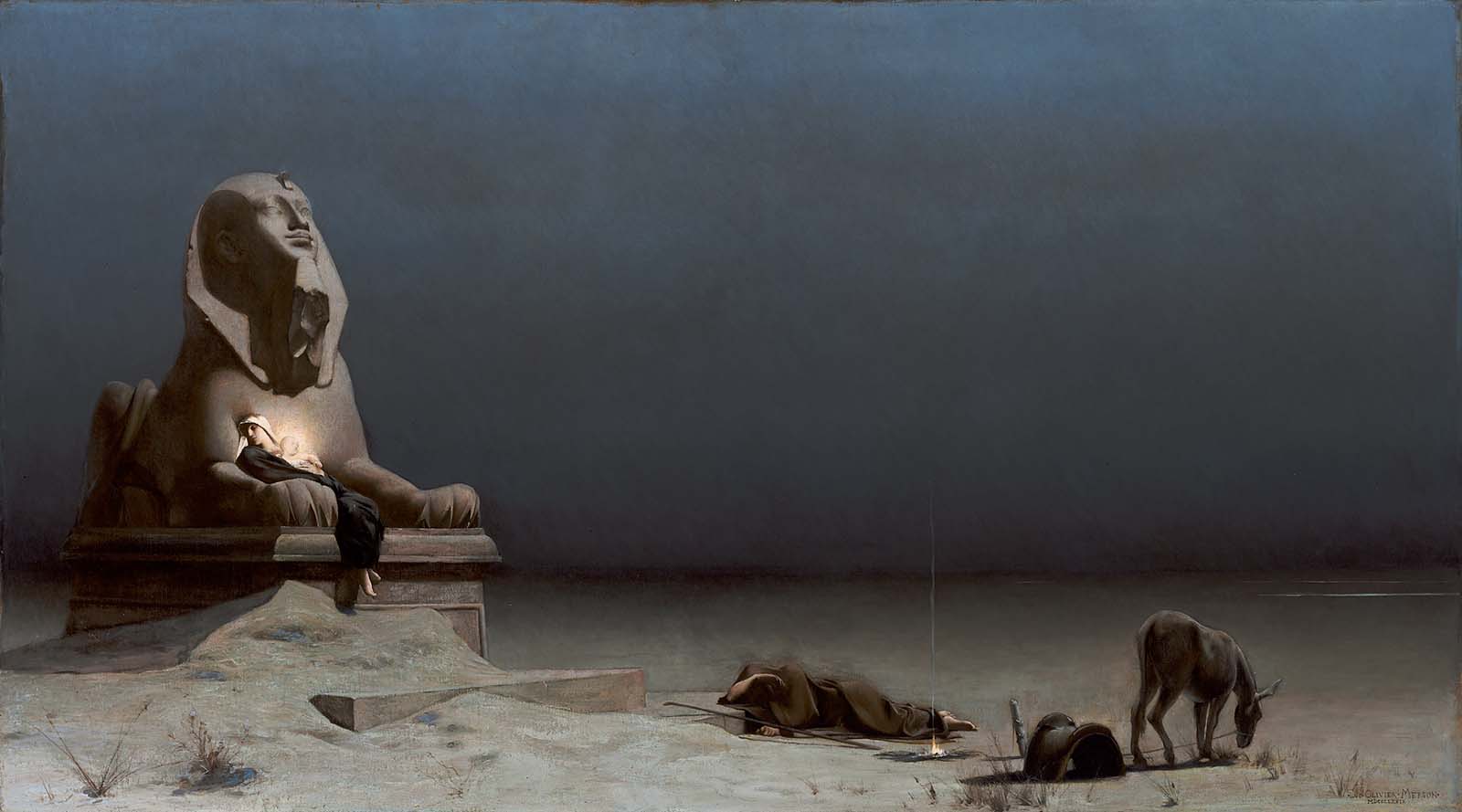
Rest on the Flight Into Egypt by Luc-Olivier Merson
Elements of the Atlantean civilization and its connection to the ascended masters through geometry, astronomy and mathematics, had been preserved in the spiritual understanding and rituals maintained through the Egyptian pyramids, the mystery schools of Heliopolis, City of the Sun, and the temples of Karnak and Luxor.
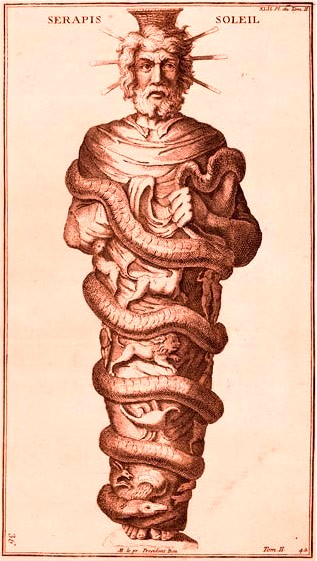
In The Masters and their Retreats, we read that the ascended master Serapis Bey, who was embodied as Amenhotep III, brought Egypt to her height of prosperity, peace and splendor, overseeing the restoration of the temple of Karnak, and then built the temple of Luxor as the physical counterpart of the Ascension Temple on the etheric plane. In a previous life, the master Serapis carried the ascension flame in his heart safely up the Nile river to Luxor, just before Atlantis sank.
“I remember well,” says Serapis, “when the first rumblings of the sinking of Atlantis were present. For, as you know, the sinking of that continent came in stages. By the grace of God, the warning given allowed many to escape. And we made our way to Luxor....You may wonder why a spiritual flame requires transporting by mere mortals....Because the only place that the flame can truly abide, apart from the altar so dedicated, is the living heart of the living adept.”
The ascension flame was the Maxim Light described in the book A Dweller on Two Planets by Phylos the Tibetan, that was blazing on the altars of Atlantis, and through which a deceased body would pass at the end of the soul's incarnation. It was an intense focus of spiritual light, akin to that which emanated from the Ark of the Covenant in the Hebraic tradition. Phylos describes it: “Over all shone the mysterious light which required no fuel, nor for its tall taper any human keeper.”
The First Gospel of the Infancy of Jesus Christ gives us a colorful and endearing account of the travels and miracle experiences of the Holy Family in the land of the ancient pharaohs. In the lengths of the journey, the girths of the saddle broke, and Joseph and Mary went into a city. And all of the priests and magistrates went before an idol, who said to them: “The unknown God is come hither, who is truly God; nor is there any one besides him, who is worthy of divine worship; for he is truly the Son of God.” And at that same instant, the idol fell down.
The son of one of the priests had an affliction. He was possessed with a multitude of devils, walking around naked, uttering strange things and throwing stones at whosoever passed. He went into the inn where the Holy Family was. Mary had washed one of the swaddling cloths of Jesus and laid it on a post to dry, and the possessed boy took one and put it on his head. Immediately, the devils began to come out of his mouth, and flew away in the shape of crows and serpents. Healed by the power of Christ, the boy began to sing praises and gave thanks to the Lord who had healed him. The boy explained what had happened to his father who said, “Perhaps this boy is the son of the living God who made the heavens and the earth.” Then, says the gospel, was fulfilled the prophecy, “Out of Egypt I have called my son.”
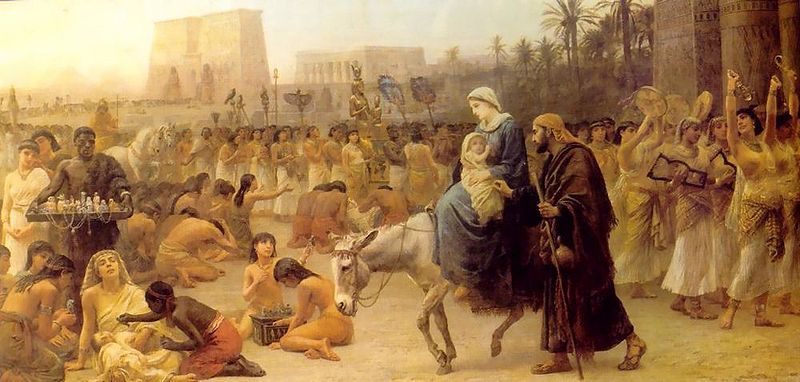
Year of Our Lord by Long Edwin
Upon hearing that the idol had fallen, Joseph and Mary were afraid, lest the Egyptians behave towards them like Herod's soldiers and burn them. They left the inn and went a secret way where robbers attacked carriages and kidnapped travelers. As they approached, the thieves heard a great noise, like the king of an army with many horses and trumpets. They were so frightened that they ran off, leaving their booty and prisoners behind. The prisoners began to loose themselves and asked Joseph and Mary where the king was. Joseph answered, “He will come after us.”
Joseph and Mary went to another city where a woman was possessed with Satan. She would break her chains and go naked into the desert, where roads crossed, and in churchyards, throwing stones at men. Mary saw the woman and took pity on her, and immediately Satan left her, fleeing in the form of a young man, saying, “Woe to me, because of thee Mary, and thy son.” The woman blushed, put on her clothes and went home. Her father and relatives, who were the best in the city, entertained Mary and Joseph with the greatest respect, and then offered them many provisions.
They went forth and arrived in another city by evening, where a wedding was about to take place, but the bride could not speak, having been made dumb by sorcerers. When the bride saw Mary entering the town, carrying Jesus in her arms, she reached for the infant child and took him in her arms, kissing him continuously. Immediately, her tongue was loosed and her hearing restored, and she began to sing praises to God. The inhabitants of the city greatly rejoiced, that God and his angels had come down among them. Mary and Joseph stayed for three days and were treated with the greatest respect and most splendid entertainment.
After three days and with many provisions, Mary and Joseph left again and arrived in a large city, that was famous. Perhaps this was Alexandria. In this city was a woman who was also possessed by Satan, who lay upon her every night in the form of a serpent. The woman saw Mary and asked if she could hold and kiss the infant child. As soon as Jesus entered her arms, Satan left and never came back, and all the neighbors praised God. The next day, the woman brought perfumed water to bathe Jesus, and then kept the water. A girl whose body was white with leprosy, washed in the water and was immediately healed, and the people said, “Without doubt, Joseph and Mary and that boy are Gods.”
As they were departing, the girl asked Mary to go with them, and she accompanied them to a city where there was the the palace of a great king. The girl went to the prince's wife and found her mournful. She told the girl that the child she had with the prince was leprous, and that the prince would have nothing to do with him. The girl told the prince's wife how the infant Jesus had healed her of her leprosy with his bath water. The prince's wife made a large feast for Joseph and Mary and the next day, brought perfumed water to bathe Jesus, and then her son. Her son was instantly healed and she gave praises to God, and gave Mary and the Holy Family very large gifts with all imaginable respect.
Joseph and Mary departed to another city and went to a man's house, who was newly married, but could not enjoy his wife by the influence of sorcerers. As they stayed in his house that night, the man was freed from his disorder.
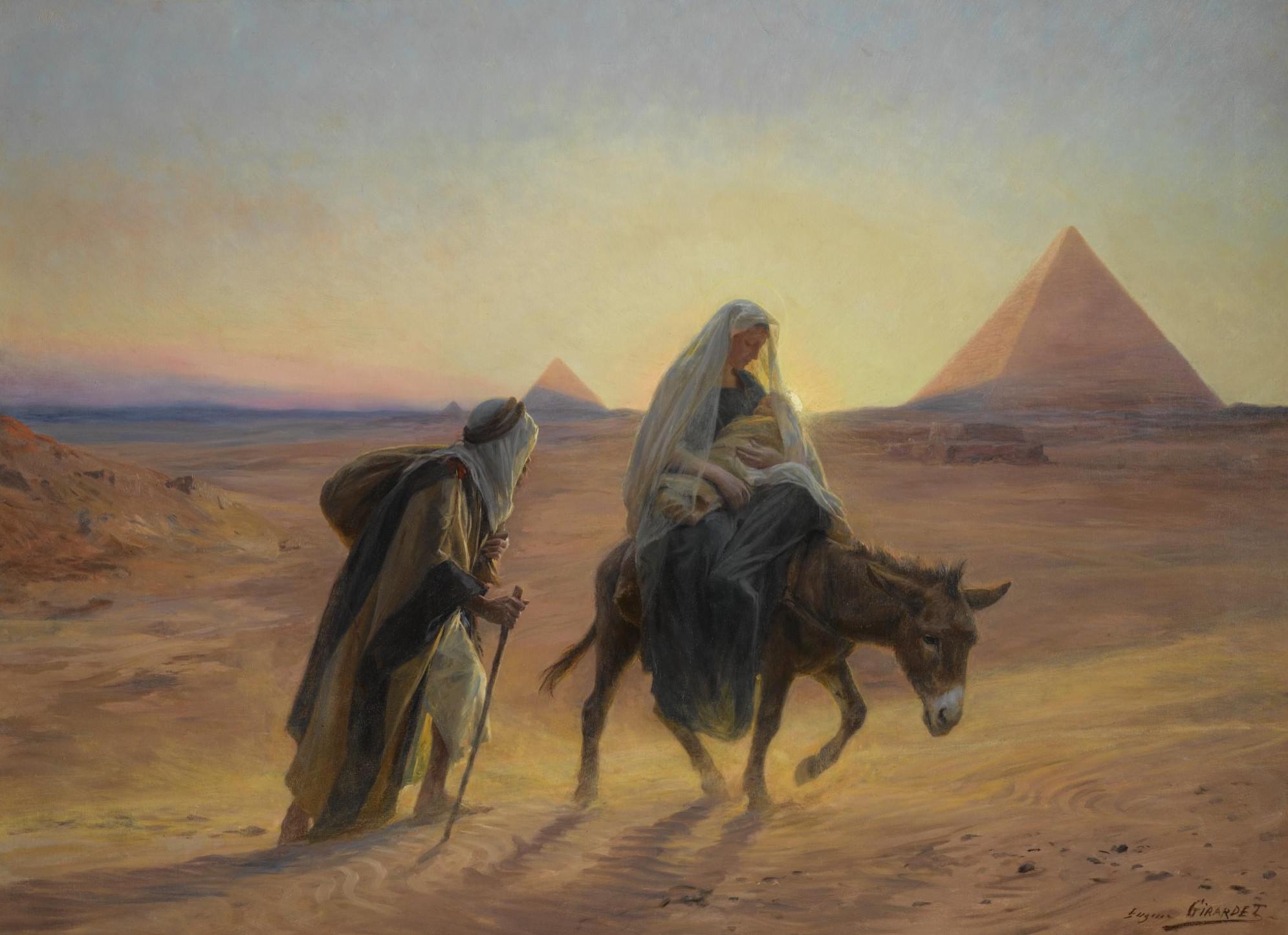
Flight into Egypt by Eugene Girardet
Two days later, they arrived in another city and found three women going from a grave weeping. Mary told the girl to inquire of their sorrow. They did not answer, but invited the travelers to lodge with them. In the parlor of their home was a mule, covered with silk, whom they kissed and were feeding. The women told the girl that this mule was their brother, bewitched by a jealous woman to block his ability to marry another. No wise men, diviners or magicians could break the curse.
The girl told them of her miraculous healing and bade them to share their burden with Mary. Mary, upon hearing of their affliction, placed the baby Jesus on the back of the mule and said, “O Jesus Christ, restore according to thy extraordinary power this mule, and grant him to have again the shape of a man and a rational creature, as he had formerly.” No sooner had she uttered these words that the mule passed into the form of a young man again, without any deformity. The family rejoiced greatly, and asked Mary for her consent to to marry their brother to her traveling friend. Mary agreed, and they made a splendid wedding for the girl, glorifying and praising God: “O Jesus, son of David, who changest sorrow into gladness and mourning into mirth!” Mary, Joseph and the baby Jesus stayed ten days with this family before continuing on their way, and all cried when they left.
The Gospel of Pseudo-Matthew recounts other tales of Joseph, Mary, Jesus and the girl, as they traveled through Egypt with a caravan of sorts.. This account tells us the girl traveling with Jesus was also named Mary, and describes stories of baby Jesus' connection with animal life. These stories also remind me of the life of Saint Francis, who centuries later, became Jesus' disciple and left a beautiful legacy of loving and connecting with animal life—even taming a wolf.
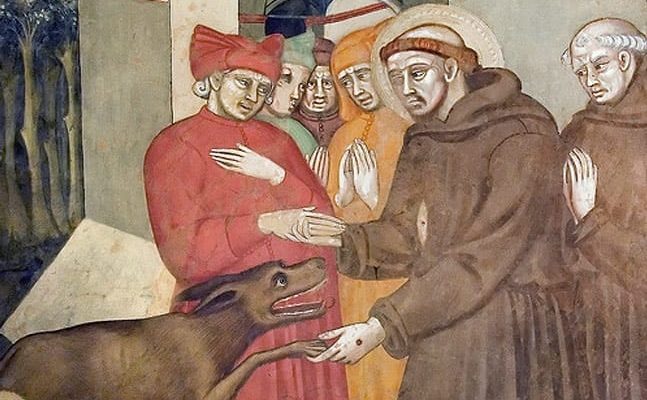
Saint Francis and the Wolf of Gubbio
“And having come to a certain cave, and wishing to rest in it, the blessed Mary dismounted from her beast, and sat down with the child Jesus in her bosom. And there were with Joseph three boys, and with Mary a girl, going on the journey along with them. And, lo, suddenly there came forth from the cave many dragons; and when the children saw them, they cried out in great terror.”
The Gospel of Pseudo-Matthew here refers to Psalm 148, but in Psalm 91, the word “dragons” that we find in the King James Version, was translated as “serpents” in other translations of the Bible. “You will trample upon lions and cobras; you will crush fierce lions and serpents under your feet!” For all we know, the dragons Jesus found could indeed have been Egyptian cobras. The story continues:
“Then Jesus went down from the bosom of his mother, and stood on his feet before the dragons; and they adored Jesus, and thereafter retired. Then was fulfilled that which was said by David the prophet: 'Praise the Lord from the earth, ye dragons; ye dragons, and all ye deeps.' And the young child Jesus, walking before them, commanded them to hurt no man. But Mary and Joseph were very much afraid lest the child should be hurt by the dragons. And Jesus said to them: 'Do not be afraid, and do not consider me to be a little child; for I am and always have been perfect; and all the beasts of the forest must needs be tame before me.'”
This gospel also speaks of child Jesus' beautiful relationship with lions and panthers, fulfilling the words of Isaiah. “Lions and panthers adored him likewise, and accompanied them in the desert. Wherever Joseph and the blessed Mary went, they went before them showing them the way, and bowing their heads; and showing their submission by wagging their tails, they adored him with great reverence. Now at first, when Mary saw the lions and the panthers, and various kinds of wild beasts, coming about them, she was very much afraid. But the infant Jesus looked into her face with a joyful countenance, and said: Be not afraid, mother; for they come not to do thee harm, but they make haste to serve both thee and me.
“With these words he drove all fear from her heart. And the lions kept walking with them, and with the oxen, and the asses, and the beasts of burden which carried their baggage, and did not hurt a single one of them, though they kept beside them; but they were tame among the sheep and the rams which they had brought with them from Judaea, and which they had with them. They walked among wolves, and feared nothing; and no one of them was hurt by another. Then was fulfilled that which was spoken by the prophet: Wolves shall feed with lambs; the lion and the ox shall eat straw together. There were together two oxen drawing a wagon with provision for the journey, and the lions directed them in their path.”
The Gospel of Pseudo-Matthew, like The Revelation of the Magi, also alludes to the fact that Jesus could shorten time and space to ease his family travels. “After this, while they were going on their journey, Joseph said to Jesus: 'Lord, it is a boiling heat; if it please thee, let us go by the seashore, that we may be able to rest in the cities on the coast.' Jesus said to him: 'Fear not, I will shorten the way for you, so that what you would have taken thirty days to go over, you shall accomplish in this one day.' And while they were thus speaking, behold, they looked forward, and began to see the mountains and cities of Egypt.”
.jpg)
Old Persian miniature of Mary and Jesus at the foot of the Tree
The Gospel of Pseudo-Matthew also shares a miracle story of the child Jesus involving a palm tree. Though there is no way to prove the veracity of these stories, recorded six hundred and fifty years after the birth of Christ, we know that many of these stories and legends were also passed down to subsequent generations through oral tradition. What is interesting about this story is that it may have influenced the Prophet Mohammed's understanding, particularly Surah 19 of the Quran, that describes Jesus' birth with reference to a palm tree: “And the pains of child-birth came upon her near the trunk of a palm-tree.”
Continuing with the story, “And it came to pass on the third day of their journey, while they were walking, that the blessed Mary was fatigued by the excessive heat of the sun in the desert; and seeing a palm tree, she said to Joseph: 'Let me rest a little under the shade of this tree.' Joseph therefore made haste, and led her to the palm, and made her come down from her beast. And as the blessed Mary was sitting there, she looked up to the foliage of the palm, and saw it full of fruit, and said to Joseph: 'I wish it were possible to get some of the fruit of this palm.' And Joseph said to her: 'I wonder that thou sayest this, when thou seest how high the palm tree is; and that thou thinkest of eating of its fruit. I am thinking more of the want of water because the skins are now empty, and we have none wherewith to refresh ourselves and our cattle.'
“Then the child Jesus, with a joyful countenance, reposing in the bosom of his mother, said to the palm: O tree, bend thy branches, and refresh my mother with thy fruit. And immediately at these words, the palm bent its top down to the very feet of the blessed Mary; and they gathered from it fruit, with which they were all refreshed. And after they had gathered all its fruit, it remained bent down, waiting the order to rise from him who had commanded it to stoop.
“Then Jesus said to it: 'Raise thyself, O palm tree, and be strong, and be the companion of my trees, which are in the paradise of my Father; and open from thy roots a vein of water which has been hid in the earth, and let the waters flow, so that we may be satisfied from thee.' And it rose up immediately, and at its root there began to come forth a spring of water exceedingly clear and cool and sparkling. And when they saw the spring of water, they rejoiced with great joy, and were satisfied, themselves and all their cattle and their beasts. Wherefore they gave thanks to God.
“And on the day after, when they were setting out thence, and in the hour in which they began their journey, Jesus turned to the palm, and said: 'This privilege I give thee, O palm tree, that one of thy branches be carried away by my angels, and planted in the paradise of my Father. And this blessing I will confer upon thee, that it shall be said of all who conquer in any contest, You have attained the palm of victory.' And while he was thus speaking, behold, an angel of the Lord appeared, and stood upon the palm tree; and taking off one of its branches, flew to heaven with the branch in his hand.
“And when they saw this, they fell on their faces, and became as it were dead. And Jesus said to them, 'Why are your hearts possessed with fear? Do you not know that this palm, which I have caused to be transferred to paradise, shall be prepared for all the saints in the place of delights, as it has been prepared for us in this place of the wilderness?' And they were filled with joy; and being strengthened, they all rose up.”
There are several locations in Egypt with springs associated with the child Jesus. According to Egyptian tradition, the Holy Family –on their way to Hermopolis Magna, a prosperous metropolis on the west bank of Nile—went to Tal Basta, an ancient Egyptian city mentioned in Pharaonic history. Legend says that when the Holy Family arrived, they sat under a tree outside the nearby village of Mostorod, to take shade from the glare and heat of the sun. During their rest from the hardships of traveling, Jesus asked Mary to drink, so she carried him in her arms and headed to the village. The people there did not receive Mary well and were hard-hearted toward Jesus, because when the two entered the village, their idols had fallen to the ground.
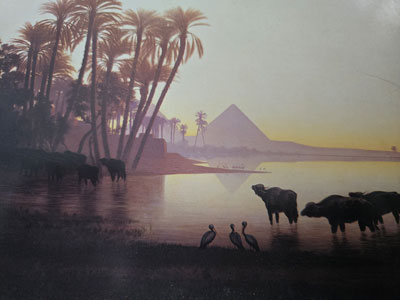
Sunset on the plains of Giza by Frere Theodore
Legend says that when Jesus saw Mary crying, he wiped her tears with his two small hands, then drew a circle on the ground with his finger. Then Joseph took a piece of iron, one of the carpentry tools he brought to support his family in Egypt, and hit the ground next to the tree to dig up the earth. Immediately, a “sweet spring like honey and white as snow” gushed out. The Lord Jesus placed his pure hands in the water and blessed it, so that those who drink from it may be healed. The spring was called al-Mahama, meaning “place of bathing,” and still exists today. It is by the village of Mostorod.
The Holy Family also spent several days in Matareya, sheltered by a sycamore tree known today as “Mary’s Tree.” Legend says Mary washed Jesus' clothes from the water of a nearby well, that he blessed. She poured its water there, and an aromatic plant with a beautiful aroma grew, known as the balsam plant. Some historians call this well the Balsam Well, and there is still a street in Matareya called Balsam Street, as well as a street called Mary’s Well.
The monastery of Muharraq is located in the middle of the land of Egypt. Here, the Holy Family stayed for more than six months, and it is said that the surface of the altar is the stone on which the Savior Child slept. Then, they passed by Mount El Natrun, south of the desert wilderness of Sheheet. Legend says that here, Jesus told Mary, “Know, my mother, that there will live in this desert many monks, hermits, and spiritual fighters, and they will serve God like angels.” While they were there, Jesus became thirsty, and Joseph found nothing but a lake of salty water. Jesus extended his hands in the salty water, and a single spring of sweet water emerged from the salty water. This fresh water spring is known as Maryam's Spring, in the middle of a salt water lake saturated with natron salt, located three kilometers from where the Baramous Monastery exists today.
The Gospel of Pseudo-Matthew speaks of another incident where the Holy Family disturbed the Egyptian idols, quoting Isaiah 19. “And rejoicing and exulting, they came into the regions of Hermopolis, and entered into a certain city of Egypt which is called Sotinen. And because they knew no one there from whom they could ask hospitality, they went into a temple which was called the Capitol of Egypt.” In this temple were three hundred and fifty-five idols. Divine honors and sacred rites were paid to each of which, on its own day,. When the Egyptians of that city entered the Capitol, the priests would tell them how many sacrifices were to be offered each day, according to the honor in which the god was held.
“And it came to pass, when the most blessed Mary went into the temple with the little child, that all the idols prostrated themselves on the ground, so that all of them were lying on their faces shattered and broken to pieces; and thus they plainly showed that they were nothing. Then was fulfilled that which was said by the prophet Isaiah: 'Behold, the Lord will come upon a swift cloud, and will enter Egypt, and all the handiwork of the Egyptians shall be moved at his presence.'”
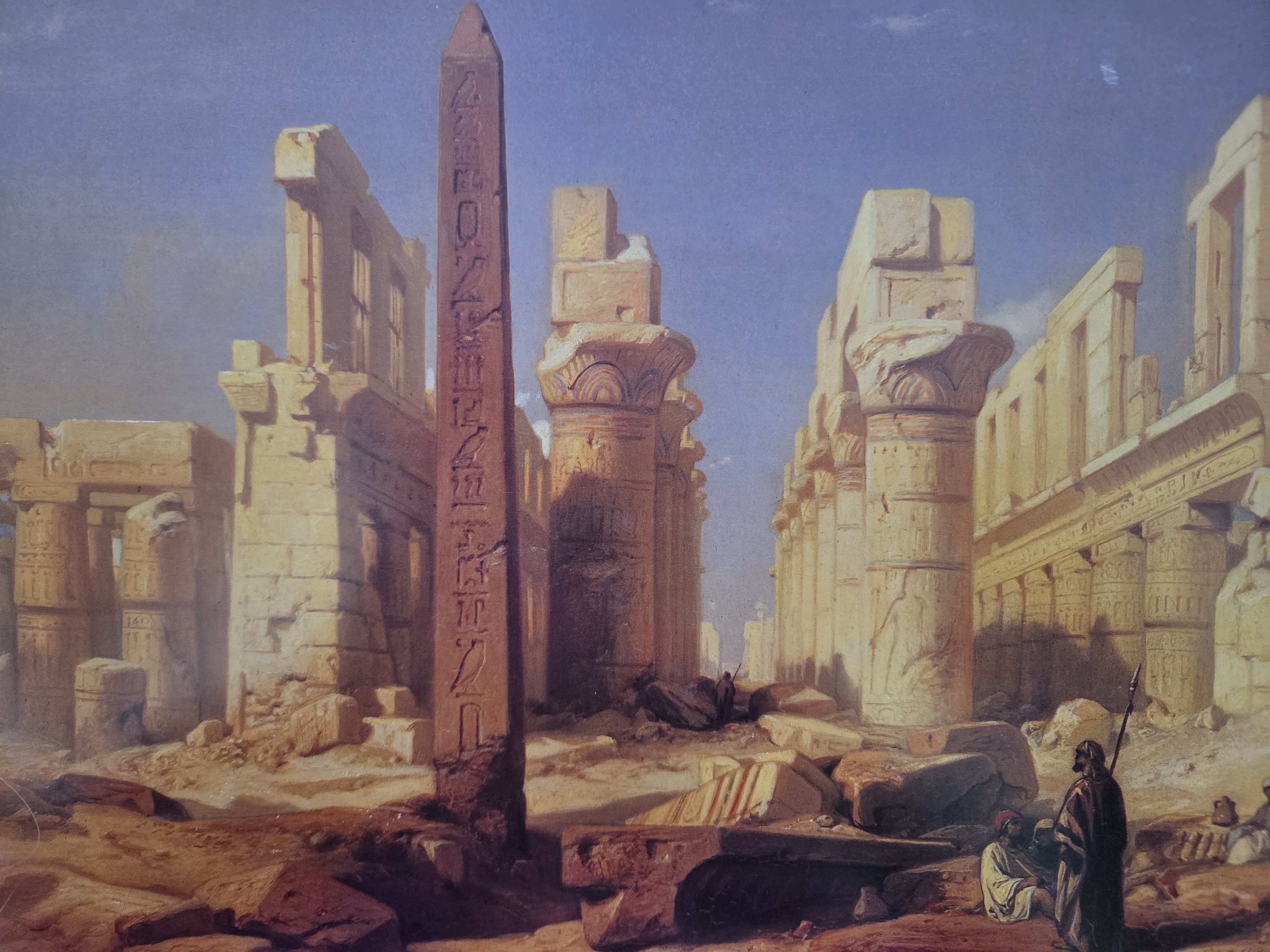
Ruins of the Temple of Karnak by Jacobs Jacob
“Then Affrodosius, that governor of the city, when news of this was brought to him, went to the temple with all his army. And the priests of the temple, when they saw Affrodosius with all his army coming into the temple, thought that he was making haste only to see vengeance taken on those on whose account the gods had fallen down. But when he came into the temple, and saw all the gods lying prostrate on their faces, he went up to the blessed Mary, who was carrying the Lord in her bosom, and adored him, and said to all his army and all his friends:
“Unless this were the God of our gods, our gods would not have fallen on their faces before him; nor would they be lying prostrate in his presence, wherefore they silently confess that he is their Lord. Unless we, therefore, take care to do what we have seen our gods doing, we may run the risk of his anger, and all come to destruction, even as it happened to Pharaoh king of the Egyptians, who, not believing in powers so mighty, was drowned in the sea, with all his army. Then all the people of that city believed in the Lord God through Jesus Christ.”
Another story from the First Gospel of the Infancy of Jesus Christ validates the New Testament: “As Joseph and Mary continued their journey, they came to a desert country infested with robbers, so Joseph and Mary prepared to pass through it in the night. Two robbers accosted them. One gave them safe passage and Mother Mary blessed him. The Lord Jesus said to his mother, 'When thirty years are expired, O mother, the Jews will crucify me at Jerusalem; and these two thieves shall be with me at the same time upon the cross, Titus on my right hand and Damachus on my left, and from that time Titus shall go before me in paradise.'”
The First Gospel of the Infancy of Jesus Christ also mentions that Jesus meets Pharaoh. It gives many more miraculous stories of Jesus as an infant and a young child, both in Egypt and returning to Judea, healing lepers and casting out devils. Even though the infancy gospels and Egyptian legends indicate that Jesus returned to Judea after approximately three years, the teachings of the ascended masters indicate that Jesus spent more time in Egypt. This is also validated by the many similarities between the spiritual rituals and initiations that Jesus demonstrated, that became part of Christianity, and the Egyptian mysteries—indicating deeper study by Jesus of Egyptian culture and religion.
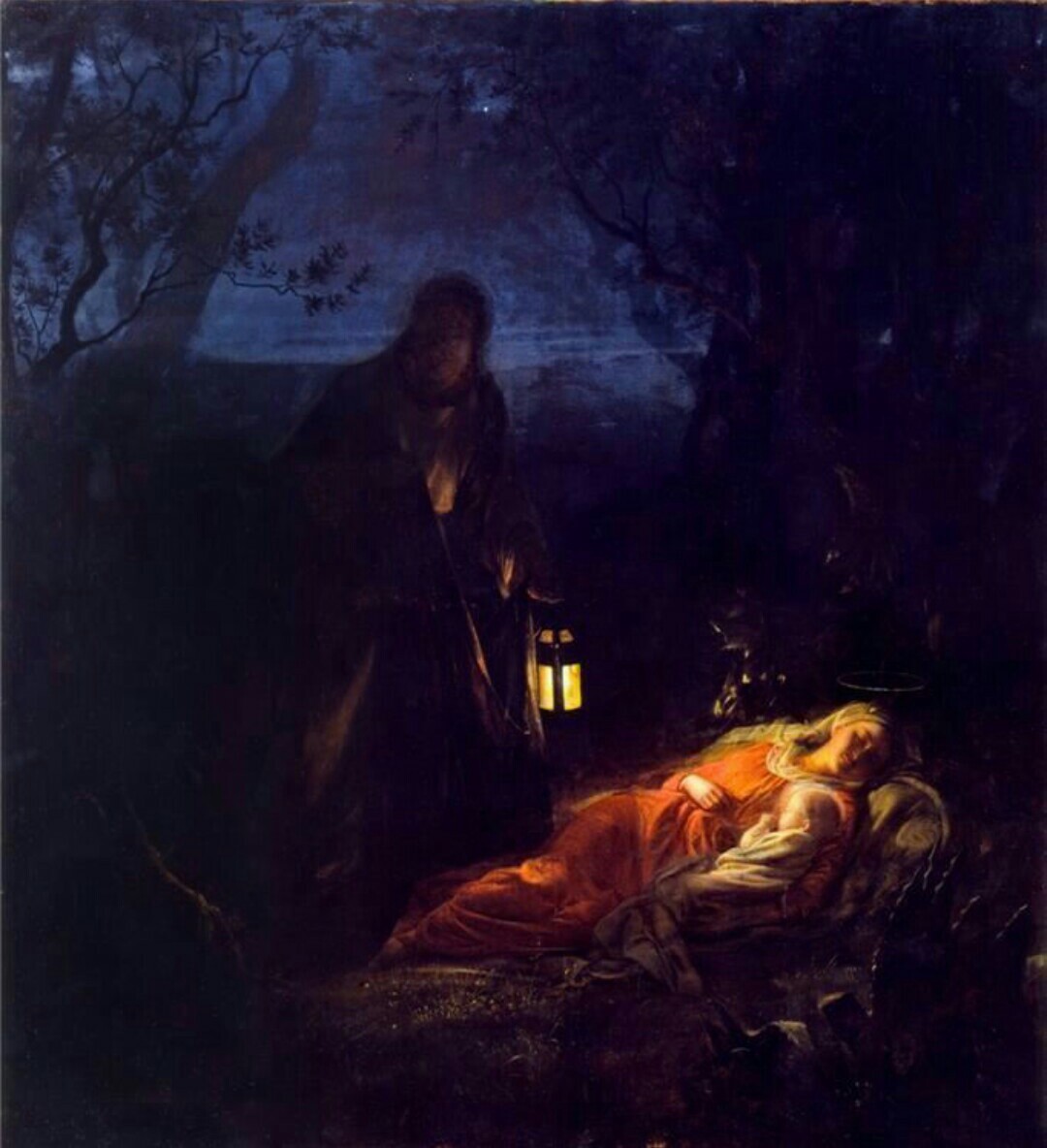
Jesus by Carl Heinrich Bloch
In Jesus in Kashmir, Suzanne Olsson writes about Jesus' sojourn in Egypt: “Here was located the famous Library of Alexandria, a great center of learning visited by world-famous leaders and statesmen. When Joseph and Mary fled to Egypt, they walked the famous coastal road to Alexandria—312 miles or 503 km—a journey of about three or four weeks walking or by cart, passing stunning brilliant beaches, ports and sea views. There, Jesus could sit in the greatest library of the ancient world, be inspired by the greatest minds, and have access to hundreds and thousands of scrolls to excite his curiosity for higher learning. There are probably more places named after Mother Mary in Egypt than anywhere else.”
A beautiful modern event that reaffirms Mother Mary's tie to Egypt were her appearances over the Coptic Church in Cairo between 1968 and 1971 that were photographed and videotaped.
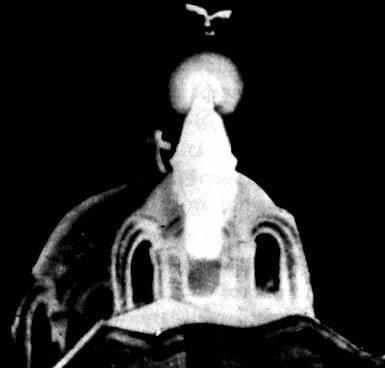
Mother Mary appears over the Coptic church in Cairo
The master Saint Germain, who was embodied as Saint Joseph, shares this sweet remembrance in a dictation published by the Summit Lighthouse: “While we were yet in Egypt,” he said, “Mary and I taught Jesus his earliest lessons. I would take him in my arms and sit him on my lap. Yes, I was there for him. And it was in Egypt that as a small child he began to ponder the mysteries of the universe.”
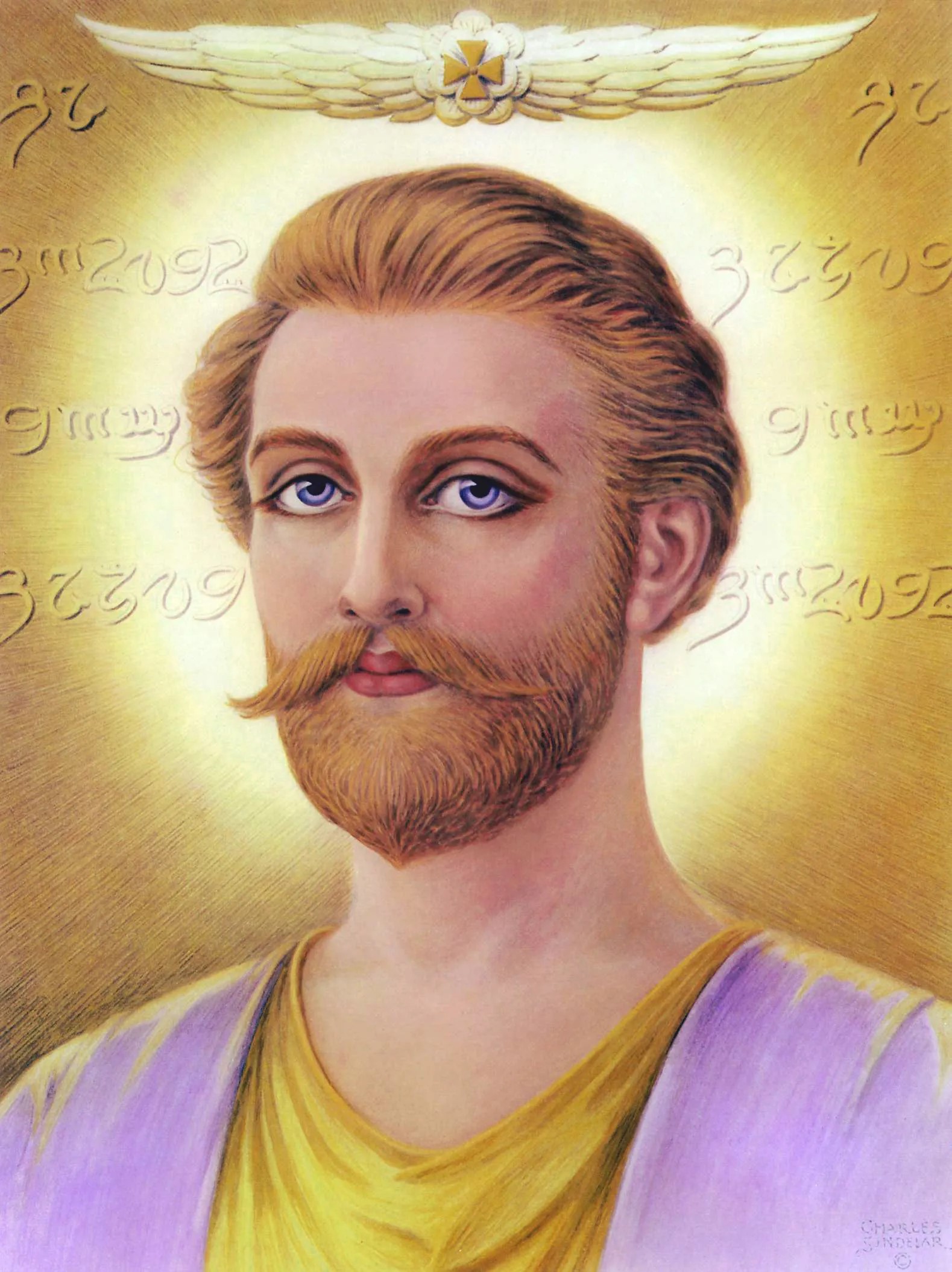
Portrait of the master Saint Germain
by Charles Sindelar
Ascended master teachings from the Bridge to Freedom state that when Jesus was a very small boy, he already manifested a purity of spirit. “The beautiful boy, dressed in his simple white tunic, and the sandals that Joseph had made for him, was exposed to the pressures and thoughts of many planes.” Jesus' parents were his earliest teachers. Mary taught him to either accept the world filled with imperfections, such as the appearance of illness and distress as real, or to magnify the Lord, by focusing on his I AM Presence.
When young Jesus came to Mary with bruises on his feet or knees, she would say: “We shall not magnify the hurt or that scar. We shall magnify our Lord.” Then, turning her attention to the perfect pattern of man made in God's image and likeness, they would draw the healing and peace currents of their God-Presence until the appearance of imperfection would disappear. This they did systematically every day, building a momentum that served Jesus for the rest of his life.
Many experiences tested their faith and power of concentration. One anecdote speaks of a morning where Mary saw young Jesus playing on the shores of the Nile, when a large crocodile suddenly appeared next to him and opened his mouth. Mary visualized Jesus enfolded in God's protection, until the crocodile swam way, and Jesus, not disturbed, just smiled and waved at his mother.
The ascended masters teach that Jesus attended the temples of Luxor and other sacred sites, including the library of Alexandria, where he studied the Egyptian mysteries. Some of these mysteries are included in the Gospel of the Egyptians.
In a dictation through The Summit Lighthouse, Mother Mary said that the statement, “Out of Egypt have I called my son” refers to the fact that Jesus, prior to his incarnation and following the age of twelve, was God-taught by the master Serapis and went into the Great Pyramid and received the inner initiations prior to their demonstration in public before all the world.”
The Bridge to Freedom dictations speak of both Mary and Jesus attending the temple of Luxor during their childhood and receiving rigorous disciplines. Perhaps this training was given to their souls on inner levels, outside the body, just like our souls receive training in the etheric retreats while our body sleeps. Most likely, however, some of this training took place in the physical plane. In a 1961 dictation, Jesus said: “I too, awoke to a world of form, to a world of shadows, and had to find within myself the reason and purpose of my being. Well do I remember those early days in Egypt when I was taken into those temples, when I learned the Law before the priests. I do recall my gratitude for the love of my mother and father, which balanced the austerity, the discipline, the tremendous pressure required of even a child, who applied for mastery in one of the temples at Luxor.”
In the Dossier on the Ascension, the master Serapis Bey states: “I recall full well when the Master Jesus came to Luxor as a very young man, that he knelt in holy innocence before the Hierophant, refusing all honors that were offered him and asking to be initiated into the first grade of spiritual law and spiritual mystery. No sense of pride marred his visage—no sense of preeminence or false expectation, albeit he could have well expected the highest honors. He chose to take the low road of humility, knowing that it was reserved unto the joy of God to raise him up.”
In another dictation through the Summit Lighthouse, Mother Mary said: “If, then, this one who was perfected in God, who came into life free of karma, desired to submit himself to the very first level, can you not also understand this lesson in humility? For if you would but learn one precept or one principle or one purpose in your days of study, this one precept might provide you with the key not only to your own ascension but to the ascension of millions who will follow in your footsteps.”
By the time Jesus incarnated, Serapis had already become an ascended master. In The Masters and Their Retreats, we read that after his final embodiments in Greece as the Spartan warrior Leonidas and the Athenian sculptor Phidias. Serapis became one of the most important gods of the ancient world—from the fourth century before Christ. He was the founding deity of the great city of Alexandria, and numerous historical records point to his involvement with worldly affairs. King Ptolemy, ruler of Egypt in the third century B.C., was visited twice by Serapis in a dream, who commanded the king to bring the master's statue to Alexandria as a focus of divine virtue. It was installed in the great temple of Alexandria called the Serapium, with the blessings of the Delphic Oracle.
Just as Jesus, later in life, communed with Moses and Elijah on Transfiguration Mount, so he had the ability to perceive and commune with Serapis Bey and the ascended brotherhood of Luxor. The Goddess of Light spoke of this event: “You will remember Jesus, with all of his attainment. When he came to Luxor he sought the very first level of teaching, initiation and discipline. When the hierophant said, “But I have need to be taught of thee,” Jesus said, “Nay, I would have the very first instruction as preparation for the mission of this dispensation.”
The ascended master known as the Great Divine Director also reminded students: “If you would teach, I ask you to come first as a disciple,” he said. “Just as Jesus came to the feet of the hierophant of Luxor, Egypt, even when he was perfected. And he knelt there and asked to be given the very first precepts of the Law, the beginning instruction. And the hierophant said, 'But I would kneel before you and would be taught of you.' And Jesus said, 'Nay, for I would learn and learn again these sacred precepts in order to insure the perfect rendering of the great example of the Christ in this age.' Thus the Lord Christ underwent, from beginning unto the finish, the tests and the trials that are given to every candidate for the ascension at the Ascension Temple at Luxor, Egypt.”
Even though it is not clear how many childhood years Jesus spent in Egypt, or back and forth between Egypt and Galilee, what is striking are the similarities between his ministry and the ancient Egyptian mysteries. These are described in the book, Ancient Mystic Rites by theosophical author and clairvoyant Charles Leadbeater.
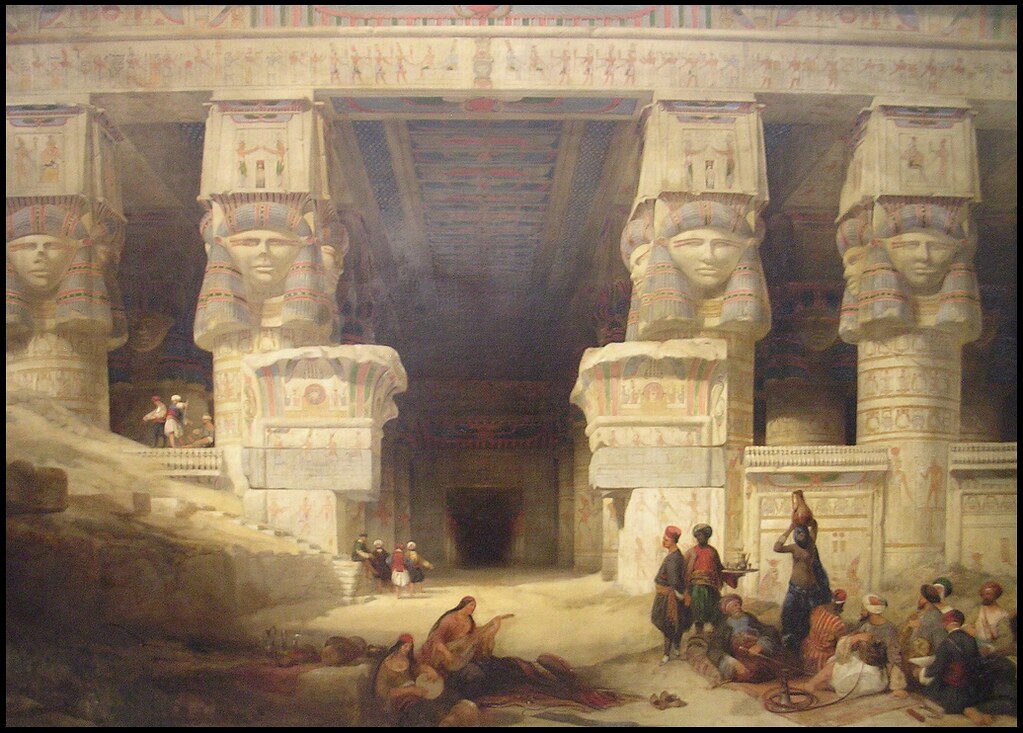
Roberts David, The Temple of Dendara
Leadbeater explains that in the Egyptian ritual, the candidate had to pass through a symbolical representation of the suffering, death and rising again of Osiris. This included his experiences between death and resurrection, when he entered the lower panes of Amenta to judge the dead, deciding for each soul what measure of felicity was due and whether returning back to earthly incarnation was needed for further development. Leadbeater states, “the legend of the death and resurrection of Osiris was well known to the people of Egypt, both initiates and profane, and there were great public ceremonies corresponding to those of our Good Friday and Easter Sunday in Catholic countries, when these mystic events were celebrated with the utmost splendor and with the heartfelt devotion of the people.”
Leadbeater further describes the similarities between the Egyptian and Christian mysteries. Horus, son of Osiris,was born of Isis, the virgin Mother. At his birth the eastern star shone forth, and the angelic hosts sang their song of triumph. He was adored by shepherds and wise men, and saved from danger which threatened him from without. The story of the initiate is the story of the Sun-God, the universal Christ who is born into the heart of man, and his mystic birth is the purpose of the first great initiation.
The second Egyptian mystery corresponds to the Baptism. The third initiation is the splendor of the transfiguration, when the monad—the Presence of the I AM that I AM—descends and transforms the ego into the likeness of his own glory. The fourth great initiation is the passion and the resurrection of the Christ, which was reenacted for centuries by candidates in the Great Pyramid. Here, the initiate would lay for three days and nights in a sarcophagus in the heart of the earth and descend into the astral world, before awakening once again from the sepulcher into the outer air at the eastern side of the great pyramid, so that the first rays of the rising sun might waken him from his long sleep. During this initiation, the candidate is carried up into heaven, to receive an expansion of consciousness on the spiritual plane. Then, during the fifth initiation, the adept ascends above all earthly life and becomes one with the holy spirit, typified by the ascension into heaven.
We can see that just as Jesus' life fulfilled the prophecies of the Old Testament, so he fulfilled the ancient Egyptian mysteries, and demonstrated the inner temple initiations on the outer—throughout his life and for all to see. Leadbeater also explains that the tradition of these mysteries was transmitted from century to century, until we find it among the Essenes. The Essenes were the spiritual community that shaped the beliefs of Jesus, his parents, his grandparents, and his disciples. Leadbeater writes that it was in the Essene school that the disciple Jesus lived in preparation for his ministry, after receiving a high initiation into the true mysteries of Egypt.
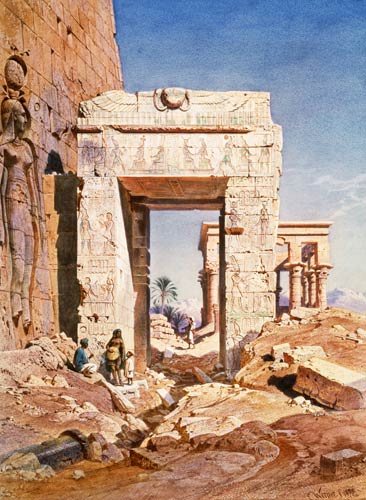
Doorway from the Temple of Isis Carl Frieroich Werner
The ritual of Amen, used in ancient Egypt, likely inspired the ritual of holy communion that Jesus shared with his disciples. In the Egyptian tradition, the body of Osiris was broken in fourteen pieces by the God of chaos, the evil one Set, and Isis, representative of the divine Mother, was seeking to make this body of God whole once again. She searched for the pieces of Osiris, reassembling them back together, and used her divine powers to resurrect him, so he could judge the living and the dead.
Leadbeater describes that in the ritual of Amen, the brethren bowed to each who had partaken of the sacrament, saying, “Thou art Osiris.” He explains it was likely that Jesus took the existing sacrament, which was regularly celebrated in the Essene community, and transfigured it into another and holier Eucharist where we receive the “Lord of Love.” Speaking of Holy Communion, Sainte Thérèse of the child Jesus says that we are the host that Jesus wants to change in himself.
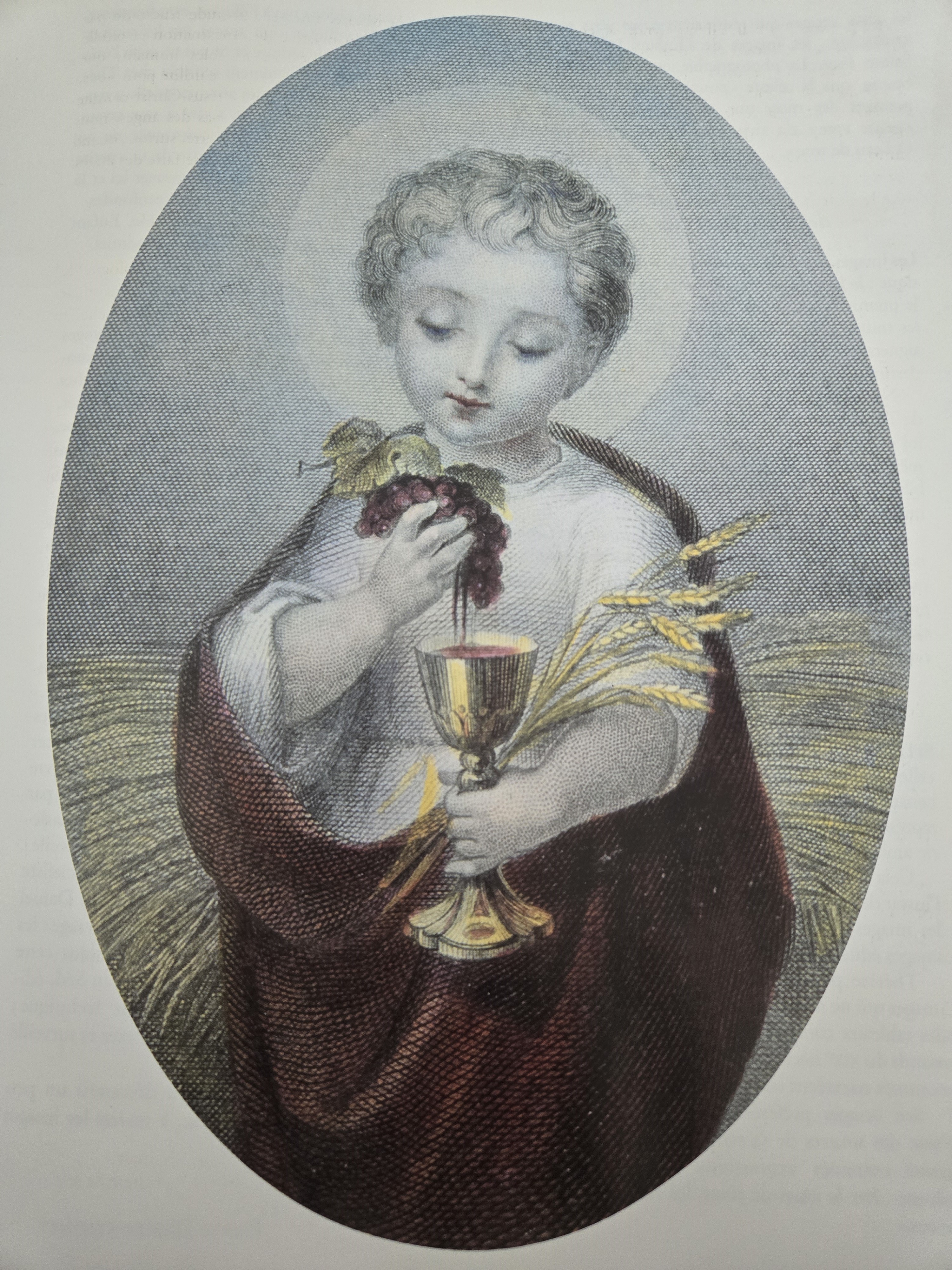
Favorite picture of Saint Therese of Lisieux
In The Opening of the Seventh Seal, the ascended master Sanat Kumara declares that Jesus Christ became the fullness of the four cosmic forces, the four divine personages of the Lion, the Man, the Calf and the Flying Eagle described by the prophet Ezekiel: “The Everlasting Gospel is the initiation of the Woman given unto the saints. It is the gospel of the Ancient of Days....The foursquare gospel is the life of the one, the Son of man, who has descended into the earth to outpicture the Christhood of the four living creatures. Having fulfilled this the fiery destiny of the soul of God, he becomes the one who ascends into heaven.”
Sanat Kumara tells us that many of the initiations Jesus underwent were a part of his public ministry, but some were borne solely within the retreats of the Brotherhood. He says that the events of Jesus' life are “evidence to all adepts that he has undergone said initiations according to the preordained path.” As we move through the four stages, we connect with Eastern masters like Lord Maitreya and Gautama Buddha, who were an important part of Jesus' life and training, both on inner planes and during his travels to the east.
The first initiation is the initiation of the son. Sanat Kumara says, “The first stage is the birth of the Savior, the initiation of the Son of man who is to become the Son of God through the Christ of Jesus under the office of the Man on the East Gate. This includes infancy, childhood, and the maturing years when the Spirit of the Lord waxes strong within the heart flame. It includes the soul’s pilgrimage both during and following the years of formal education, when it seeks and finds the living Gurus and sits at their feet on earth and in heaven (on the etheric plane in inner retreats of the Great White Brotherhood), submitting to all of the initiations he will later demonstrate before the saints and the great multitude.”
Sanat Kumara describes that in this first stage, the individual asserts and consolidates his or her self-awareness in God as the “I AM WHO I AM,” in order to fulfill the divine plan for the life he or she is to serve. Here, the Son must magnetize sufficient light to ward off the opposition to his mission, building a forcefield of Christ consciousness. This reinforcement of selfhood in God becomes the acceptable offering on the altar of the Father.
Sanat Kumara explains that only this supreme sacrifice can hold the balance and pay the price for the sins and karma of the world. He speaks of the false disciples who only seek God's light for pleasure or to fuel their own dark deeds, and run from God when they must pick up their cross and follow in the footsteps of Jesus.
“Therefore do many of the disciples, when they hear this saying of the law of individual Christhood, turn back and walk no more with the Lord. Having no light within them, they spurn the initiation of eating his flesh and his blood–lest they should dwell in him and he in them and therefore be like him. For he said: “He that eateth me, even he shall live by me.”
“Beware,” Sanat Kumara warns, “of those who pretend to be on the Path, associating with lightbearers for the mere enjoyment of the light instead of for the sake of the Dharma.”
The initiations of the Father are the second stage of Christhood. Sanat Kumara says: “The initiation of the second stage of Christhood is the Water (Matter) Baptism through the Christ of Maitreya under the office of the Lion on the North Gate. This stage was reenacted by the Lord Jesus Christ in his baptism by John in the river Jordan. Its purpose was to illustrate the ritual for you, my beloved; for the living Gurus (God-men) John and Jesus had no need to publicly reenact the ritual except to fulfill the law as an example of its righteous use...This is the moment of the initiation by Maitreya when the Person of the Father enters the temple-–magnified by the already balanced and expanded Threefold Flame. The Light of the I AM Presence, as the Light of Alpha and Omega, pours directly through his heart chakra as he is dedicated to his earthly mission by the dove of the Holy Ghost. This is the moment of my approbation, “This is my Son, my beloved, in whom I AM well pleased.”
Sanat Kumara explains that the pleasure of the Father in the Son is always by law of congruency. When the Son is the perfect chalice for the Father, the Father dwells bodily in the Son. The Father is joyous, and comforts all life through the transparency of the Son. Jesus told his disciples, “If you have seen me you have seen the Father,” because “I and my Father are one.” All the events in Jesus' life that transpired between his baptism in the River Jordan and his transfiguration on the mount fulfills the second archetype of personal Christhood of the Lion on the North Gate.
The third initiatic stage is for the working of the Holy Spirit. In the life of Jesus, it is marked by the transfiguration, that Sanat Kumara describes as a baptism by fire. “In the Fire (Spirit) Baptism, Jesus outpictured the third archetype of Christhood, the sign of the Holy Spirit, the initiation through the Christ of Gautama under the office of the Calf on the West Gate. In this hour he magnetized the light of the Great Central Sun, the light of Alpha and Omega (individualized in the Mighty I AM Presence), into every cell of his four lower bodies. This great influx of the light of the Logos he focused and so intensified, through his seven chakras (sun-centers) and the nuclei of all energy centers, that “his face did shine as the sun and his garments became glistering, exceeding white; so as no fuller on earth can white them.” So reads the eyewitness account of his disciples.
“This great drama is known as the cosmic interchange–the interchange of Spirit and Matter. It is the bathing of every crystal of the Matter chalice (even the garment) of the Son of God with the fiery baptism of the Holy Ghost. This the third stage of Christhood is the “pretrial” for the fourth stage that is to take place under the office of the flying Eagle on the South Gate–the Lord whose Lord I AM.”
Sanat Kumara explains that during the transfiguration, the microcosm fuses with the Macrocosm, and neither will ever be the same again. In order for the disciples to see this, Jesus raised up Peter, James, and John to his exalted cosmic consciousness, accelerating their vision and soul faculties to perceive the ascended masters Moses and Elijah and to give them a foretaste of heaven's hierarchical order.
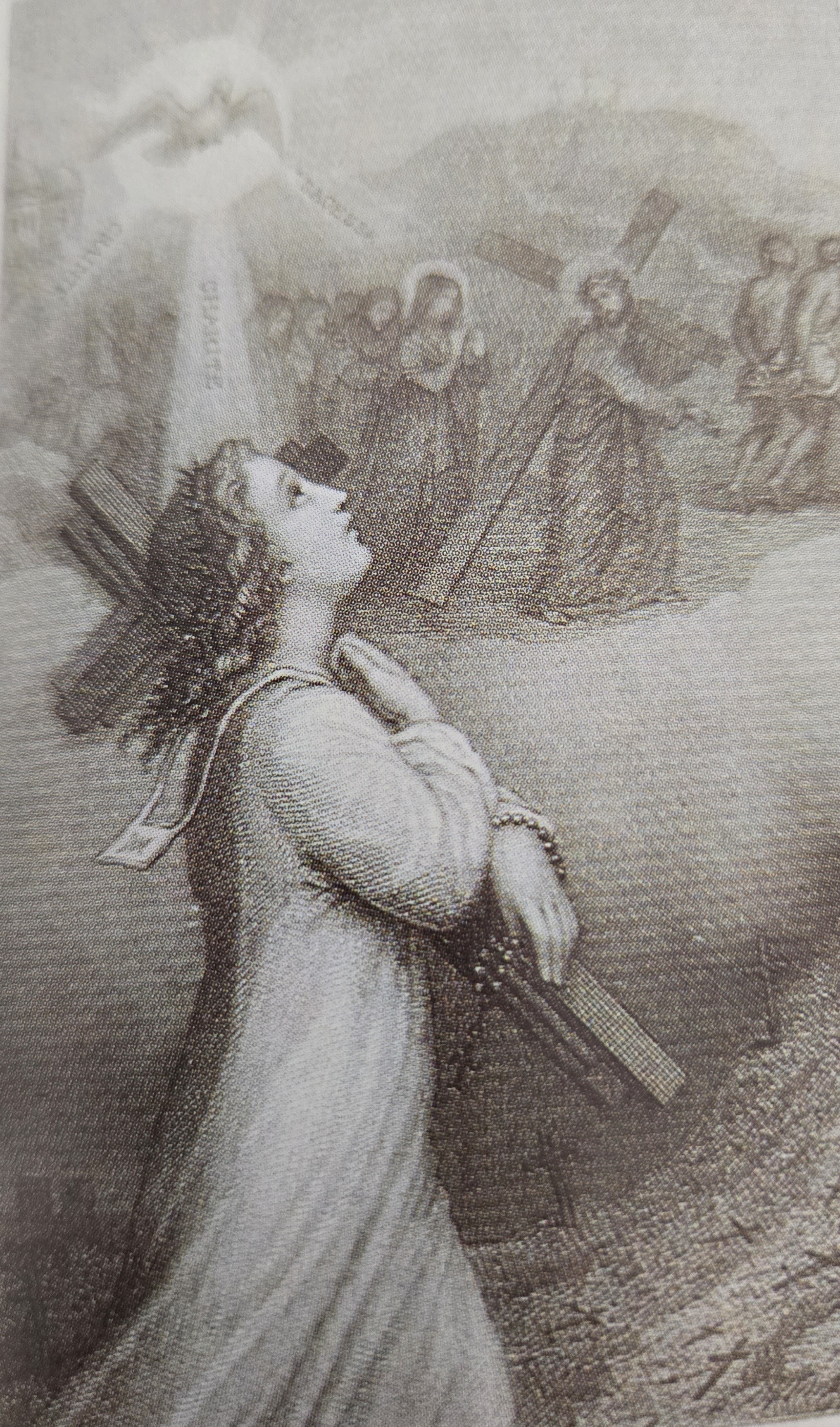
Carrying our Cross from the personal
collection of Saint Therese de Lisieux
The fourth initiatic stage is the stage of the Mother, whose archetype is the flying Eagle on the South Gate. Sanat Kumara says, “Herein is the consummation of purity’s love as the soul embraces the Mother flame and enters into the initiations of the Crucifixion, the Resurrection, and the Ascension. In the life of Jesus Christ, these begin with his prediction to his disciples of his crucifixion, followed by the anointing of his head (crown chakra) by Mary of Bethany for the three initiations which are to follow. These are the culmination of the Path of the Ruby Ray. They cannot be completed until the ritual of the fourteen stations have been fulfilled in Alpha and Omega–in the beginning and the ending of all cycles (evolving in the sacred centers) of the individual divine plan.
“The announcement of the Son of God to all the world for all ages to come that he has indeed paid the last farthing of personal and planetary karma and is ready to ascend to the Godhead whence he descended so many evolutions ago yet rings across the centuries and the galaxies:
“All power is given unto me in heaven and in earth....And, lo, I AM with you alway, even until the end of your initiations under the law of personal and planetary karma. Lo, I AM the all-power of God, the fullness of his joy and the glory of his Life universal and triumphant throughout the Spirit/Matter cosmos.”
Sanat Kumara concludes by saying that the Everlasting Gospel is the message of the ascension to the children of God, and the message of the second death to those who blaspheme the name of God, I AM THAT I AM, and repent not of their deeds. It is the message of the judgment that liberates all souls above and below unto the conclusion of their rounds. “May you also receive the crown of Life which he has promised to all who love him, enduring temptation (meeting the misqualified energies of personal and planetary karma) and trial (the path of initiation).”
I made the following two charts, based on the initiations described by Sanat Kumara on the Path of the Ruby, also posted at http://www.sanatkumara.online/ The first graph shows the initiations of the soul in Spirit on the four gates, and the light descending from spirit to matter. This represents the descent of the New Jerusalem that John saw, “coming out of heaven, prepared as a bride for her husband.” Notice the divine energy descending by initiation follows the lightning flash described in Kabbalah. The second chart depicts the divine energies of the soul in Matter on the four gates, as the initiations of the City Foursquare. Notice the energy flow follows the counterclockwise direction we also find in zodiac astrology.
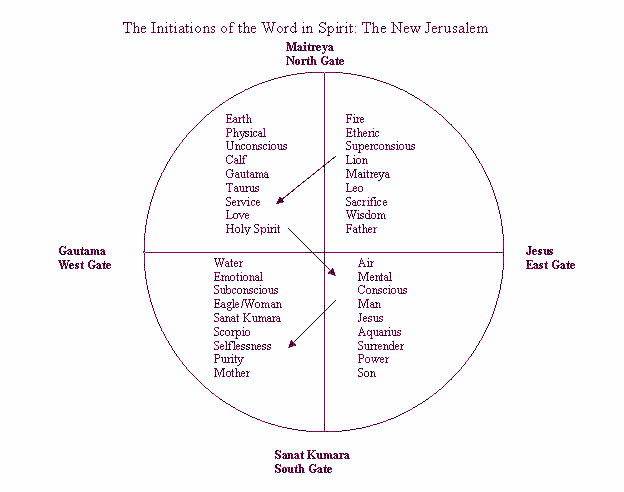
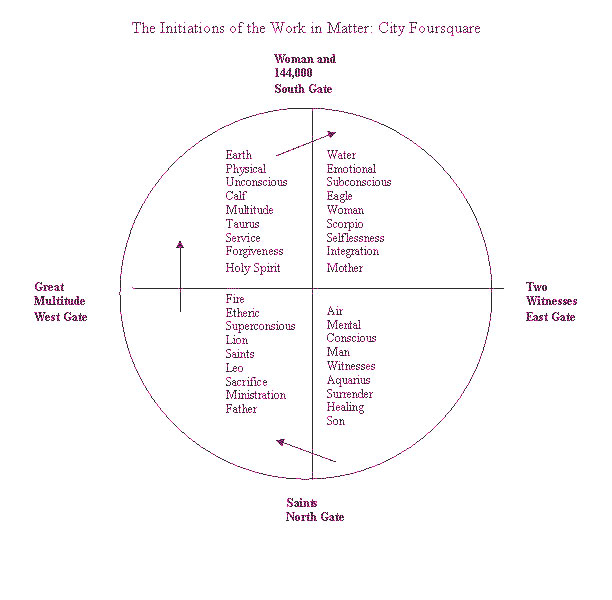
I would like to seal this chapter on Jesus and the Egyptian Mysteries with a few concepts gleaned from the apocryphal Gospel of the Egyptians, that describes itself as the “Holy Book of the Great Invisible Spirit.” Together with other Gnostic gospels, it mentions the “aeons,” a heavenly spiritual order, or sphere of being, emanating from the Godhead and relating to the nature of the absolute. The gospel also mentions “saints begotten by the Holy Spirit through invisible, secret symbols achieved by reconciling the world with itself.”
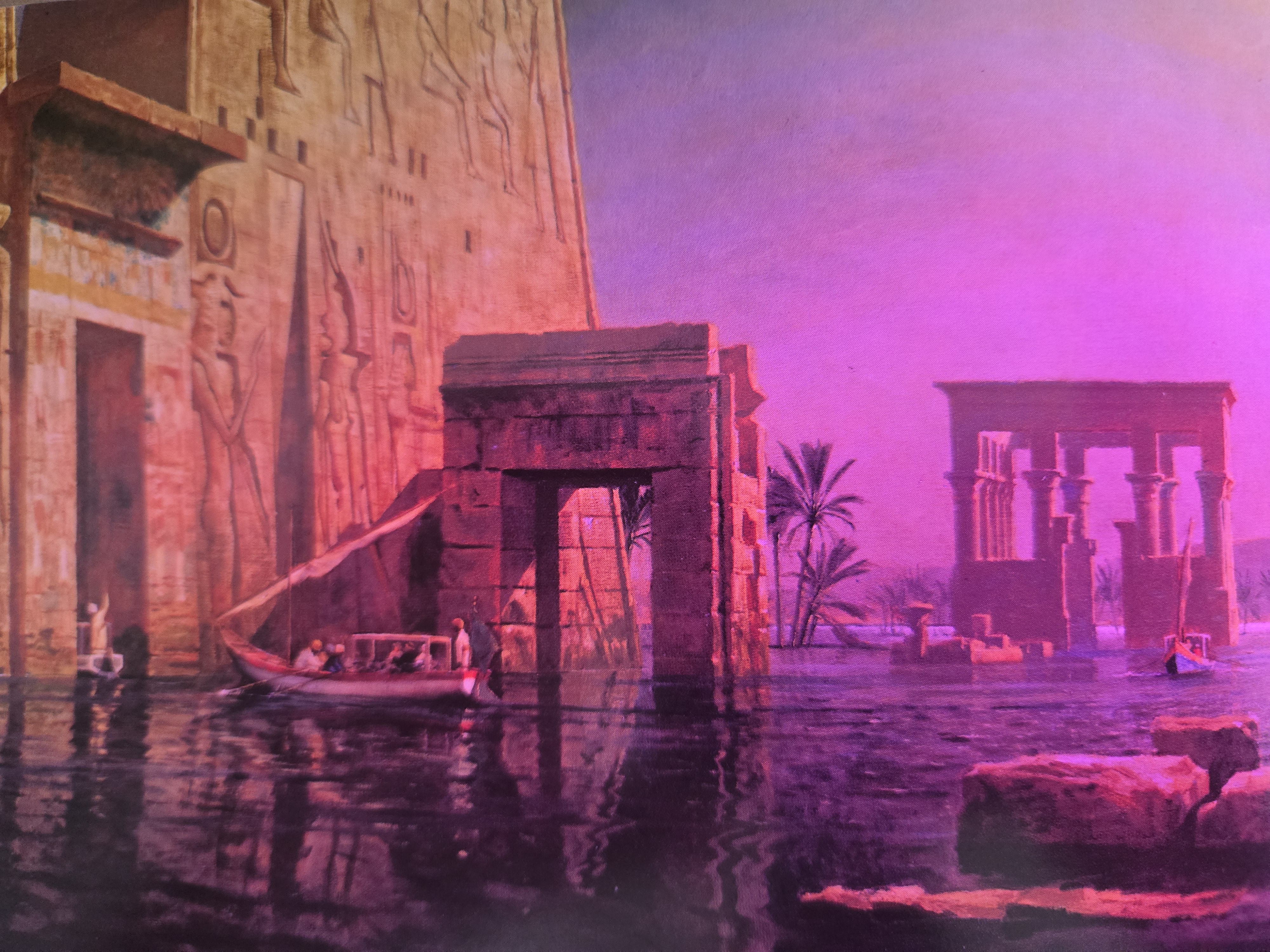
Guided Visit to the Temple of Philae by Michael Zeno Diemer
What impressed me most about this gospel is that it begins with the Logos, the sacred Word. It presents seven vowels repeated twenty-two times each to intone divine blessings, akin to the ancient Atlantean science of invocation and to the gift of speaking in tongues. “In this manner,” says the gospel, “the three divine powers offered their praises to the immense, unseen, indescribable, virginal and ineffable spirit.” These sacred numbers remind me of the seven rays of God, and of the twenty-two Hebrew letters of living fire.
Reminiscent of Jesus and the woman at the well, The Gospel of the Egyptians addresses Christ as the “Living Water” with a beautiful invocation:
IE IEUS EO OU EO OUA!
Indeed truly, O Yesseus Mazareus Yessedekeus
(meaning Jesus Nazarene the Righteous)
O living water, O child of the child, O glorious name!
AION O ON
(O existing Aeon)
IIII EEEE EEEE OOOO UUUU OOOO AAAA
Indeed, truly,
EI AAAA OOOO, O
Existing one who sees the Aeons!
Indeed, truly,
A EEEEE IIII UUUUUU OOOOOOOO,
Who is eternally eternal!
Indeed, truly,
IEA AIO,
In the heart, who exists
U AEI EIS AEI
EI O EI, EI OS EI
(Son forever)
You are what you are
You are who you are!
This great name of yours is upon me,
O self-begotten Perfect one, who is not outside me.
Now that I have known you, I have mixed myself with
the immutable. I have armed myself with an armor of light.
I have become light! I shall declare your glory truly,
for I have comprehended you,
SOU IES IDE AEIO OIS,
O AEON, AEON, O God of Silence!
I honor you completely.
You are my place of rest, O Son
ES ES O E
The formless one who exists.